
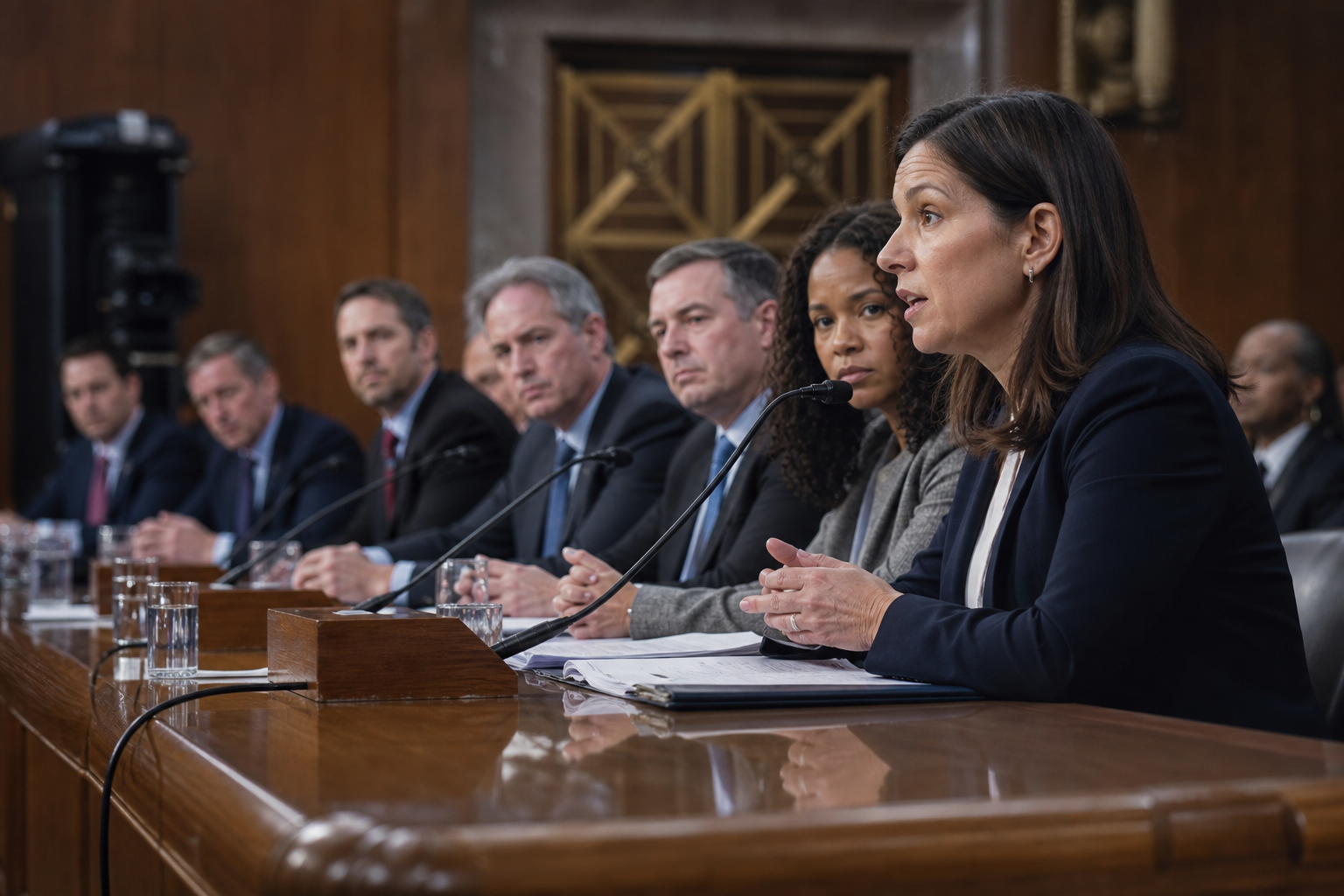
The White House executive order on fintech companies and payment systems matters for a simple reason. Digital finance is no longer a niche product category. It is part of the plumbing of economic life. When wages move, when bills clear, when small businesses get credit, when families send money, when platforms hold balances, when software intermediates payment rails, the stakes are no longer merely entrepreneurial. They are systemic.
That is why the federal government should implement major policy changes specifically targeting fintech companies and payment systems. Not because innovation is suspect, and not because every startup is a hidden threat, but because payment systems are too important to be governed by regulatory patchwork, private incentives alone, and institutional improvisation after the fact.
The executive order is significant precisely because it acknowledges this reality. It represents a change in federal policy direction, and it affects both the fintech sector and payment systems infrastructure. That shift should not be treated as a symbolic gesture or an administrative mood swing. It is a recognition that the old arrangement, fragmented oversight layered onto rapidly scaling financial technology, is no longer adequate to the scale of the market it supervises.
The strongest objection comes from defenders of calibrated restraint. They warn, reasonably, that broad federal intervention can become rigid, that dynamic sectors can be overregulated, and that top-down rules may entrench incumbents or drive activity into darker corners. There is truth in parts of that argument. Poorly designed regulation can freeze a market at the wrong moment. Compliance burdens can favor firms large enough to absorb them. And not every technological change warrants a sweeping legal rewrite.
But those cautions do not resolve the present question. They merely establish the need for competent policy design. They do not justify preserving a fragmented status quo for a sector that increasingly performs core financial functions.
The anti-intervention case rests on a romantic view of fragmentation. We are told that overlapping state regimes, agency-by-agency adaptation, and market experimentation create a healthy laboratory. In some consumer technology markets, that logic has force. In payment systems, it fails. Payments are network industries. Their value depends on trust, interoperability, reliability, and universal acceptance. The costs of fragmentation are not theoretical. They show up as inconsistent consumer protections, uneven supervision, opaque responsibilities when failures occur, and infrastructure that serves profitable users better than excluded ones.
A payment app may look like a product. A payment system behaves like infrastructure. Infrastructure requires standards.
The case for major federal policy changes is therefore not that Washington should micromanage code, pick winners, or outlaw experimentation. It is that the federal government must set the baseline architecture within which experimentation occurs. That means clear rules for who may intermediate payments, what obligations attach to custody of customer funds, how risks are disclosed, how data is governed, how systems interoperate, how outages are handled, and which public authorities are accountable when private platforms become indispensable.
Opponents often invoke the adaptive capacity of existing institutions such as the Federal Reserve, the OCC, and the FDIC. Fair enough. Those institutions do matter, and any serious policy change should use existing expertise rather than pretend it does not exist. But that point actually supports stronger federal action. If digital payments and fintech have become material to financial stability, consumer protection, and market access, then the government should not rely on ad hoc adaptation alone. It should align authority, modernize rules, and remove the ambiguities that let firms shop for the weakest oversight or expand first and clarify obligations later.
The argument here is not for novelty for its own sake. It is for coherence.
Consider the practical stakes. Fintech companies increasingly blur lines that older law treated as distinct. They can look like software firms, lenders, payments processors, deposit substitutes, marketplaces, and data brokers at once. That may be efficient from a product perspective, but it is precisely why the public sector must impose role clarity from a regulatory perspective. When one company performs multiple quasi-banking functions through an app, the burden should not fall on ordinary users to decipher which protections apply and which do not.
A national economy also requires national standards. State-by-state variation may be manageable for local commerce. It is not a sound governing model for digital payment systems that move instantly across jurisdictions. Nor is it sufficient to let each private network define interoperability, access, and dispute resolution according to its own incentives. Firms optimize for growth and shareholder returns. They do not naturally optimize for redundancy, universal service, equity, or systemic resilience unless required to do so.
This is where the debate often becomes evasive. Critics of federal policy changes warn about stifling innovation, but they are less candid about the innovation they are defending. Some of it is genuine improvement. Some of it is simply regulatory arbitrage wrapped in user-friendly design. Fast growth does not prove public value. A sleek interface does not eliminate old financial risks. And a company calling itself a platform rather than a bank does not make liquidity, fraud, governance, or concentration risk disappear.
The public has seen this pattern before in adjacent sectors. Private actors scale first, normalize dependence, and only later acknowledge that they have become systemically important. At that point, the state inherits the cleanup function without having built the governing framework in advance. That is not a defense of market dynamism. It is a subsidy to disorder.
The better approach is disciplined federal intervention, substantial enough to matter, specific enough to be administrable. Major policy changes should include uniform standards where common rules are essential, room for supervised innovation where product development remains fluid, and public investment where private actors underprovide foundational infrastructure. The central objective should be a payments ecosystem that is faster, safer, more interoperable, and more inclusive, not merely more lucrative for whichever firms moved earliest.
Equity belongs in this conversation as well, not as ornament but as design logic. Payment systems determine who gets served cheaply, who gets paid quickly, who bears hidden fees, and who is left navigating delays and exclusions. A purely market-led system predictably stratifies. High-value customers receive seamless service; marginal users absorb friction, opacity, and risk. Federal policy can counter that tendency by making baseline protections universal rather than optional.
The White House executive order has already made one judgment. Fintech companies and payment systems are important enough to warrant a federal change in policy direction. The task now is to ensure that this recognition matures into durable governance. That means moving beyond slogans about innovation versus regulation. The real choice is between coherent national stewardship and continued fragmentation in a sector that no longer behaves like a peripheral experiment.
Washington should choose stewardship. In finance, as in other critical systems, scale without standards is not freedom. It is exposure. And when payment systems sit beneath the daily life of the entire economy, exposure is a public problem, whether markets admit it or not.