
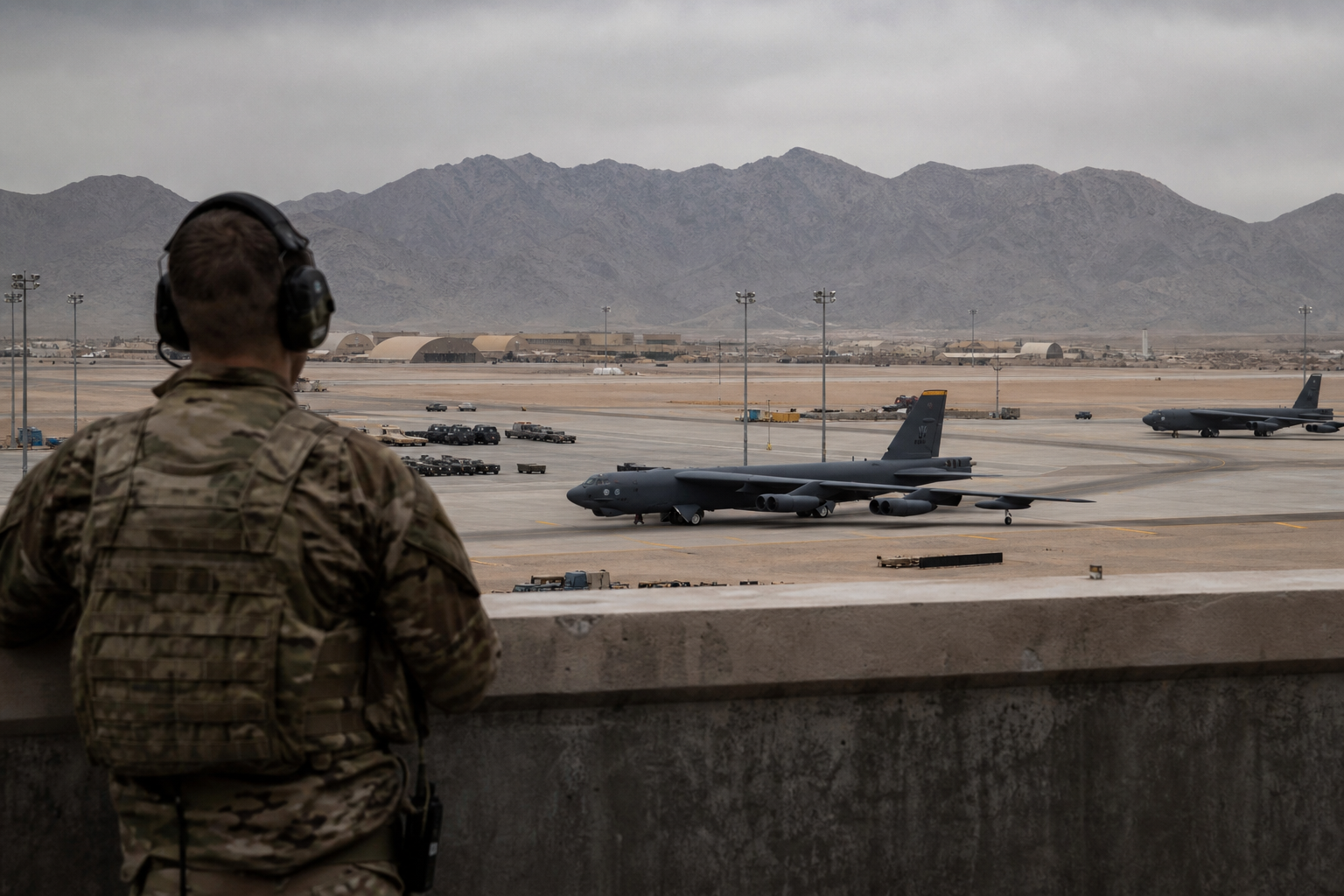
Three US soldiers are dead, one in Iraq and two in Jordan, with another injured. The US military has confirmed the casualties. The instinct to hit back is not mysterious. If attacks attributed to Iran kill American troops in two separate countries within two days, the argument for direct military strikes on Iranian territory writes itself in cable-news font: restore deterrence, impose costs, show resolve.
That is the clean story. Clean stories are usually where the scam starts.
The resolution is not whether the United States should respond. It should. The question is whether direct strikes on Iranian territory are the right response. On that narrower question, the hawks are selling certainty they do not possess, and the antiwar left is sometimes selling innocence nobody in this region has earned. The useful answer sits in the uglier middle: Washington should reject direct strikes on Iran not because force is always wrong, but because this particular escalation is more likely to protect reputations in Washington than soldiers in the Middle East.
The strongest case for striking Iran directly deserves respect before it gets dismantled. It goes like this: proxy retaliation has failed. The United States has spent years hitting militia warehouses, commanders, and launch sites across Iraq and Syria. Yet the attacks continue. Tehran enjoys the benefits of regional coercion while exporting the risks to proxies. If America keeps swatting the subcontractors while sparing the client, Iran's leadership learns the obvious lesson, that it can bleed US forces at tolerable cost. On this view, direct military strikes against Iranian territory are not mindless vengeance. They are the only language left in the deterrence toolbox.
There is truth in that. The current model has not reliably protected US troops. A policy that repeatedly absorbs attacks while issuing carefully limited replies is not some masterclass in restraint. It is also a ritualized performance that lets every party keep its narrative. Iran and aligned militias advertise resistance. Washington advertises firmness. Defense contractors invoice for the privilege. Troops remain in exposed positions, serving as tripwires in a conflict the political class prefers to keep undeclared and strategically vague.
But the fact that the existing script is broken does not make direct strikes on Iranian soil wise. It only means the menu of bad options is real.
Start with incentives. A direct US attack inside Iran would be sold in Washington as a clean act of punishment, limited, precise, and necessary. That is how these things are always marketed. In reality, it would hand Tehran a gift as well as a wound. A regime that thrives on siege narratives would get confirmation of its central propaganda claim, that the United States is not managing risk in the region but prosecuting war against Iran itself. Hard-liners in Tehran would gain domestic justification for escalation, internal repression, and a broader mobilization of proxies. The people who would pay first are not the speechwriters who promise a “measured” strike. They are the troops at exposed bases, the civilians near retaliatory targets, and everyone downstream of a regional energy shock.
The hawkish reply is predictable: that risk exists already, and deterrence requires making Iran fear costs at home. Fair enough. But deterrence is not a magic word. It is an empirical claim, and recent American history should make anyone less confident, not more, about the fantasy of controlled escalation. Washington's record in the Middle East is littered with people who believed one more calibrated use of force would restore credibility, redraw red lines, and stabilize the board. Instead, force often widened the game, multiplied the actors, and created new incentives for retaliation. States do not absorb humiliation the way think tank panels do. They answer through channels you do not fully map and timelines you do not control.
The body count in this fact pattern is three dead soldiers across Iraq and Jordan. That is serious, tragic, and politically combustible. It is not, by itself, a strategic rationale for opening direct hostilities against a state of nearly 90 million people with a mature missile arsenal, a proxy network, and every reason to avoid losing face after being hit on its own territory. You do not get to say “limited strike” as if the other side is contractually obligated to keep your war limited.
There is another grimmer point that Washington prefers not to discuss. The United States keeps troops in a region where its mission is often defined in slogans and executed in ambiguity. Those troops are asked to deter Iran, reassure partners, suppress remnants of old enemies, prevent new ones, and signal resolve to everyone watching. That is not strategy. That is exposure. Direct strikes on Iranian territory do nothing to solve the underlying contradiction. They may actually deepen it by creating more reasons to maintain, expand, and militarize a posture that has already proven vulnerable.
So who benefits from direct military strikes against Iran? Some Israeli and Gulf hard-liners would welcome a deeper US confrontation with Tehran. Defense firms would not mourn another jump in demand, budgets, munitions consumption, and replenishment contracts. Politicians in Washington would get a brief hit of moral clarity and macho optics. Commentators who never have to stand perimeter duty would get to praise resolve. Who pays? American service members stationed across the region, civilians in the line of retaliation, taxpayers financing another round of open-ended coercion, and global consumers if oil markets convulse.
The alternative is not passivity. It is narrower and less theatrical. Harden force protection. Reassess deployments whose deterrent value is mostly asserted rather than demonstrated. Strike the actual operational nodes responsible when necessary, but do not volunteer for a direct US-Iran war because television demands symmetry. Use sanctions, cyber operations, intelligence exposure, maritime interception, and diplomacy with regional intermediaries to raise costs on Iranian networks without granting Tehran the prestige and pretext of a homeland showdown. Most importantly, align military presence with a clear political objective instead of leaving troops in a permanent gray zone where every death becomes an argument for doing more of what failed before.
That is less emotionally satisfying than bombing Iran. It is also more honest.
Direct strikes on Iranian territory promise decisiveness because Washington is addicted to gestures that look like strategy. But a strike is not a strategy. It is an event. And in the Middle East, Washington has an old habit of confusing events with solutions.
Three American soldiers are dead. The United States owes its troops something better than catharsis marketed as policy. If the mission cannot be defended without periodically risking a state-on-state war with Iran, then the real indictment is not insufficient retaliation. It is the mission itself.