
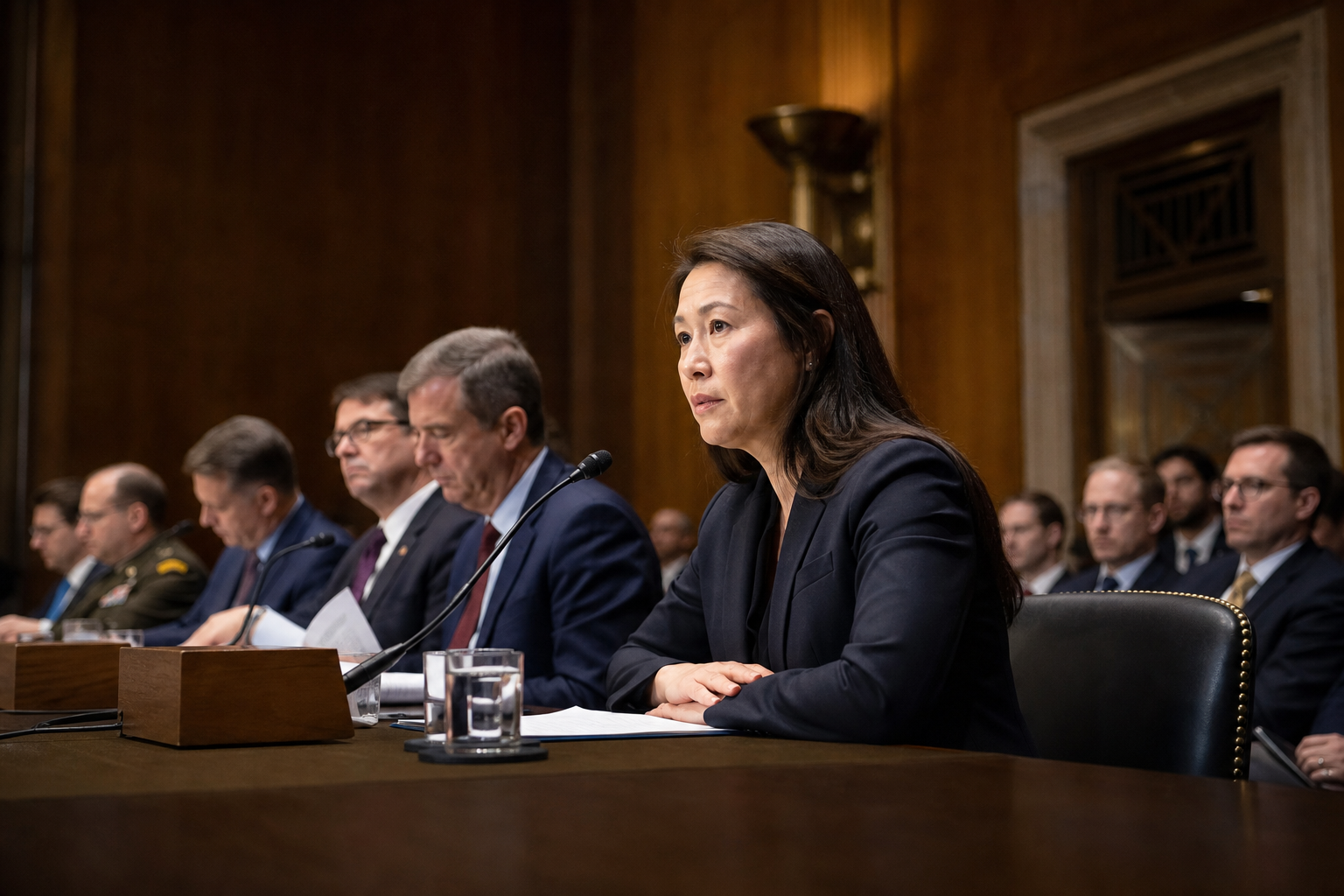
The United States should implement comprehensive federal AI regulation, and it should do so now, with enough flexibility to adapt but enough authority to matter. That conclusion does not rest on technophobia, imitation for its own sake, or a reflexive distrust of innovation. It rests on a simpler proposition: artificial intelligence is becoming general infrastructure, and infrastructure with economy-wide effects cannot be governed through a patchwork of state laws, voluntary promises, and after-the-fact cleanup.
The fact pattern in this debate is revealing. White Case LLP has published an AI regulatory tracker for the United States as part of a global AI regulatory monitoring initiative. Multiple jurisdictions worldwide are developing AI regulatory frameworks. The lesson is not that a perfect template already exists abroad and can simply be copied. The lesson is that advanced economies, faced with the same technological acceleration, have recognized the same underlying governance problem. AI systems affect employment, consumer protection, privacy, discrimination, critical services, intellectual property, national security, and market concentration. Those are not niche issues. They are cross-sector public questions, which is precisely why they require a federal answer.
The strongest argument against comprehensive federal AI regulation is not frivolous. Critics raise three serious objections. First, they warn that comprehensive rules may freeze a fast-moving technology into categories that quickly become obsolete. Second, they argue that state experimentation and sector-specific oversight can function as a regulatory laboratory, revealing what works before Washington imposes a single national model. Third, they caution that a large federal framework can become a vehicle for regulatory capture, entrenching incumbents that can afford compliance while burdening smaller firms.
Those concerns deserve respect, and any serious federal framework should be designed with them in mind. But they do not outweigh the case for national regulation. In fact, they clarify what good federal AI regulation should look like.
Start with the claim that federal action would be premature because global frameworks are still being developed. That sounds prudent until one asks what exactly is being proposed as the alternative. The alternative is not a neutral waiting room. It is active deployment of AI across health care, hiring, insurance, education, finance, policing, and public administration without a coherent national baseline for transparency, testing, redress, and accountability. In other words, the United States is not deciding between regulation and stasis. It is deciding between regulation and uncoordinated exposure.
When a technology is capable of scaling errors as efficiently as benefits, delay is itself a policy choice. A flawed local lending model can harm one market. A flawed AI underwriting system can rapidly propagate discriminatory outcomes across fifty states. A bad hiring practice once spread slowly, firm by firm. An automated screening model can standardize exclusion at national scale before a harmed applicant even understands what happened. The market does not price these risks well, because many of the costs are externalized onto workers, consumers, students, and communities with little bargaining power and even less visibility into model design.
That is why the argument for piecemeal, sector-specific interventions is too narrow. Sectoral enforcement still matters, of course. Financial regulators should govern AI in lending; health regulators should govern AI in medical settings; labor and civil rights agencies should govern employment uses. But sector-specific regulation without an overarching federal framework leaves the same structural gaps unresolved. What counts as a high-risk AI system? What disclosure obligations attach to synthetic content? What baseline audit or documentation duties apply before deployment? What rights do individuals have when an algorithm meaningfully affects access to work, credit, housing, or public benefits? Which agency coordinates systemic monitoring across sectors? Those are architecture questions, not merely sector questions.
The state laboratory argument is equally overstated. States can be valuable sites of policy innovation, especially where local conditions differ. But AI governance presents the classic case for federal preemption of fragmentation. The relevant firms operate nationally or globally. The relevant data flows do not respect state borders. The harms do not stop at the state line either. A patchwork may generate experimentation, but it also generates compliance arbitrage, inconsistent protections, duplicated costs, and a race by some jurisdictions to remain permissive in order to attract investment. That is not healthy decentralization. It is underproduction of a public good, namely trustworthy digital infrastructure.
The same is true of the innovation objection. It is easy to invoke innovation as though the only threat to it comes from public rules. In practice, innovation is often impaired by uncertainty, scandal, and the erosion of trust. Clear national standards can reduce transaction costs for firms that want to build responsibly. They can distinguish legitimate developers from opportunists. They can prevent one high-profile abuse from triggering a broad public backlash against the entire field. The history of complex industries is not that regulation simply arrives to slow them down. It is that predictable guardrails often make durable growth possible.
There is, however, a narrow point the skeptics get right: a federal framework should not be a crude replica of whatever Europe or any other jurisdiction is currently doing. “Similar to frameworks being developed in other jurisdictions” should mean comparable in seriousness, scope, and enforceability, not slavishly identical in every mechanism. The United States should learn from external models, observe where they are administratively workable, and avoid their obvious mistakes. Federal law should be risk-based, iterative, and institutionally realistic. It should set baseline duties, empower expert agencies, require transparency proportionate to risk, mandate testing and recordkeeping where consequential decisions are involved, and create avenues for redress when people are harmed.
Most importantly, it should be comprehensive in the only sense that matters. It should cover the full life cycle of AI systems, from development and deployment to procurement, auditing, incident reporting, and enforcement. Voluntary standards alone are insufficient. Company self-attestation is not governance. Nor is a checkerboard of procurement rules, state privacy statutes, and sporadic agency guidance. A technology this pervasive requires a federal framework with legal force.
The broader debate in this news cycle is really about whether the United States still believes in governing general-purpose technologies at the level where their consequences are actually felt. AI is no longer a niche software issue. It is becoming part of the operating system of the modern economy. If Washington declines to act comprehensively, power will not remain diffuse and democratic. It will consolidate anyway, in private firms, opaque systems, and uneven local rules. The absence of federal regulation is not freedom. It is a transfer of governing authority to actors least accountable for aggregate harm.
The White Case tracker and the wider global monitoring effort capture a world moving, however unevenly, toward AI rules. The United States can either shape that era with a coherent federal regime or drift into it through litigation, scandal, and state-by-state improvisation. A mature state does not wait for avoidable failures to stack up before admitting that national infrastructure needs national standards. Comprehensive federal AI regulation is not a brake on the future. It is how a republic decides that the future will be governable.