
Bonnie Tyler died at 75 in a hospital in Portugal, where she was being treated for an illness. Her family announced the news in a statement posted on her website on Thursday and described the death as unexpected. Those facts are spare, dignified, and enough to trigger the larger public argument: when a public figure dies, does that warrant significant media coverage and public mourning, or should the response remain mostly private, selective, and market-tested?
It warrants significant coverage and public mourning, and not for sentimental reasons alone. A society that can rapidly distribute, contextualize, and collectively process the death of a public figure is doing more than indulging celebrity culture. It is maintaining shared memory, transmitting cultural history, and giving millions of people permission to connect their own lives to a public event that actually shaped them. That is not trivial. It is how a culture keeps continuity at speed.
The strongest objection is the one rooted in privacy and spectacle. Not every death needs saturation coverage. Not every grieving family should be forced into an information frenzy. And the phrase public mourning can easily slide into performance, self-branding, and content opportunism. Those are real hazards, not imagined ones. When a family says only that a singer died in a Portuguese hospital while being treated for an illness, responsible outlets should not fill the gaps with gossip, amateur diagnosis, or morbid speculation. Significant coverage is not a license for intrusion.
But that concession does not defeat the resolution. It clarifies it. The question is not whether media can behave badly. Of course it can. The question is whether the death of a public figure warrants major public attention in principle. It does, because public figures are not merely private individuals with larger audiences. Their work enters common circulation. Their songs, films, speeches, campaigns, and performances become part of the operating system of public life. Bonnie Tyler was known above all for "Total Eclipse of the Heart," a song that outlived release cycles, radio formats, and generations. When someone whose work becomes that deeply embedded dies, the event is not confined to a family circle, however central that circle remains. It radiates outward through memory, institutions, playlists, headlines, and conversation.
Another serious objection says significance should be organic, not declared. Let the public decide. Let the network decide. Let audiences click or ignore. There is something attractive in that view because it sounds democratic. Yet in practice it confuses passivity with neutrality. Media does not merely measure public interest, it helps construct the conditions under which public interest can take shape. If serious outlets decide that the death of a major singer merits only a brief item because immediate traffic forecasts are uncertain, they are not humbly deferring to the people. They are shrinking the public square in advance.
This is where the market-only argument fails. A death notice is not just an inventory item competing for attention with sports rumors and viral clips. News organizations exist to identify what matters before every metric fully catches up. A society that waits for dashboards to validate significance will underinvest in memory, in context, and in the cultural record. The result is not efficiency. It is amnesia.
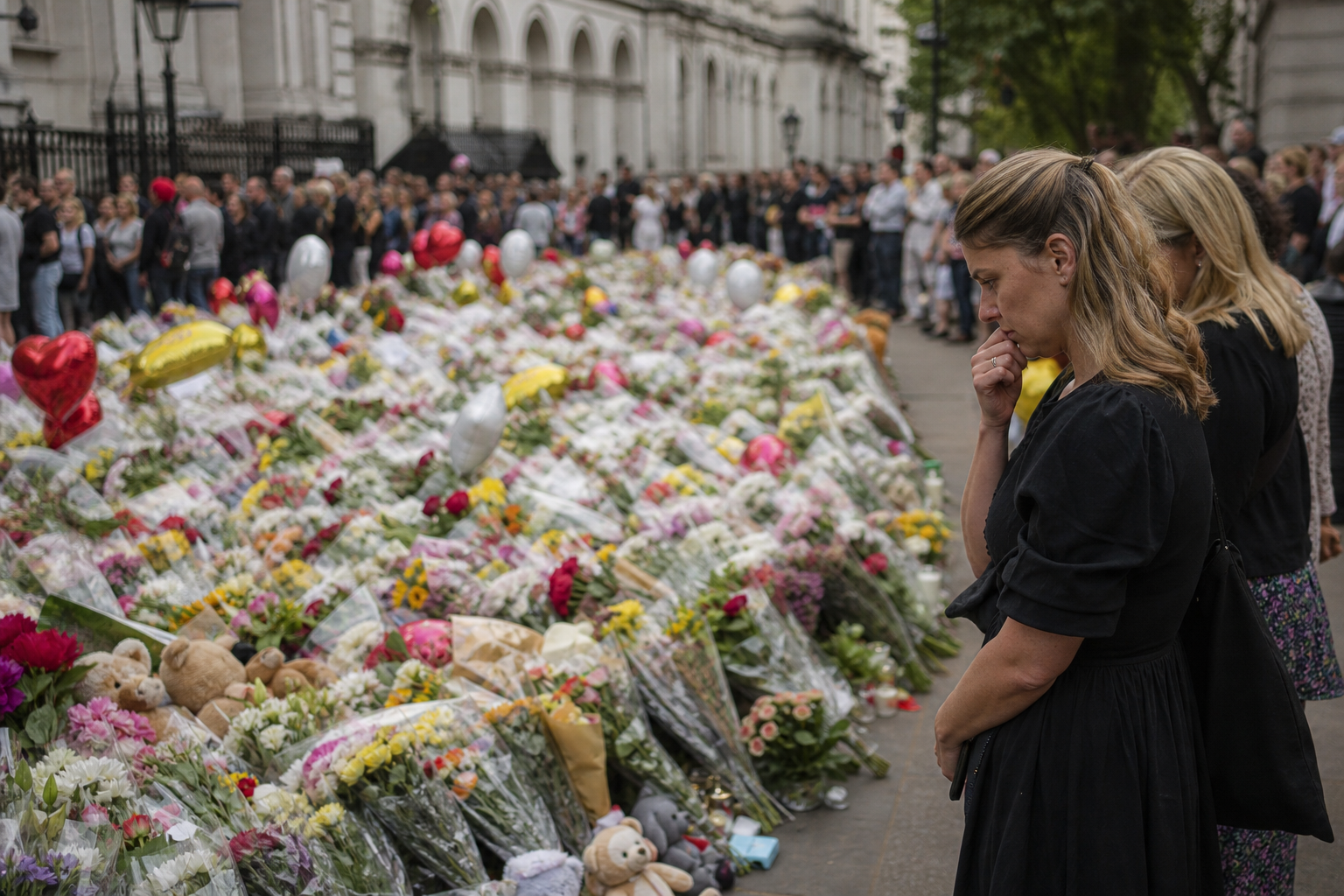
Public mourning matters for the same reason. Critics often hear that phrase as coercion, as if people are being ordered to grieve. They are not. To say a public figure's death warrants public mourning is not to say every citizen must participate. It means there should be legitimate, visible civic space for mourning, tribute, recollection, and reevaluation. Fans replay songs. Colleagues tell stories. Broadcasters run retrospectives. Newspapers publish obituaries that do more than list chart positions. That is public mourning at its best, voluntary but shared, emotional but informative.
And it has downstream value that cautious critics too often underrate. Major coverage of a public figure's death reactivates archives. It sends younger audiences back into catalogs they never explored. It creates a moment for criticism, not just commemoration, asking why one song, one voice, one persona took hold and endured. It links private feeling to public history. In Tyler's case, a reader who only vaguely knows "Total Eclipse of the Heart" may now encounter the larger shape of her career, her era, and the emotional scale of pop music that made her famous. Cultural inheritance does not perpetuate itself automatically. It needs moments of concentrated attention. Death, however painful, is one of those moments.
Opponents also point to the family's own method of announcement, a statement on Tyler's website, as a signal that this should remain low-key. That deserves respect, but it should not be overread. A family statement is first a factual source and a boundary marker. It is not a veto on significance. Families control what they wish to disclose; the public, media included, then responds to the undeniable reality that a person with a public legacy has died. Respecting the boundary means not inventing details, not trespassing, not harassing relatives. It does not mean pretending the event has no broader social meaning.
There is, finally, a deeper point about pace. Societies that stop marking the deaths of public figures with seriousness lose more than ceremony. They lose one of the few remaining mechanisms for synchronized attention across fragmented audiences. In an era of personalized feeds and collapsing consensus, the death of a widely recognized artist can still gather millions around a common reference point. That shared attention is valuable in itself. It reminds us that culture is not only consumed individually but held collectively. And because it is held collectively, its losses should be acknowledged collectively.
Significant media coverage, then, should mean several specific things. Fast confirmation of the basic facts. Clear repetition of what is known and what is not known. Biographical context that explains why the person mattered. Space for peers, fans, and critics to assess the legacy. Restraint about intimate details that are not the public's business. Less speculation, more record. Less ghoulishness, more memory.
Bonnie Tyler's death is sad news for her family first. It is also news for everyone whose life was touched, however briefly, by her music. A culture confident in its own continuity does not suppress that recognition, and it does not leave it entirely to algorithmic drift. It covers the death, marks the moment, and lets the public mourn. Not because fame erases privacy, and not because grief must be performed, but because some lives become part of the shared inheritance. When those lives end, significant media coverage and public mourning are not excess. They are how a living culture remembers itself and keeps moving.