
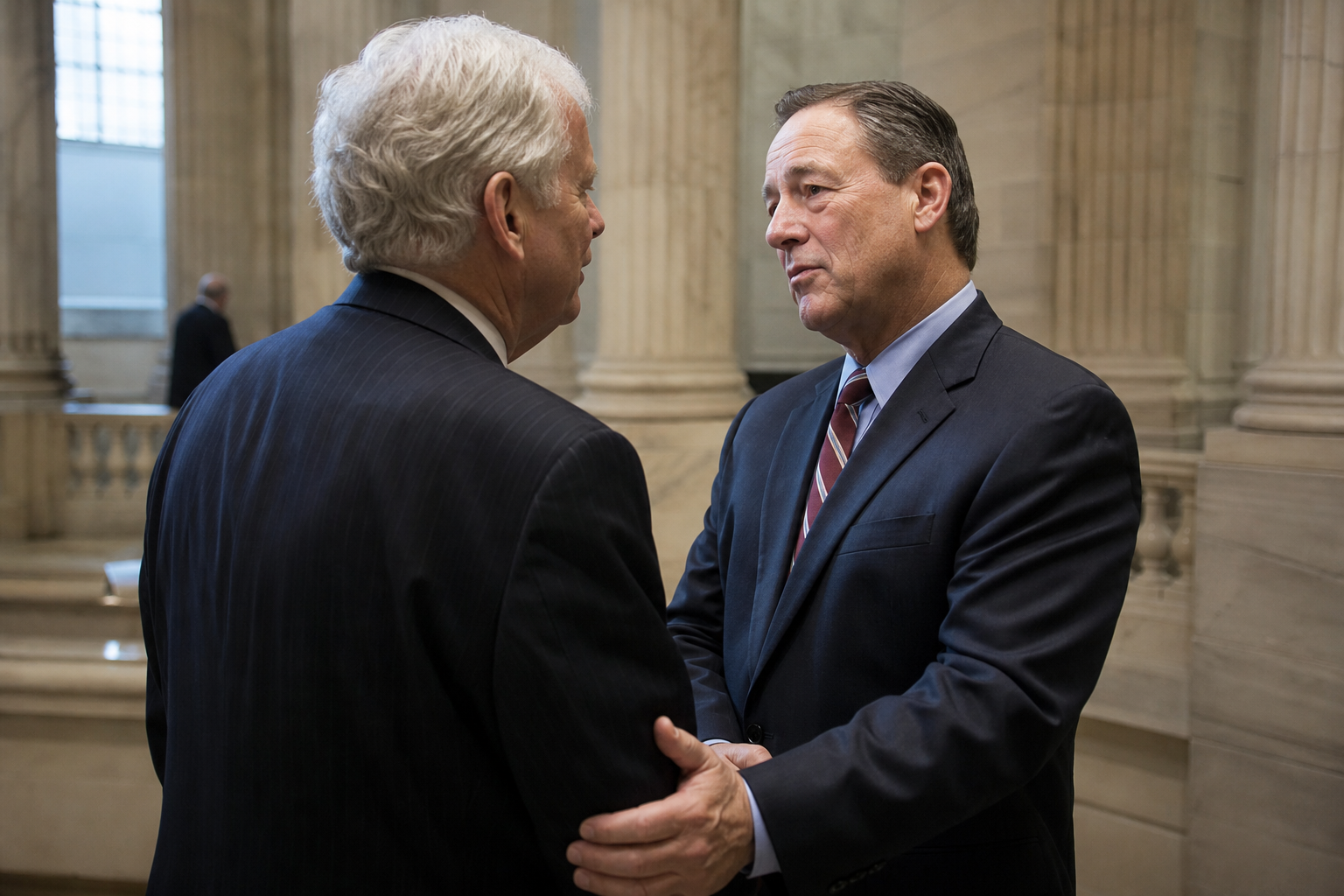
The argument over whether personal friendships between legislators should be publicly discussed after their congressional service ends sounds trivial until you ask a harder question: how does Congress really function when the cameras are off? Not in theory, not in civics textbooks, but in practice. Through committees, votes, staff work, donor pressure, party discipline, yes, but also through human relationships. If that is true, then talking openly, after the fact, about those relationships is not gossip. It is post-game film review for a public institution.
The resolution is modest on purpose. It does not ask for live surveillance of private dinners, compulsory disclosures during active service, or a rolling tabloid beat on Senate social life. It asks whether personal friendships between legislators should be publicly discussed after service ends. That timing matters. It strips out most of the strongest privacy and chilling-effect objections, while preserving much of the public value.
Take the fact pattern on offer. Jeff Flake served as a Republican senator from 2013 to 2019. Lindsey Graham served in Congress during the same period. They served together for six years. Flake characterized the relationship as a friendship, and also said there were moments of tension and disagreement between them. That is precisely the kind of detail worth discussing once the service is over, not because the public needs a sentimental biography, but because it helps explain how political cooperation and conflict coexist inside Congress.
The strongest argument against public discussion is pragmatic, not moralistic. It says the benefit is low and the cost is real. After service ends, direct policy influence is diminished. Media attention is finite. Public bandwidth is limited. Why spend it on former lawmakers describing who liked whom, especially when those accounts may be curated, self-serving, and incomplete? Worse, if legislators know their friendships will be publicly dissected later, they may invest less in the cross-party or cross-faction trust that keeps a legislature functional.
That is the best case for no, and it deserves a serious answer.
Start with the cost side. The feared chilling effect is possible, but likely overstated. Legislators form relationships because those relationships pay immediate dividends. They help move bills, gather intelligence, defuse conflict, and create bargaining channels that formal procedure cannot supply. A senator deciding whether to build trust with a colleague is not going to forgo those current advantages because, years later, someone might discuss the relationship in a memoir, an interview, a hearing retrospective, or a news profile. The present value of cooperation is high. The discounted future cost of retrospective discussion is low.
That does not mean the cost is zero. Some people will become more guarded. Some friendships will be flatter, more transactional. But compare the magnitude. The resolution concerns discussion after congressional service ends, not mandatory contemporaneous disclosure. That is a much cheaper form of transparency than real-time exposure. If you want institutional learning without crippling the institution, delayed discussion is exactly the efficient compromise.
Now the benefit side, which opponents consistently undervalue. They treat these conversations as historical archiving, as if anything not immediately actionable is a luxury good. That is too narrow. Democracies do not improve only through present-tense scandal response. They also improve through better models of how power actually operated. Post-service discussion gives citizens, reporters, historians, and future lawmakers a map of the informal channels that shaped formal outcomes.
This matters because official records are thin on mechanism. Roll-call votes tell you what happened, not always why. Press releases are marketing documents. Floor speeches are performance. Even investigative reporting during active service often catches only the visible edge of a relationship. Retrospective accounts, while imperfect and often self-interested, can still fill in the operational detail. Who could call whom in a crisis? Which disagreements stayed private so legislation could survive? Which friendships bridged factions, and which merely disguised alignment? Those are not idle curiosities. They are part of the production function of lawmaking.
Flake and Graham are a useful illustration precisely because the friendship was not presented as seamless. Flake said there were moments of tension and disagreement. Good. That makes the relationship analytically valuable. If a friendship survives disagreement, it may have served as a channel for candid negotiation rather than a vehicle for blind loyalty. If it broke down at key moments, that also tells us something about the limits of personal trust in partisan institutions. Either way, public discussion after service helps separate cartoon narratives from reality.
Another objection says these discussions will produce mostly polished legacy management. That is partly true. Former legislators are not neutral narrators. They shape stories to protect reputations, settle scores, and rationalize choices. But this is not a reason to avoid the discussion. It is a reason to have more of it, from more participants, with comparison and scrutiny. In markets, bad information is not solved by banning signals, but by increasing competition among them. A single memoir can distort. Multiple public accounts, cross-checked against timelines and voting records, can illuminate.
There is also a basic accountability point that opponents tend to wave away. Personal friendship in Congress is not disqualifying, and it should not be treated as suspect by default. But it is relevant context when assessing how coalitions formed, why tensions were contained, and how disagreements were managed. The public has already paid for the consequences of those relationships through taxes, legislation, appointments, and national outcomes. Asking for retrospective explanation after service is not voyeurism. It is a mild return on investment.
The cleanest way to think about this is as a cost-benefit problem. Real-time forced exposure of personal relationships would be expensive, distortive, and often counterproductive. Total silence after service leaves a black box around an important part of congressional behavior. Public discussion after service ends sits in the efficient middle. It protects active governance more than contemporaneous disclosure would, while still generating useful knowledge about the hidden wiring of Congress.
That is why the resolution should be embraced, but in the right spirit. Not as a mandate for salacious coverage. Not as an excuse to reduce politics to friendship gossip. And not as a claim that every personal bond explains every vote. The point is narrower and stronger: when legislators leave office, the public should be willing, even eager, to discuss the relationships that shaped their work. Serious discussion of personal friendships between former members of Congress is one of the cheapest transparency tools available.
If Congress runs partly on relationships, then understanding those relationships is not beside the point. It is part of the point. After service ends, the privacy cost falls, the governance risk falls, and the learning value remains. That is a trade worth taking.