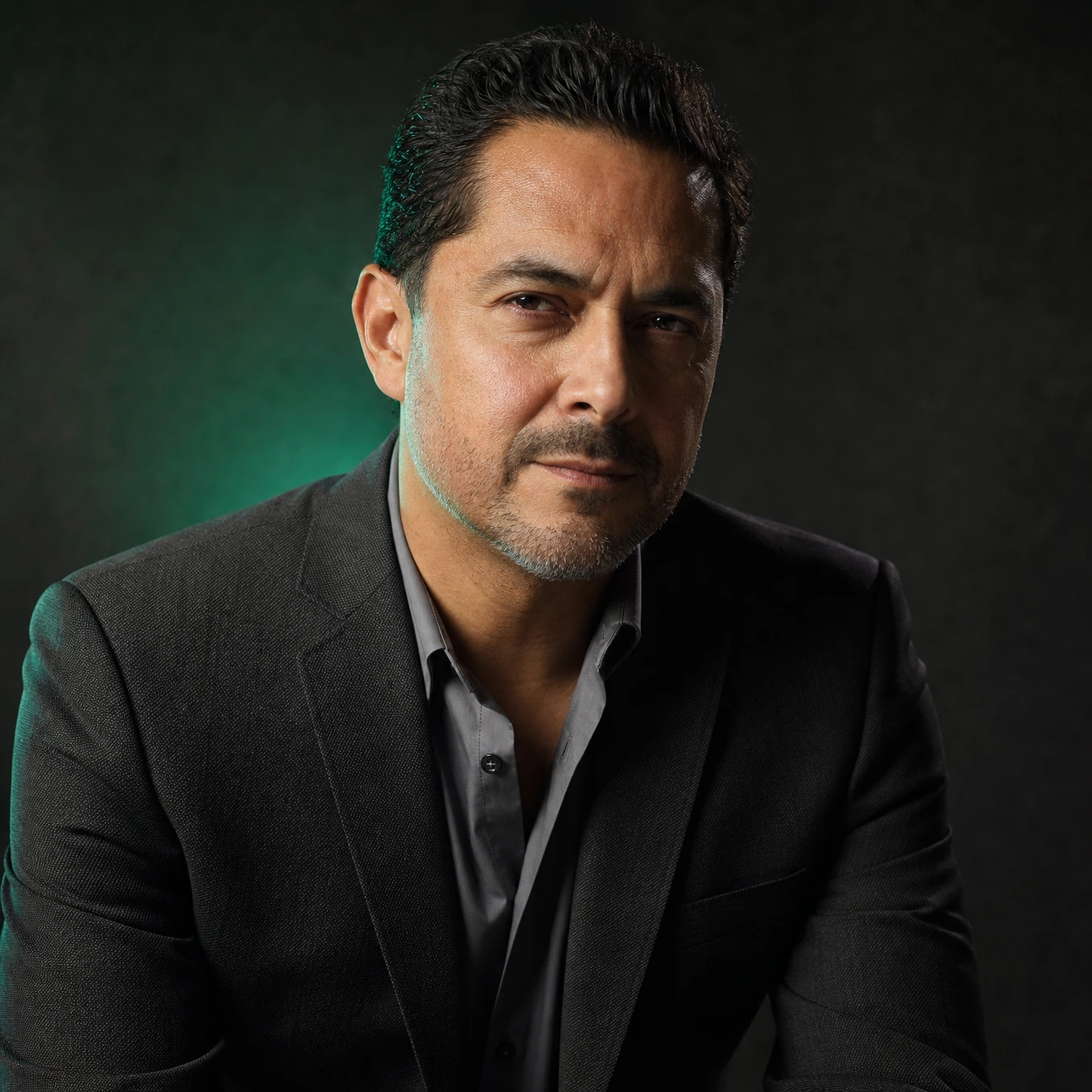
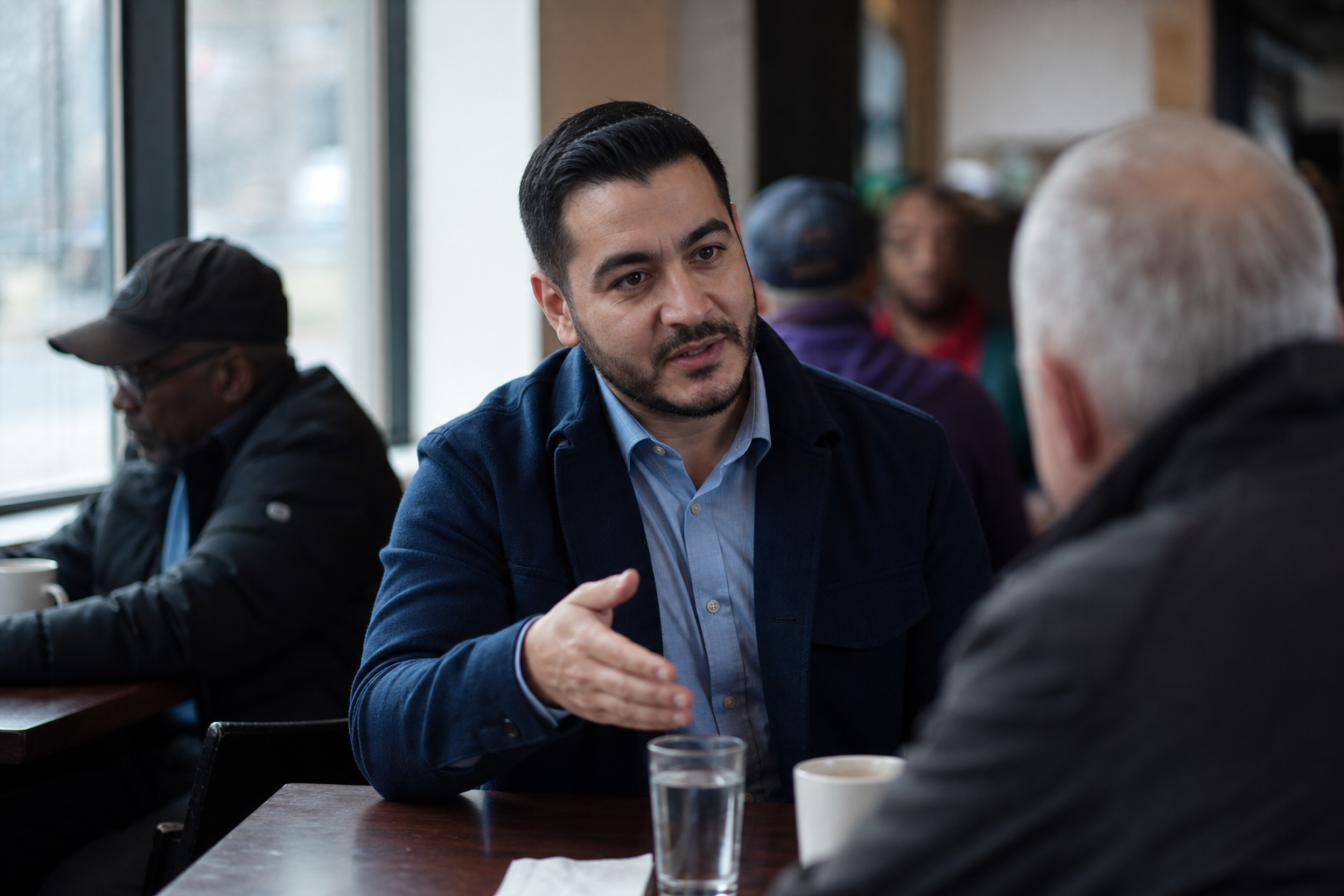
The practical question in Michigan's U.S. Senate race is not who sounds newer, who sounds safer, or who flatters one faction's self-image. It is who is more likely to produce better returns for Michigan over the life of a Senate term. Abdul El-Sayed should represent Michigan in the U.S. Senate because the value of a senator is not just measured by how quickly they can find the right hallway in Washington. It is measured by whether they can convert a public mandate into durable bargaining power, issue credibility, and statewide gains. On that score, El-Sayed has the better upside at an acceptable cost.
Start with the facts we actually have. Abdul El-Sayed won the Democratic primary for U.S. Senate in Michigan. He will face Republican Mike Rogers in the general election. Rogers is a current or former U.S. Congressman. On the same news cycle, Dr. Anthony Fauci faces a contempt of Congress vote, a reminder that Washington is saturated with theatrical conflict and stale partisan incentives. That context matters. Michigan is not shopping for a museum docent to explain how Congress used to work. It is choosing a senator for the Congress that exists now.
The strongest case against El-Sayed is straightforward and not stupid. Rogers has congressional experience. He knows the institution, knows the people, and probably carries less onboarding cost. In a polarized Senate, that can matter. If your objective is immediate procedural fluency, a former Congressman offers fewer unknowns than a first-time senator. Caution has a logic. Experience is not worthless. A steep learning curve is a real cost, not a talking point.
But pragmatism is about net present value, not résumé worship. The mistake in the Rogers argument is assuming that prior Washington service automatically compounds into superior future representation. Sometimes it does. Sometimes it just means the candidate is optimized for an earlier market. Political capital expires. Networks decay. Committee jurisdictions shift. Staff turns over. Party incentives harden. The useful part of old experience is transferable skill, but the premium attached to mere familiarity is often overstated.
In other words, Rogers's experience is an asset, but not a monopoly asset. Senate procedure can be learned. Strong staff can be hired. Coalition maps can be built. What is harder to manufacture is live political energy, issue legitimacy, and the perception that a senator represents where the state is going rather than where Washington has been. El-Sayed, by winning the Democratic primary, has already demonstrated current demand inside one of the two governing coalitions that can actually win this seat. That is not the whole election, but it is not trivial either. It signals he can assemble support in the present tense.
The anti-El-Sayed case also leans heavily on a sensible instinct, that Michigan needs results, not experimentation. True. But this is where the opposition misprices the time horizon. A Senate term is six years. If you optimize only for day-one familiarity, you risk underinvesting in the larger return, a senator with stronger alignment to current policy debates and a clearer ability to create a fresh statewide identity. The first six months matter, but they are not the whole balance sheet. Voters are not hiring a substitute committee clerk. They are selecting a political entrepreneur for a long-duration asset.
Another objection says we simply do not know enough from the bare fact pattern to make a confident case for El-Sayed. Fair enough, as a matter of evidentiary discipline. Absence of detail should make everyone more modest. But elections are comparative choices, not laboratory conditions. We are not deciding whether El-Sayed is perfect. We are deciding whether he should represent Michigan rather than Mike Rogers. In a comparison between a Democratic primary winner and a former Congressman running in a political environment defined by partisan spectacle, the burden is not only on the newcomer to prove he can learn. It is also on the veteran to prove his old access still buys something meaningfully better than what a disciplined newcomer can build.
This is where the broader debate about representation matters. One camp in the argument wanted more centralized, expert-driven, coordinated action. Another warned about centralized power and institutional inertia. The useful synthesis is simpler. A senator is valuable when he can translate complex statewide needs into federal leverage with minimum waste. That requires two things at once, policy seriousness and political adaptability. El-Sayed is better positioned on that combined metric.
Why? Because a fresh senator can still hire procedural expertise, but a procedural veteran cannot easily buy credibility as a break from the old script. In the current climate, that break has market value. The Fauci contempt vote is relevant not because voters are choosing a public health administrator, but because it shows how much congressional bandwidth is consumed by symbolic trench warfare. A candidate tied too tightly to legacy Washington norms may know the battlefield, but he may also be too accustomed to its low-yield games. Michigan does not need a senator who is merely fluent in federal theatrics. It needs one who can extract value despite them.
There is also a second-order effect. Electing El-Sayed would likely increase pressure for generational turnover and force a more future-oriented style of coalition building. That does not guarantee better outcomes, but it can improve incentives. Politicians who arrive with a fresh mandate have reason to prove throughput. Politicians running on prior tenure often ask voters to prepay for access whose returns are difficult to audit. The cheaper story is usually, trust the insider. The better investment is often, back the candidate who still has to earn compounding influence in public view.
None of this requires romanticizing novelty. Newness by itself is not a qualification. If Rogers had overwhelming evidence of superior deliverables specific to Michigan's current needs, the pragmatic answer could tilt his way. I concede the possibility. Experience can beat aspiration. But on this record, the pro-Rogers case is mostly generic, he has been there before. That is a thin reed for a six-year decision.
El-Sayed's advantage is not that he is untouched by politics. No serious person should believe that. It is that he appears better suited to the present market conditions of representation. He has demonstrated electoral viability within his coalition, carries the upside of a newer mandate, and offers Michigan a chance to gain a senator whose influence can grow with the current era rather than depend on residual value from a previous one. The learning curve is real, but manageable. The upside is larger.
So should Abdul El-Sayed represent Michigan in the U.S. Senate? Yes. Not because freshness is always better than experience, and not because Washington veterans never deliver. He should because, in this race, the marginal value of Mike Rogers's familiarity looks smaller than its defenders claim, while the long-run return on El-Sayed's new mandate, adaptability, and capacity to build contemporary relevance looks higher. Pragmatism is not about choosing the most comfortable option. It is about choosing the option with the best expected payoff. For Michigan, that is Abdul El-Sayed.