
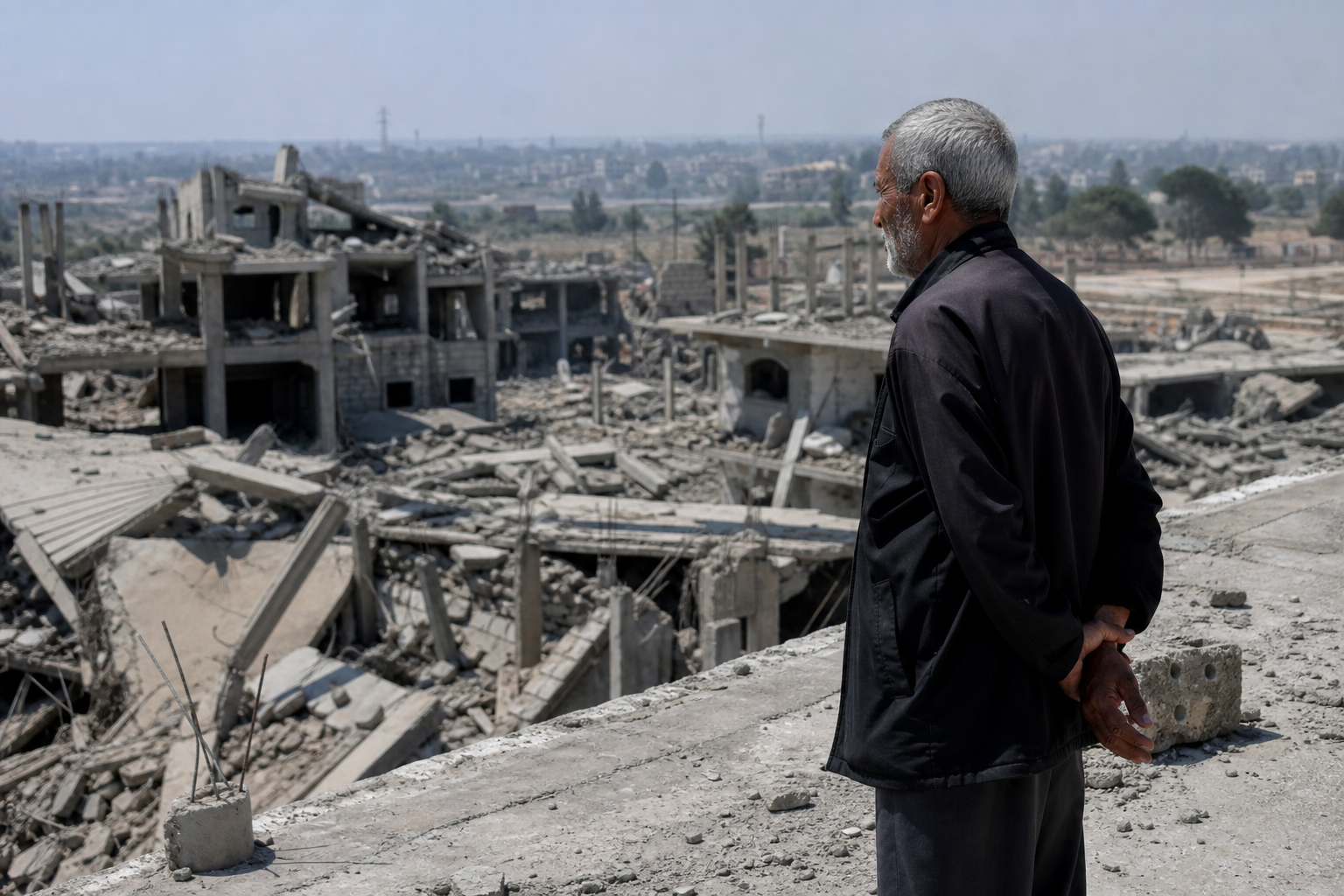
The clean version of this story is simple and marketable. Iran poses regional threats, the United States answers with military strikes, deterrence is restored, stability follows. That is the sales pitch. The facts we actually have point the other way. Centcom reported striking 90 Iranian targets. Explosions were reported in southern Iran. Iran's health ministry says 14 people have been killed since Tuesday. Tehran then launched strikes following the explosions. This is not a theory seminar about resolve. It is an ongoing military exchange, already underway, already drawing blood, already failing the basic test its advocates claim matters most, reducing the threat.
That is the first fraud to clear away. The resolution asks whether the United States should conduct military strikes against Iranian targets in response to regional threats. But the United States has already conducted them. So the operative question is not initiation, it is endorsement. Should Washington continue down a path that its own immediate results describe as retaliatory recursion, strike, response, strike again? If you want to argue yes, you need more than chest thumping about deterrence. You need evidence that this particular use of force produces more security than insecurity, and that the people ordering it are not merely buying a performance of control with other people's lives.
The strongest case for strikes is not stupid. It is worth taking seriously because it has the advantage of sounding adult. Iran and the militias it backs are not imaginary. Regional threats are real. Shipping lanes, bases, allies, commercial traffic, and ordinary civilians can all end up in the blast radius of Tehran's strategy. In that world, refusing to answer force with force can invite more attacks. States do sometimes have to impose costs. There is no moral prize for passivity if passivity simply transfers the initiative to the most aggressive actor in the room.
Fine. Conceded, narrowly. Inaction has costs. Iran is not a misunderstood nonprofit. But that concession does not rescue this resolution. It actually sharpens the indictment, because once you admit force can sometimes be necessary, you still have to ask whether these strikes, in this exchange, under these incentives, are likely to work. The answer from the fact pattern in front of us is no.
Ninety strikes is not restraint in any ordinary sense. It is already a substantial use of military power. And yet the result on the page is not de-escalation. It is retaliation. That does not automatically mean every strike is futile, but it does kill the lazy argument that visible punishment naturally restores order. If overwhelming action were self-justifying, we would not be looking at the latest round in an ongoing exchange. We would be looking at a pause. Instead, we have proof of concept for the opposite, each side converts the other's move into domestic justification for the next one.
This is where the deterrence camp usually changes the pitch without admitting it. First they say strikes are necessary to stop escalation. When strikes produce escalation, they say the problem is that the strikes were not decisive enough, coordinated enough, or severe enough. Notice the elegance of this racket. Success proves them right, and failure also proves them right, because failure can always be reclassified as insufficient force. It is a closed sales loop, and it has buried a lot of countries.
The United States has run this script for decades across the region. Limited strikes are sold as controlled, targeted, surgical. Then they become signaling. Then signaling becomes credibility. Then credibility becomes a standing commitment to answer every provocation because not answering would supposedly invite collapse. Somewhere along the way, the original policy goal disappears and the new goal becomes preserving the image that America can choreograph outcomes through superior violence. It cannot. Not reliably, not cheaply, and not in a region where every external strike also serves as a recruitment poster for every faction that profits from grievance.
And yes, profits matter. Not because every event is fake, but because every event is monetized. Defense contractors do not need a total war to win. They need a permanent zone of manageable instability, enough danger to justify replenishment, enough ambiguity to avoid accountability. Politicians do not need victory either. They need to look alert, resolute, and patriotic on camera. The national security bureaucracy does not get promoted for saying, with disciplined honesty, that some threat ecosystems cannot be bombed into political compliance. It gets promoted for activity. For options. For action. For keeping the machine moving.
Who pays for this arrangement is more obvious than who benefits. Iranians killed in strikes. Regional civilians living under the logic of reprisal. U.S. service members exposed to the next answer from Tehran or its partners. Commercial routes made more precarious, not less. American taxpayers funding another cycle whose strategic metrics are always conveniently deferred to later. The people cashing in are insulated. The people bleeding are not.
Supporters of continued military strikes will object that this is too cynical, that it treats genuine threats as mere pretexts. No. The threat is real. The cynicism is directed at the proposed remedy and at the institutions selling it. Real danger often generates the worst policy, because fear suppresses standards. Once the words regional threats are invoked, politicians get to stop proving efficacy. They just repeat necessity. But necessity without a credible path to improvement is how states drift into expensive habits they no longer know how to quit.
The practical rebuttal from hawks is that stopping strikes means capitulating. That framing is dishonest. The alternative to this exact pattern of military action is not surrender. It is refusing the automatic belief that every threat has to be answered on the timetable, terrain, and symbolism preferred by the people who benefit from kinetic response. It means discriminating between disrupting an imminent attack and indulging an open ended punishment cycle. It means demanding strategy instead of ritual.
And ritual is what this increasingly looks like. A strike package goes out, official statements invoke security, retaliation follows, each capital tells its public that resolve has been demonstrated, and the region becomes a little more combustible. The policy class then announces that the new instability proves the need for sustained pressure. This is not grand strategy. It is a subscription model.
There is also a more basic issue that gets obscured by abstractions like posture and credibility. Military strikes do not happen in theory. They happen in places where actual people live. Fourteen reported dead since Tuesday is not a footnote to a deterrence white paper. It is the human invoice for a policy whose benefits remain conspicuously unverified. If advocates want to claim those deaths purchase security, they should have to show more than faith. They should have to show outcomes. The immediate outcome here was more strikes.
So no, the United States should not endorse further military strikes against Iranian targets as the answer to regional threats when the evidence in front of us shows an escalatory loop, not a stabilizing one. That is not pacifism. It is quality control. If a product fails after 90 uses, the answer is not blind brand loyalty. The answer is to stop buying the pitch.
Washington's deepest addiction is not war itself. It is the performance of mastery, the insistence that every complex regional crisis can be managed by calibrated explosions and stern briefings. Iran has its own version of the same fraud, cynical brinkmanship marketed as resistance. Both governments can sell escalation to domestic audiences. The dead cannot invoice either one.
The resolution asks what the United States should do. The honest answer begins with what it should stop pretending, that another round of military strikes against Iran is a strategy rather than a habit, and that habit is enriching the usual people while making the region more dangerous for everyone else.