
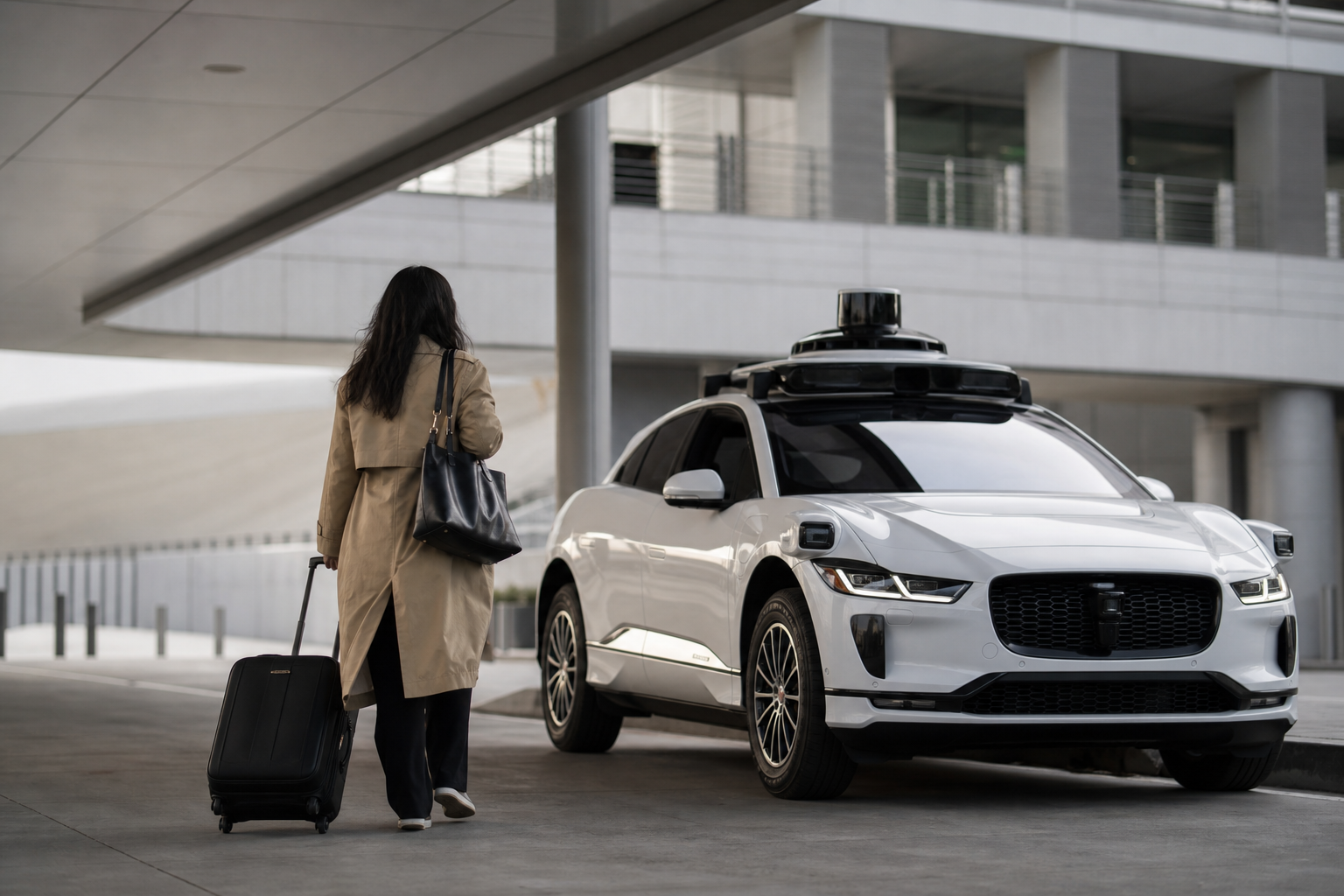
The strategic question facing Uber is not whether autonomous vehicles matter. They do. The question is whether Uber should try to become an autonomous vehicle developer itself, or whether it should invest heavily in robotaxi partnerships and use its platform to aggregate supply from companies that already build the technology. On that question, the answer is yes: Uber should partner heavily rather than build in-house.
That is not a slogan about “sticking to core competencies” and leaving it there. It is a judgment about industrial organization, capital allocation, timing, and bargaining power in a market that will likely consolidate around a few technically capable autonomous driving stacks and a few large-scale demand aggregators. Uber does not manufacture vehicles. It is not starting from a position of vertical integration. It is starting from a position of platform coordination, dispatch, pricing, demand forecasting, and city-by-city service operations. In autonomous taxis, those are not trivial assets. They are system assets.
The facts matter. Uber is allocating $500 million toward securing robotaxi partnerships. Waymo and Tesla are identified as competitors in the autonomous taxi market. Waymo already operates autonomous taxi services that could potentially bypass Uber’s platform. Those points are enough to frame the stakes. Uber is trying to avoid being disintermediated by firms that control the driving technology. But avoiding disintermediation does not require duplicating the entire autonomous vehicle stack in-house. In many cases, it requires the opposite: building a broad, managed, multi-partner marketplace before any one autonomous vehicle provider can dominate distribution.
The strongest objection to partnerships is serious and deserves direct engagement. If Waymo can bypass Uber today, why would Uber deepen dependence on external suppliers tomorrow? Why hand strategic leverage to companies that may eventually route around the platform? This is the best argument for in-house development, and it is not foolish. History contains many examples of intermediaries losing power when upstream suppliers integrated forward. If autonomous vehicles become the decisive layer of value creation, Uber could find itself paying tolls to the companies that own the “brains” of the car.
But this objection confuses two different kinds of control. One is technological sovereignty, owning the autonomous driving system itself. The other is market orchestration, controlling the customer funnel, trip volume, geographic coverage, and operating interface through which autonomous supply reaches riders. For a company that does not manufacture vehicles, and that faces rivals with multiyear leads in autonomy, the second form of control is more attainable and more economically rational than the first.
An in-house AV program would not simply be expensive. It would be duplicative. Waymo and Tesla are not hypothetical entrants. They are named competitors already in the field. The relevant policy question is whether Uber should spend heavily to recreate capabilities that specialized firms have spent years building, while also managing safety, deployment, fleet partnerships, regulation, and consumer operations. That is not strategic independence. That is an invitation to sprawl.
At the level of the transportation system, duplication is not efficiency. It is fragmented investment in an area with high fixed costs, long development cycles, and steep safety requirements. The social and commercial objective should be to accelerate reliable robotaxi deployment, not to force every platform company to become an autonomous vehicle laboratory. When firms specialize, aggregate capacity grows faster. Vehicle and autonomy developers focus on the stack. Uber focuses on routing demand, utilization, service design, and local operations. That division of labor is not weakness. It is scale discipline.
The alternative, in-house development, also carries a governance problem that its advocates tend to understate. If Uber tries to build its own AV technology from scratch or near scratch, management attention is pulled into a long-horizon technical race whose timelines are uncertain and whose capital requirements can metastasize. In the meantime, competitors continue to deploy, learn, improve, and shape public expectations. The result could be the worst of both worlds: Uber arrives late to robotaxis and arrives burdened by sunk costs.
Partnerships, by contrast, preserve optionality while delivering immediate strategic value. A $500 million commitment is not small. It signals that Uber understands robotaxi access must be secured at scale, not tested timidly on the margins. Heavy investment in partnerships can create a portfolio approach, one that reduces dependence on any single autonomous vehicle company. That matters because the proper response to supplier power is not necessarily vertical integration. Often it is structured countervailing power: multiple partnerships, shared standards, negotiated economics, and a platform valuable enough that even major autonomous vehicle operators prefer participation to exclusion.
This is where the anti-partnership case is weakest. It treats any dependence as fatal and any ownership as liberating. In practice, ownership can be ruinously costly when acquired in the wrong domain and at the wrong technological moment. Uber does not need to own every layer to remain important. It needs to make itself indispensable to riders, cities, and fleet operators. If consumers can compare wait times, prices, service areas, and vehicle options in one trusted application, Uber retains leverage. If robotaxi developers need access to Uber’s demand density and trip distribution, Uber retains leverage. Market power is not only embedded in code running on a vehicle. It is also embedded in the network that allocates scarce mobility supply efficiently across millions of trips.
There is another point that matters for the long term. Autonomous transportation will not be won solely by engineering excellence. It will be won by deployment. Deployment depends on coverage, utilization, regulatory adaptation, service reliability, and the ability to integrate heterogeneous supply across cities and operating conditions. Those are coordination problems. Uber is, fundamentally, a coordination institution. It should act like one.
None of this means the risks disappear. Waymo can still bypass Uber. Tesla can still seek direct consumer relationships. Partnership contracts can sour. Margins can compress. It is entirely plausible that Uber should retain enough internal technical capacity to evaluate partners, integrate systems intelligently, and avoid becoming a passive reseller. But that is not the same as making in-house autonomous vehicle development the center of gravity. The resolution is about where Uber should invest heavily. The answer remains partnerships.
The larger reason is straightforward. In a sector defined by high fixed costs and strong network effects, the winning strategy is not for every participant to rebuild the full stack. It is to construct a coordinated mobility system in which each actor performs the function it can scale best. Uber’s comparative advantage is not fabricating vehicles or inventing a rival autonomous driving stack to Waymo or Tesla. Its advantage is organizing demand, matching supply, standardizing the consumer experience, and turning fragmented transport capacity into a coherent service.
That is why the partnership strategy is more than financial prudence. It is the disciplined architecture of an industry. Uber should invest heavily in robotaxi partnerships because autonomous taxis will be built by a small number of specialized technology providers, but they will be distributed, utilized, and normalized through platforms that can coordinate mobility at scale. Uber should compete to be that platform, not pretend it is also the best candidate to be the lab, the manufacturer, and the fleet intelligence provider all at once.
In autonomous transport, control does matter. But the form of control that matters most for Uber is not solitary ownership of the machine. It is structured command over the network through which the machine becomes public service. That is the difference between chasing technology and governing a market.