
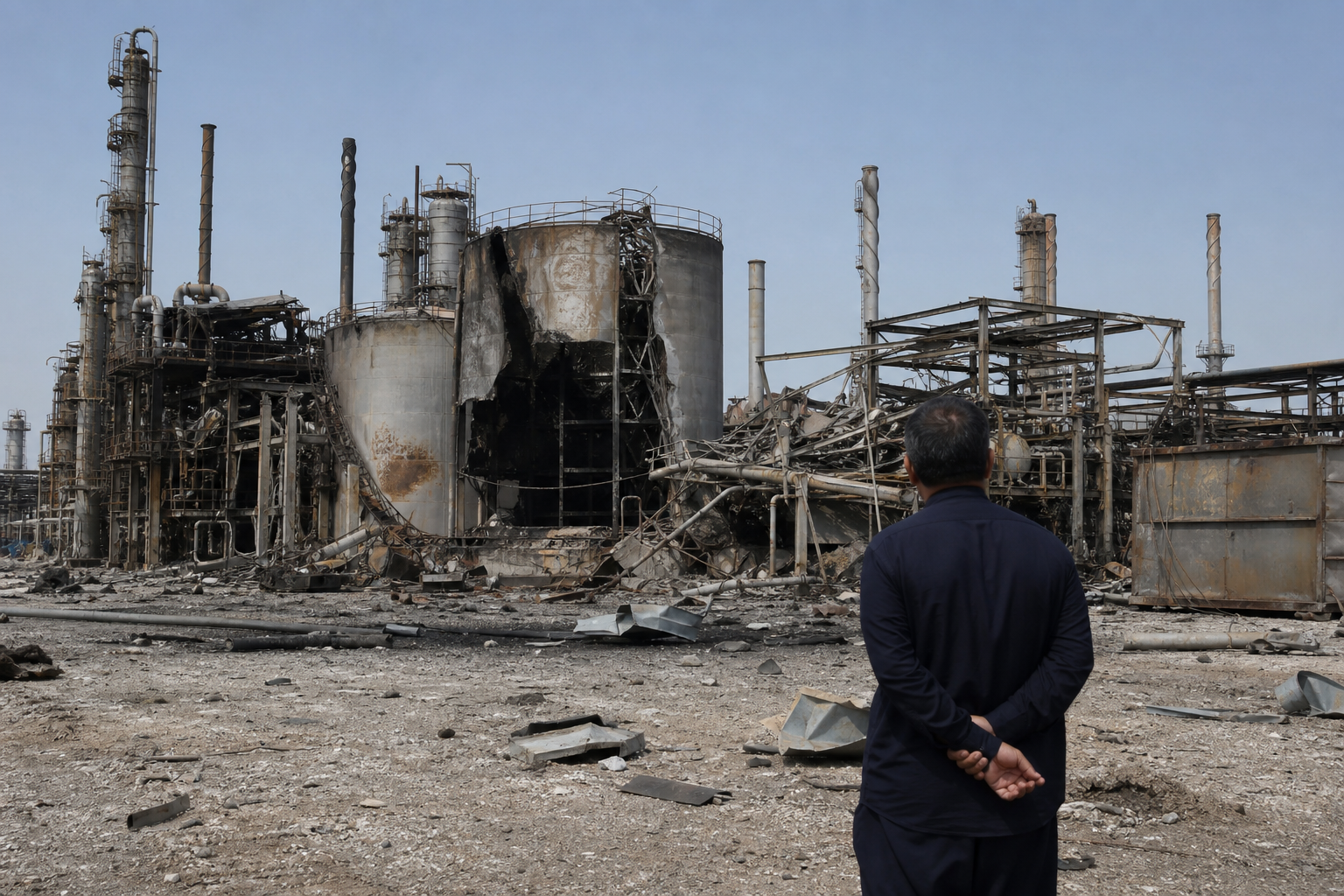
The question is not whether the United States needs leverage with Iran. It does. The question is whether publicly threatening military strikes on Iranian infrastructure, specifically bridges and power plants, is a sound way to create that leverage. It is not. At this stage of a crisis, with four consecutive days of exchanged fire and a renewed US blockade of Iranian ports, such threats are less a tool of disciplined statecraft than an accelerant poured onto a live fire.
That distinction matters. American history, and the longer history of coercive diplomacy, does not teach that all threats are useless. It teaches something narrower and more demanding: threats can sometimes work when they are credible, limited, integrated into a diplomatic channel, and aimed at a clear political settlement. They usually fail when they are public, personal, maximalist, and directed at targets whose destruction would humiliate the other side and widen the war. Trump’s aired statements about bombing bridges and power plants fall in the second category.
The best argument for the resolution deserves to be stated fairly. Iran has not come peacefully back to talks. The United States and Iran are already exchanging fire. Port blockades are already in place. In that setting, advocates of a harder line say the status quo is itself escalating, and that diplomacy without pressure is only a slogan. They argue that a credible threat of force can alter Tehran’s cost-benefit calculation, making negotiations preferable to continued confrontation. There is historical support for the basic proposition that leverage matters. No serious student of statecraft should deny it.
But leverage is not the same thing as public menace, and coercive diplomacy is not a synonym for naming civilian infrastructure on television. The strongest pro-threat case often reaches for analogies like the Cuban Missile Crisis, where pressure and the possibility of force helped produce a negotiated outcome. Yet that analogy, properly understood, cuts against this resolution. The Kennedy administration paired pressure with message discipline, back-channel communication, a defined objective, and painstaking control over escalation. It did not publicly freelance threats to destroy electric grids or bridges in order to force talks. It created room for the adversary to retreat without national humiliation.
That last point is not sentimental. It is strategic. States under threat do not simply calculate costs like firms deciding whether to refinance debt. They answer to domestic constituencies, military institutions, ideological factions, and the politics of pride. Publicly threatening Iranian infrastructure invites the very outcome its defenders claim to fear least: hardening of position in Tehran, empowerment of hawks, and a narrowing of diplomatic space. Once a foreign leader has publicly said, in effect, negotiate or we will bomb your power plants, any Iranian official who enters talks risks appearing to submit under duress. The incentive shifts from compromise to defiance.
The nature of the target set makes the problem worse. Bridges and power plants are not obscure military nodes. They are foundational systems of civilian life and national endurance. Threatening them is different from signaling readiness to strike a militia launcher, a naval asset, or a missile site. It tells the adversary, and the world, that Washington is willing to impose broad social costs to compel talks. That is a dangerous message legally, morally, and strategically. It increases the chance of retaliation across the region, invites reciprocal escalation against infrastructure and shipping, and weakens the legitimacy of the very diplomatic process it claims to seek.
History is full of examples in which states imagined that a sharp coercive shock would produce compliance, only to discover that infrastructure threats and civilian pain often produce nationalist consolidation instead. Air power theorists promised this repeatedly in the twentieth century. The record is mixed at best, and often grim. Societies under external threat tend to centralize, endure, and radicalize before they capitulate. Even when coercion eventually contributes to a settlement, it usually does so after costs far beyond what its early advocates predicted.
There is also a constitutional and institutional objection that should not be waved away as procedural fussiness. Public threats of major military action, especially against infrastructure in a state with which the United States is already exchanging fire, are not merely rhetorical. They are commitments that can corner the presidency, military planners, allies, and Congress alike. Once made publicly, they generate audience costs at home and abroad. If carried out, they may trigger broader war. If not carried out, they may expose bluff. That is one reason enduring states have built processes around the use of force: to prevent improvisation from becoming obligation.
The opposing side is right about one thing. A “pure diplomacy” posture, detached from power, is often fantasy. But the answer is not this policy. The answer is disciplined coercive statecraft rather than theatrical coercion. If Washington wants negotiations with Iran, it should align military signaling with private channels, clear objectives, allied coordination, and a credible off-ramp. It should define what talks are for, what sanctions or blockades could be adjusted, what military actions are defensive rather than punitive, and what limits govern escalation on both sides. In other words, it should do the hard, unglamorous work of diplomacy backed by force, not substitute threats for strategy.
This is where the historical record is clearest. Durable institutions and successful crisis management alike depend on calibrated power, not impulsive spectacle. The public threat to bomb bridges and power plants does not clarify American aims. It muddies them. Is the goal renewed nuclear talks, de-escalation after four days of exchanges, restoration of deterrence, regime humiliation, or preparation for a wider campaign? A policy that cannot answer that question precisely is not strong because it sounds tough. It is weak because it invites events to answer on its behalf.
One can concede, as prudence requires, that Iran may negotiate under severe pressure. States sometimes do. But negotiation extracted by openly threatening civilian infrastructure is likely to be brittle, resentful, and crisis-prone. More important, it raises the odds that talks never begin because escalation overtakes diplomacy first. That is the central trade-off the advocates of this resolution underrate. They see pressure and assume bargaining. History suggests a less comfortable sequence is often more likely: public threat, domestic entrenchment, reciprocal action, alliance strain, then diplomacy from a worse battlefield and a narrower set of choices.
The United States should not threaten military strikes on Iranian infrastructure to compel diplomatic negotiations. It should preserve leverage, certainly. It should deter attacks, protect shipping, and communicate resolve. But statesmanship is not measured by the vividness of a threat. It is measured by whether pressure is arranged to produce a settlement rather than a spiral. In this case, publicly menacing bridges and power plants is not the forgotten hard truth. It is the old mistake, dressed up as realism, that history keeps billing at compound interest.