The resolution is not whether rapid emotional transitions can work. Of course they can. The real question is whether television series should depict them within single episodes as a general practice. On that question, the practical answer is yes, with discipline. Not because speed is inherently superior, and not because all grief should turn into action by the next scene, but because television is a constrained medium competing in an expensive, crowded market where every minute of screen time has to earn its keep.
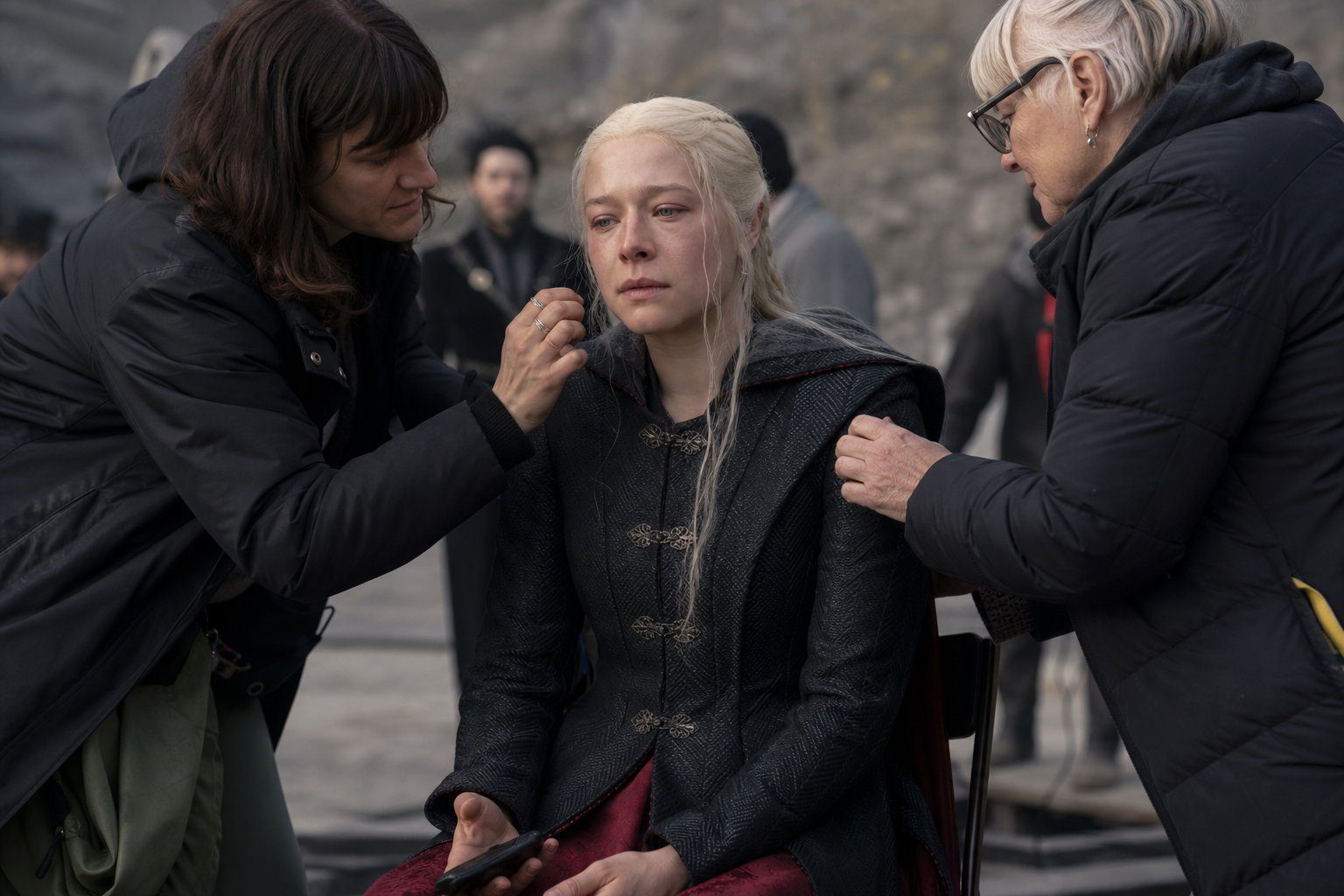
House of the Dragon Season 3, Episode 2 gives the current news hook. Rhaenyra is presented in a grief-stricken state, then later appears sword in hand in the Red Keep. Some viewers see emotional whiplash. Others see resilience, resolve, or the brutal compression of crisis. That disagreement is useful, because it exposes the actual trade-off. A television episode has finite runtime, finite budget, finite audience patience, and a near-infinite amount of narrative work to do. Character interiority, plot advancement, world-building, spectacle, supporting cast rotation, cliffhangers, and thematic payoff all compete for the same scarce resource, minutes.
Once you frame it that way, the case for rapid emotional transitions becomes stronger. Fast transitions increase narrative throughput. They let a series cover more consequential ground per episode. They convert feeling into action sooner, which is usually where television creates its clearest value. A grieving queen staring at a wall for three episodes may be realistic in one sense, but it is also expensive dead air unless the stillness itself produces tension, revelation, or strategic consequence. In most cases, audiences do not merely want to know what a character feels. They want to know what the character does next because of it.
That was the best point developed across the debate. The advantage of moving Rhaenyra from grief to a sword-wielding scene is not only pace. It is downstream productivity. Once the emotional transition happens, the show can spend time on the consequences: who fears her, who rallies to her, what new risks emerge in the Red Keep, what the shift says about succession, war, and authority. The transition is not the product. It is the unlock.
The strongest opposition argument deserves serious treatment. Critics of rapid emotional transitions are right about the risk. If writers use speed as a shortcut, characters stop feeling like people and start feeling like delivery systems for plot beats. Emotional states become interchangeable. Grief, rage, determination, numbness, all become costumes put on and discarded to reach the next set piece. Viewers notice. When a shift feels unearned, it does not merely produce artistic disappointment. It devalues future scenes. The audience stops investing deeply because they learn that any feeling can be overwritten by the next act break.
That matters. Long-term audience retention is not built on stimulation alone. It is built on trust. Viewers need to believe that a television series has rules, that its characters have an internal logic, and that pain carries forward rather than evaporating on cue. The anti-rapid side was also correct that market metrics can be deceptive. Short-term buzz, clips, and social discourse can reward sensational pacing even while overall narrative credibility deteriorates. Studios can easily mistake a spike for durable loyalty.
But those objections do not defeat the resolution. They refine it. The lesson is not that television series should avoid rapid emotional transitions. The lesson is that they should use them when the transition is legible, motivated, and productive. In other words, speed is good when it is earned cheaply and pays off quickly.
That standard is more realistic than the opposing demand for broadly slower emotional unfolding. Why? Because television is not therapy and it is not a diary. It is scheduled drama under cost pressure. Episodes have to land. Seasons have to move. Cast availability, budget allocation, episode count, and audience drop-off are not philosophical abstractions. They are operating constraints. A storytelling rule that routinely requires more time, more scenes, more dialogue, and more repetition to establish every emotional turn is simply a more expensive rule. It can be worth paying for in prestige moments, but not as the baseline grammar of the medium.
There is also a false assumption buried in some critiques, the idea that emotional realism always looks gradual on screen. It often does not. Human beings under pressure can swing quickly from despair to violent focus, from shock to administrative competence, from mourning to mission. Extreme circumstances compress response cycles. A ruler in danger does not get the luxury of narratively pure processing time. In that sense, Rhaenyra moving from grief-stricken to armed in the Red Keep is not obviously implausible. It may be one of the more plausible things available to a person whose losses immediately intensify her political and physical peril.
The better question for viewers and critics is not, did the emotion change quickly, but did the episode preserve continuity across the change? Did grief remain visible inside the action? Did the sword feel like an expression of the pain, or a replacement for it? Rapid transitions succeed when the first emotion is not erased by the second. The character should not become a new person. The character should become the same person under a new imperative.
This is where the anti-resolution case overreached. It treated rapid transitions as if they inherently sacrifice depth. They do not. They sacrifice one kind of depth, prolonged observation, in order to purchase another, consequential behavior. That can be a smart trade. Television is action-biased for good reason. Choices under pressure reveal character efficiently. If Rhaenyra's grief leads her to pick up a sword, the audience may learn more from that act than from another ten minutes of lamentation.
So the practical editorial position is straightforward. Television series should depict rapid character emotional transitions within single episodes, especially when the story operates in high-stakes environments like House of the Dragon, where power, danger, and momentum are inseparable. But writers should treat these transitions as high-yield instruments, not freebies. The move has to cash out in altered decisions, changed relationships, or escalated conflict. Otherwise it is just narrative leverage without a load.
That framework beats both extremes. It beats the slow-arc purists, who underestimate the opportunity cost of dragging every emotional beat across multiple episodes. And it beats the acceleration addicts, who confuse pace with value and think every scene should sprint. The winning approach is selective compression. Spend slowly where emotional accumulation compounds return. Spend quickly where action reveals the same truth at lower cost.
If television series want stronger episodes, better retention, and more story per dollar, they should not apologize for rapid emotional transitions. They should learn how to price them correctly. Rhaenyra's passage from grief to steel is not a betrayal of drama by default. It is a bet. When the setup is clear and the payoff is real, it is a very good one.