
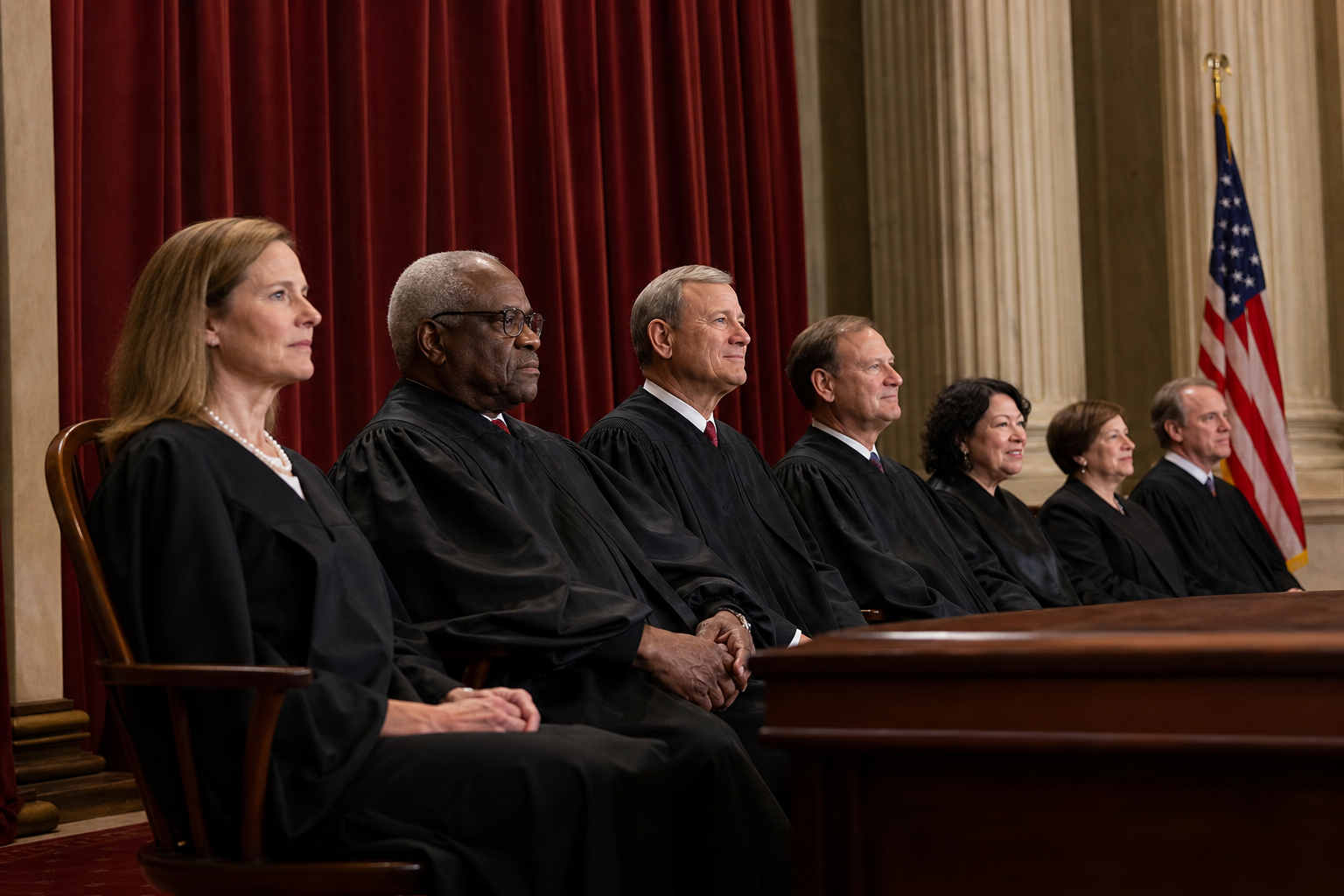
The question is not whether Supreme Court justices should be held to a high ethical standard. Of course they should. The question is whether they should be prohibited from publishing commercial books while serving on the bench. On the facts we actually have, the answer is no.
Two Supreme Court justices have authored or are authoring children's books. Justices receive compensation from book publishing deals. They remain on the Court while doing so, and those books generate revenue through sales. That is enough to trigger concern about optics, influence, and the commercialization of public office. It is not enough to justify an outright ban.
This debate turns on a simple policy test. What problem are we solving, how large is it, and is a ban the cheapest effective way to solve it? If you cannot answer those three questions clearly, you should be very reluctant to prohibit lawful conduct.
The case for a prohibition is not frivolous. In fact, the strongest arguments for it are serious and deserve engagement. The Supreme Court runs on legitimacy as much as force. Justices are not ordinary public employees. They hold life tenure, face no election, and exercise immense power. When a justice signs a commercial publishing deal, especially one that pays because the author is a famous justice and not merely because the manuscript is excellent, there is an obvious appearance problem. The office creates the market value. Personal revenue is being generated, at least in part, by public position. Critics are right to say that this can blur the line between public service and private gain.
They are also right about incentives. Even if a children's book has nothing to do with pending litigation, compensation creates a financial relationship with a commercial actor. A justice with a book to sell may do publicity, cultivate a broader audience, and become more of a brand. The Court does not need more celebrity logic around it. If your north star is preserving public trust, a clean rule has appeal.
That is the best version of the pro-ban case. It is still not enough.
First, the evidence gap matters. The fact sheet does not show a single ruling altered by a book deal, a single case compromised, or a single judicial duty neglected because a justice wrote a book. The absence of proof is not proof of safety, but policy cannot treat every hypothetical risk as grounds for prohibition. If that were the standard, there would be no limiting principle. Every speech, teaching gig, memoir contract, law review article, or public appearance could be attacked as a possible source of status monetization.
Second, the proposed remedy is badly calibrated to the alleged harm. The resolution does not ask whether justices should disclose book income, limit promotional activity, avoid publishers with interests before the Court, or place outside earnings under tighter review. It asks for a prohibition on publishing commercial books while serving. That is a blunt instrument. It lumps together children's books, civic education books, memoirs, and potentially other nonlegal works with very different risk profiles. It assumes all monetized authorship is equally corrosive. That is not serious institutional design.
Third, bans carry costs, even when the costs are easy to dismiss rhetorically. A justice's writing can have public value. Not every book is profound, and not every children's book is a constitutional seminar, but public-facing writing can broaden civic literacy and humanize otherwise remote institutions. More important, a ban should not be free in our analysis simply because the targets are elite officeholders. If the concern is misuse of office, then regulate the misuse. Do not ban the activity wholesale unless the narrower tools are inadequate.
This is where the opposition's framework overreaches. The repeated fallback is the appearance of impropriety. That phrase does real work in ethics, and appropriately so. But it cannot become a magic solvent that dissolves ordinary standards of proof and proportionality. Appearance is not irrelevant, but it is not self-justifying. Public trust is important precisely because it is scarce. That means we should spend credibility on real risk reduction, not symbolic restriction that sounds tough and delivers little.
In practical terms, what actually creates the danger here? It is not the mere existence of a book. It is the combination of money, promotion, and access. If a justice quietly authors a children's book, discloses the compensation, refrains from splashy marketing built around pending Court prominence, and avoids contractual arrangements that create entanglements, the residual risk is modest. If a justice is doing aggressive media tours, leveraging chambers prestige, or taking unusually large advances from interested parties, the risk rises fast. That suggests differentiated rules, not a categorical ban.
A pragmatic ethics regime would therefore do four things. Require prompt, detailed disclosure of advances, royalties, and publisher relationships. Restrict promotional activity that trades directly on judicial office. Mandate recusal review if a publisher or materially related party has business before the Court. Cap or tightly review outside earned income from commercial media while on the bench. Those measures hit the actual pressure points at lower cost than prohibition.
Would some critics say even that is too lenient? Certainly. There is a clean simplicity to saying Supreme Court justices should not publish books for profit while serving. Simplicity, however, is not the same as effectiveness. In governance, bright lines are useful when the underlying risk is high, the line is easy to administer, and the collateral damage is low. Here, the demonstrated risk is limited, the category of prohibited conduct is broad, and the same trust benefits can be captured through narrower rules.
There is also a second-order problem with performative bans. When institutions adopt maximal restrictions unsupported by concrete evidence, they train the public to expect ethics by headline rather than ethics by design. The result is usually bad. Officials learn to avoid the prohibited category while routing around the principle through other prestige monetization channels. Meanwhile, the public gets the illusion of reform. Better to regulate the incentive than theatrically outlaw one expression of it.
The strongest argument for prohibition is that the Supreme Court is different, and therefore ordinary cost-benefit skepticism should give way to exceptional caution. Fair enough, up to a point. The Court is different. But that cuts both ways. Because the Court is different, its ethics rules should be carefully engineered, not emotionally improvised. Overbroad restrictions can distort incentives, chill useful public engagement, and still miss the real avenues of influence.
So the right answer is disciplined restraint. Supreme Court justices should be held to stricter disclosure and conduct standards around commercial books. They should not be prohibited from publishing them altogether while on the bench. If the objective is protecting judicial impartiality and public confidence, target the actual mechanisms of conflict. Do not confuse a market transaction with corruption per se, and do not mistake symbolism for institutional repair.
A good rule is not the one that sounds purest. It is the one that reduces risk at acceptable cost. On that test, a blanket ban on commercial books by sitting justices fails.