
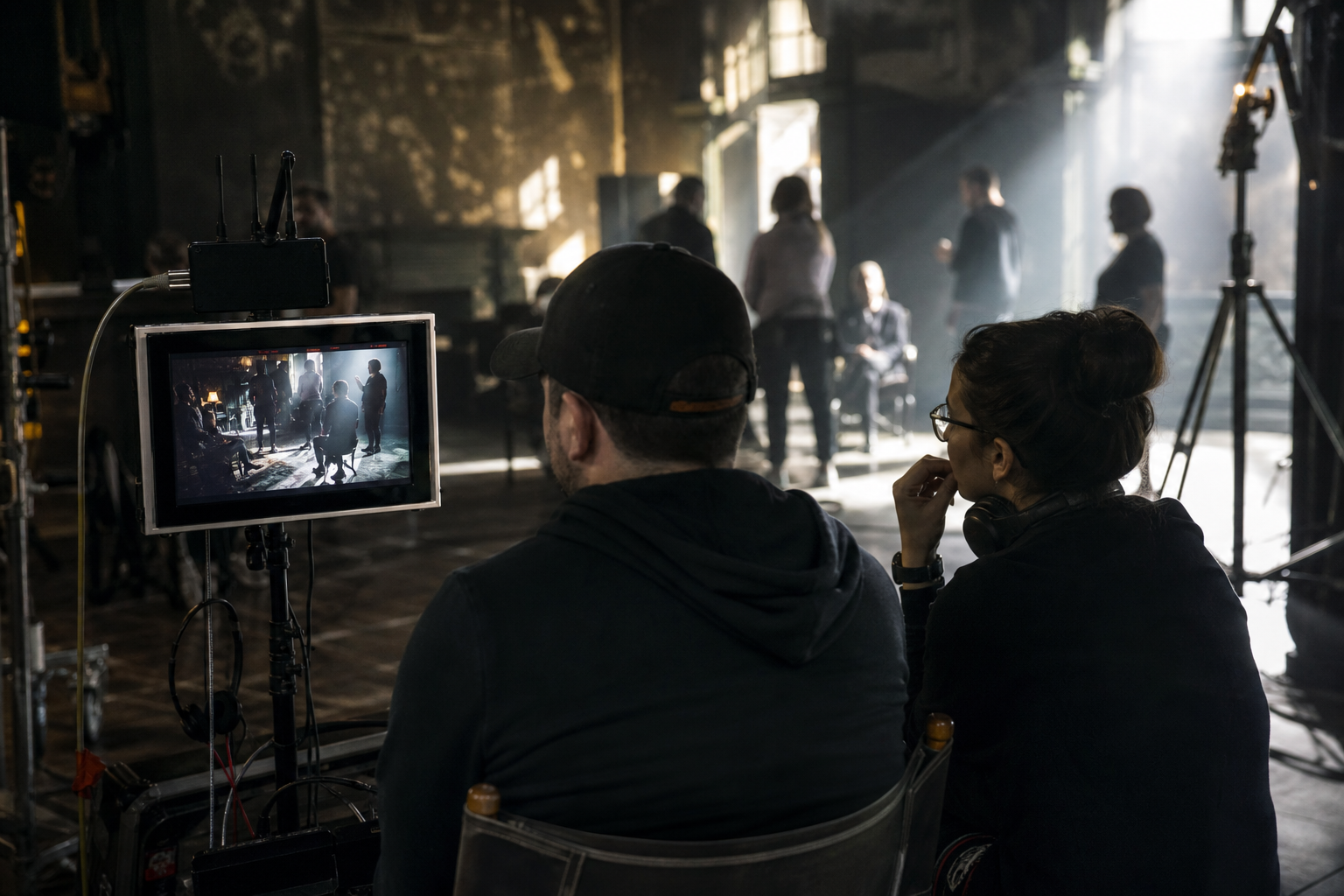
The case for prioritizing original genre-blending content on streaming platforms is stronger than it first appears, and stronger still once we stop pretending this is merely a matter of taste. It is a question of cultural infrastructure. When a streaming service decides what gets funded, surfaced, and sustained, it is not just filling a library. It is allocating attention, production capital, creative opportunity, and long-term audience habits. In that context, the release of Widow's Bay, a streaming series that combines comedy and horror while drawing on classic horror tropes, matters as more than a quirky programming choice. It is evidence of how platforms can use their scale to move beyond stale catalog maintenance and toward a more adaptive, more inclusive, and more durable programming strategy.
The resolution says streaming platforms should prioritize original genre-blending content over traditional single-genre programming. Prioritize does not mean abolish. It does not require the disappearance of pure comedy, pure horror, pure drama, or pure thriller. It means that when platforms make marginal decisions about investment, promotion, and development pipelines, they should lean toward programming that expands the expressive and audience capacity of the medium. On those terms, original genre blends are the better public-facing bet.
Why? Because streaming is not broadcast television, and it is not a video store shelf. It is a high-volume, data-rich, globally distributed system in which discoverability is scarce and attention is managed algorithmically. In such a system, relying too heavily on traditional single-genre programming produces a familiar institutional failure: fragmentation without coordination. Every firm chases engagement in isolation, every category calcifies, and the result is saturation. Consumers see endless rows of interchangeable thrillers, interchangeable sitcoms, interchangeable horror entries assembled to satisfy metadata more than imagination. Producers underinvest in experimentation because the immediate comparables are easier to price. Audiences then receive a thinner cultural menu than a platform of this scale should be able to provide.
Genre-blending content is one of the clearest ways to break that cycle. A series like Widow's Bay can inherit the readability of classic horror tropes while opening additional points of entry through comedy. That matters for audience development. It matters for creators who do not fit neatly inside rigid development boxes. And it matters for platforms seeking not simply novelty for its own sake, but programming that travels across demographic and preference lines. In policy terms, genre blending is not chaos. It is portfolio diversification with cultural upside.
The strongest opposition comes in three forms. The first is the libertarian objection: viewers, not institutions, should decide; platforms should not impose a preferred style. This argument has rhetorical appeal because it invokes freedom and organic discovery. But it ignores the basic architecture of streaming. Platforms already shape what viewers encounter. They commission selectively, market selectively, recommend selectively, and bury selectively. There is no neutral state of pure audience sovereignty here. The only real choice is whether these gatekeeping powers will be used passively, reproducing inherited genre silos, or used strategically, expanding the range of what can succeed. Given that curation is unavoidable, the responsible course is to direct it toward broader creative and audience outcomes.
The second objection is the market case: if genre blending works, the market will reward it without any prescriptive priority; if it does not, forcing it wastes money. This confuses short-term revenue optimization with sound system design. Markets are often competent at extracting value from established demand. They are much worse at coordinating investment in innovation whose benefits are diffuse, delayed, or shared across the ecosystem. Original genre-blending programming creates spillovers. It refreshes creative labor markets, broadens audience expectations, and develops new production grammars for streaming-native storytelling. Individual firms may underinvest in those benefits if they can free-ride on the experimentation of others or retreat to formula when quarterly pressures mount. That is why prioritization matters. Not because executives are incapable of recognizing a hit, but because fragmented incentives systematically undersupply the kind of experimentation that keeps the overall medium alive.
The third objection is more serious: that genre blending can become a cynical engagement strategy, a hollow product designed to please everyone a little and no one deeply. There is truth in the warning. Any format can be instrumentalized. A comedy-horror series can be bold, or it can be mush. But this is not an argument against prioritization; it is an argument for standards. Institutions are capable of distinguishing between superficial mashups and coherent formal innovation. The answer to bad commissioning is not to retreat into single-genre conservatism. It is to build better development criteria, stronger editorial judgment, and more disciplined evaluation of quality and audience fit.
That is where the institutional framework prevails over both laissez-faire romanticism and pure growth maximalism. Some advocates for the resolution make the right empirical observation for the wrong reason. They see, correctly, that traditional single-genre programming faces diminishing returns in a saturated streaming market. They see, correctly, that a title like Widow's Bay can differentiate a platform. But they often reduce the matter to competition, subscriber retention, and addressable market expansion. Those metrics are real; they are also insufficient. If every platform pursues genre blending purely as a race for market share, the result can still be redundant commissioning, trend-chasing, and abrupt cancellation cycles that waste creative investment and train audiences not to trust new work.
A better rationale is coordinated cultural planning within the platform era itself. Streaming services should prioritize original genre blends because such programming better matches the capacities of on-demand viewing, recommendation systems, and segmented but overlapping audiences. It allows a single work to bridge clusters of viewers who would otherwise remain isolated in narrow categories. It reduces dependence on exhausted formulas. It creates more opportunities for creators whose instincts do not map neatly onto legacy genre departments. And because streaming consumption is serialized, binge-enabled, and heavily shaped by mood-based discovery, hybrid forms often perform a unique function: they surprise without becoming illegible.
Widow's Bay illustrates the point. A comedy-horror series using recognizable horror tropes in a streaming format can serve both as experimentation and as access point. The horror elements provide structure and familiarity. The comedy modulates intensity, broadens appeal, and creates tonal elasticity well suited to streaming sessions. This is not the abandonment of genre; it is the administrative modernization of genre. The platform that prioritizes such work is not rejecting tradition. It is organizing tradition into a more productive form.
The larger stake is cultural resilience. A healthy streaming ecosystem cannot depend on either endless franchise replication or a false neutrality in which programming decisions are left to whatever immediate signal looks cheapest to chase. Publics are built through repeated, structured exposure to ambitious work. Even private platforms, when they operate at this scale, function as cultural utilities. They shape what kinds of stories are thinkable, fundable, and visible. With that power comes an obligation to invest beyond the safest category templates.
So yes, streaming platforms should prioritize original genre-blending content over traditional single-genre programming. Not because novelty is automatically superior. Not because every hybrid works. And not because audience choice is irrelevant. They should do so because in a centralized distribution environment, deliberate prioritization is how you prevent stagnation, broaden access, and produce a more dynamic cultural commons. The future of streaming will not be secured by leaving every decision to inertia, to narrow segmentation, or to market reflex alone. It will be secured by institutions willing to plan for abundance rather than merely manage repetition.