
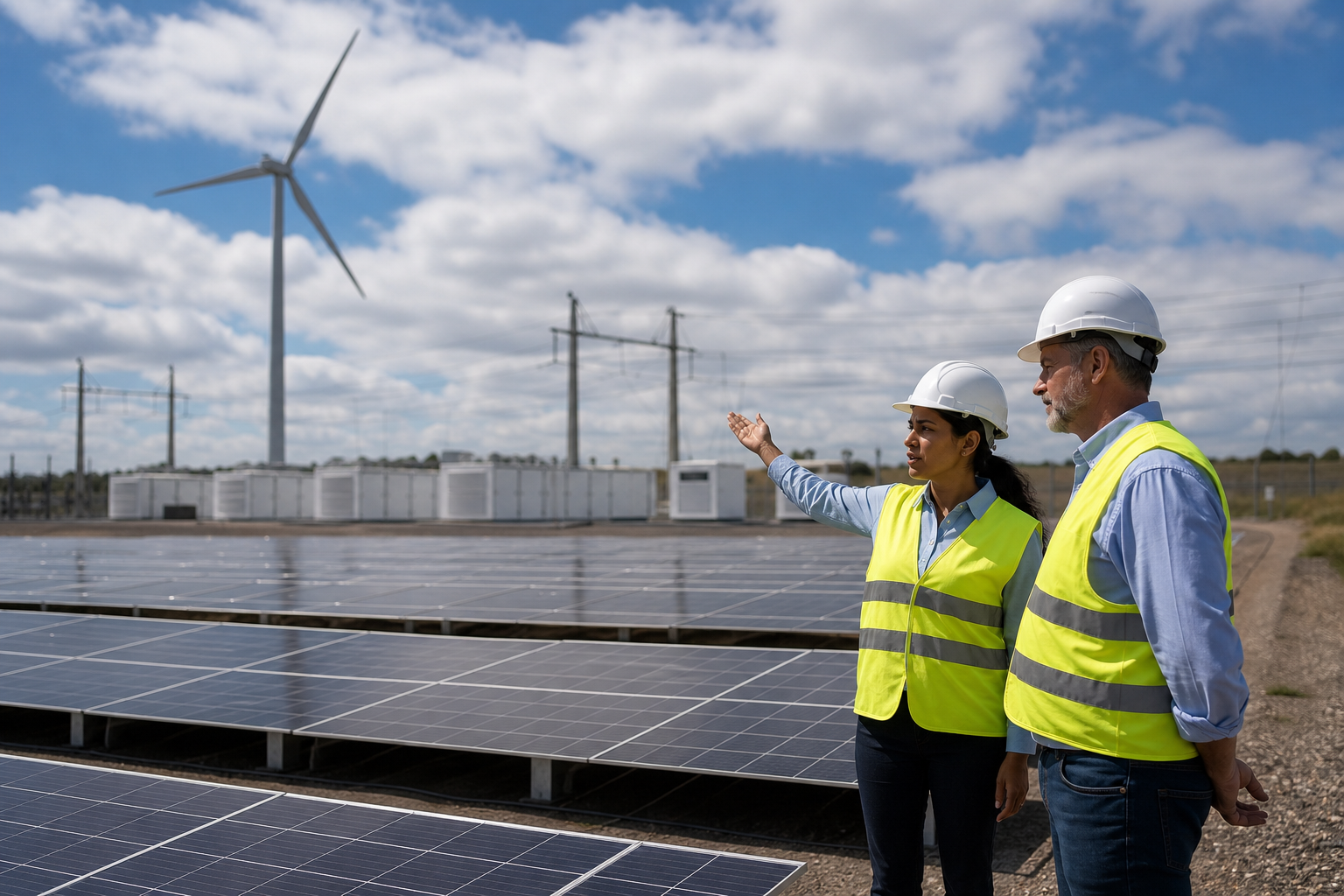
The policy question is not whether clean energy legislation and infrastructure legislation belong somewhere on a state agenda. In the 2026 Colorado Legislative Session, both were considered. The real question is whether state legislatures should prioritize them. They should, and for a simple reason that often gets obscured by budget jargon and ideological reflex: these are not niche interests competing for attention with ordinary governance. They are conditions of ordinary governance. Reliable infrastructure and a safer energy system are the practical foundation on which public health, economic stability, emergency response, household affordability, and long term state competitiveness rest.
That is why prioritization matters. A legislature can consider a bill without meaningfully advancing it. It can hold hearings, issue talking points, and let time run out. It can scatter attention across dozens of worthy topics and still fail its basic duty of care. Priority is how a legislature signals what it understands to be urgent, cross-cutting, and too consequential to treat as optional. On clean energy and infrastructure, delay is not neutral. Delay locks in risk.
The strongest case against this view is not climate denial or contempt for public works. It is the sober argument that legislative sessions have finite time, finite money, and competing obligations. Education, healthcare, public safety, tax policy, housing, water, and labor law all make legitimate claims on a state calendar. In the tournament debate, that was Marcus Hale’s best point, and it deserves respect. A government that treats every issue as existential is not serious. Prioritization requires trade-offs.
But that concession does not defeat the resolution. It clarifies it. The right test is not whether clean energy and infrastructure are the only important topics. It is whether they are upstream enough, and their neglect harmful enough, to justify elevated status in a session’s workload. They are. Infrastructure underlies commerce, freight movement, water systems, transit, schools, hospitals, and emergency management. Energy policy affects utility bills, grid reliability, industrial investment, air quality, wildfire risk, and public health. These domains do not sit beside the rest of government as one issue among many. They shape the operating environment for many other issues at once.
This is where the precautionary principle belongs, not as a slogan but as a legislative discipline. Where foreseeable harms are broad, cumulative, and expensive to unwind, the burden should fall on those who argue for deferral. A bridge not maintained, a grid not modernized, a pollution burden not reduced, a transmission bottleneck not addressed, an inefficient building stock left untouched, these are not abstract omissions. They create measurable vulnerability. They increase future costs, narrow future options, and often shift the burden onto people with the least capacity to absorb it: low income households facing volatile energy bills, communities living with dirty air, rural areas exposed to brittle infrastructure, renters in inefficient housing, and residents who cannot buy their way out of public system failure.
The libertarian objection, voiced in the debate by Nora Pike, is that state prioritization crowds out local choice and imposes one-size-fits-all solutions. There is a useful warning inside that criticism. States should not confuse priority with micromanagement. Not every clean energy program should be centralized, and not every infrastructure project should be dictated from the capitol. Local conditions matter. Communities differ. But it does not follow that the state should retreat from prioritization. The grid, roads, permitting rules, building standards, resilience planning, and utility regulation are not purely local matters. Fragmentation carries its own harms. A patchwork of under-coordinated systems can leave consumers exposed, regions disconnected, and safety standards uneven.
That is also the answer to the decentralization case advanced by Adrian Kepler. Distributed energy, local resilience, and community scale projects can absolutely strengthen a system. In many cases they should. But decentralization without guardrails is not resilience, it is a compliance gap waiting to become a public hazard. Interconnection standards, consumer protections, land use review, environmental assessment, grid planning, procurement rules, and reliability requirements are not bureaucratic ornaments. They are the mechanisms that prevent a rush to build from becoming a rush to externalize risk. A state legislature should prioritize clean energy and infrastructure precisely because those sectors need both investment and rules, both acceleration and accountability.
The cynical critique from Theo Voss, that clean energy and infrastructure become vehicles for patronage and contractor enrichment, cannot be dismissed either. Public works and energy subsidies can be captured. Cost overruns happen. Interest groups, including advocacy organizations such as the Clean Air Task Force, have viewpoints and priorities. None of that is a reason to deprioritize the field. It is a reason to legislate better. If corruption or waste is the fear, the remedy is transparent procurement, independent auditing, performance based standards, conflict of interest rules, and enforceable reporting, not abandonment of the public purpose. Consumer protection does not require paralysis. It requires design.
The opposite mistake came from the accelerationist side of the debate, which treated urgency as a license to do everything, immediately, at maximal speed. That instinct correctly recognizes that delay has costs. But speed without sequence, screening, and due process is how states end up with backlash, stranded assets, bad siting fights, and inequitable outcomes. The point is not to fast-track every proposal. The point is to ensure that a legislature spends serious time on the enabling laws, funding structures, oversight mechanisms, and implementation frameworks that let the right projects move and let weak projects fail.
This is why the Colorado example matters, even on a thin factual record. We know the 2026 Colorado Legislative Session occurred. We know legislation related to clean energy was considered. We know legislation related to infrastructure was considered. We know the Clean Air Task Force reported on the session’s activities. That tells us these issues are live, not hypothetical. But consideration alone is not a verdict. The editorial question is what a responsible state legislature should do as a matter of governance principle. It should move these subjects to the front of the agenda, because they carry high spillover effects, high deferred costs, and high public safety stakes.
A legislature that prioritizes clean energy and infrastructure is not choosing fashion over fundamentals. It is choosing fundamentals. It is acknowledging that decaying roads, fragile grids, inefficient buildings, polluted air, and delayed modernization do not stay in their lane. They become health problems, affordability problems, competitiveness problems, and disaster response problems. They also become trust problems, because citizens notice when the state can debate endlessly but cannot maintain the systems daily life depends on.
So yes, prioritize clean energy and infrastructure legislation in state sessions. Not to satisfy advocacy groups. Not to chase symbolism. Not to declare all other concerns secondary. Do it because a state has a duty to reduce foreseeable harm where it can, because neglected systems punish the vulnerable first, and because the cost of prudent action now is almost always smaller than the cost of emergency repair later. In legislating, as in regulation, the most irresponsible choice is often the one that pretends waiting is neutral.