
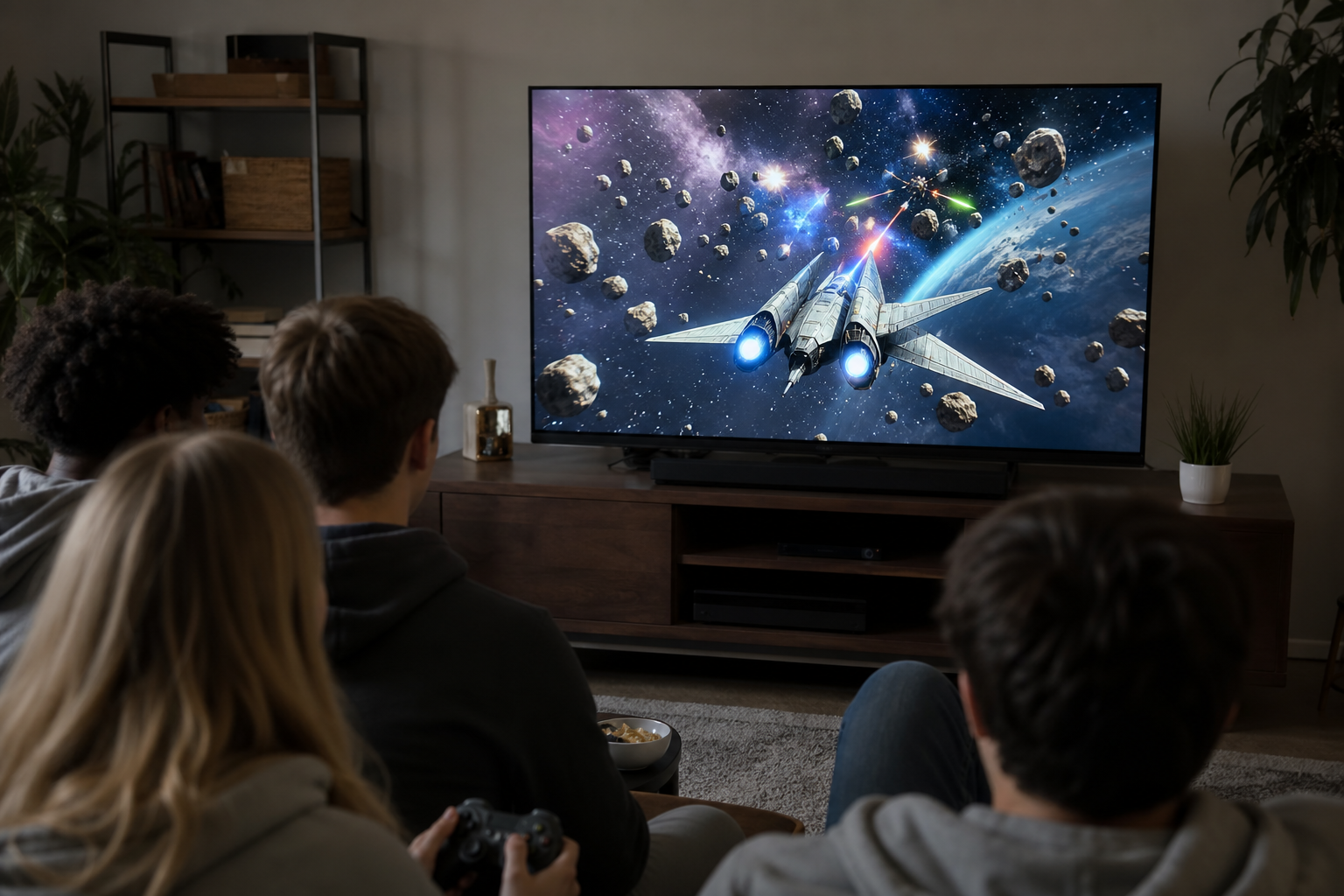
A remake lives or dies on governance. Not corporate governance in the narrow financial sense, but design governance, the disciplined process by which developers decide what must change, what must remain, and how a classic game is brought into a new hardware generation without collapsing into either museum-piece reverence or reckless reinvention. On the facts available, the Star Fox remake for Switch 2 clears that bar. It successfully modernizes the classic game because it does the three things modernization actually requires: it updates presentation to current standards, expands the game’s functional scope through battle mode, and preserves the campaign elements that made Star Fox recognizable in the first place.
That combination matters because modernization is not the same as replacement. A modernized Star Fox should still be Star Fox. If the campaign were stripped of its original design DNA, critics would rightly call it an opportunistic reboot wearing a familiar name. If the game merely repeated the old structure with sharper textures, critics would call it a cosmetic refresh sold as progress. The Switch 2 remake avoids both failures. Updated visuals acknowledge that players in a new console era expect a different visual baseline. Battle mode acknowledges that contemporary games are often judged not only by solo play but by the breadth of ways players can engage. Retaining elements from the original campaign acknowledges that the identity of a classic is a public good within the series, not a disposable inconvenience.
The strongest case against the resolution deserves to be taken seriously. Skeptics argued, quite reasonably, that updated visuals alone are not meaningful modernization. They are correct. Graphics are the easiest improvement to advertise and the hardest to confuse with deep design progress. Many remakes have hidden creative timidity behind visual polish. Skeptics also argued that a battle mode can be a bolt-on feature, an empty checkbox meant to mimic market trends rather than improve the experience. They are correct again, at least in principle. The industry has produced no shortage of multiplayer additions that extended packaging more than play. And they raised a third, subtler concern: the phrase that the campaign retains elements from the original game design is ambiguous. Retention can mean thoughtful preservation, or it can mean fear of making necessary changes.
But those objections establish a standard, not a verdict. The available facts do not describe a failed modernization. They describe the architecture of a successful one. Modernization is not measured by novelty alone. It is measured by whether a classic game is translated into contemporary form while maintaining coherent design. In public policy terms, this is the difference between institutional reform and institutional abandonment. A remake that updates visuals, adds a battle mode, and keeps core campaign elements is doing exactly what competent adaptation should do. It is using centralized planning to solve a coordination problem: how to satisfy veterans, reach new players, and justify release on a new platform without fragmenting the product into incompatible identities.
Consider the visuals first. To dismiss updated visuals as superficial is too glib. Visual presentation is part of play. It affects readability, immersion, responsiveness, and the sense that a game belongs on current hardware rather than being merely emulated by it. In a title like Star Fox, where motion, targeting, environmental cues, and spectacle are all bound to the player’s experience, updated visuals are not ornamental. They are a modernization of interface with the player. Better visual fidelity can make action legible to newer audiences and align the game with present-day expectations on Switch 2. That is not the whole case for success, but it is a real part of it.
Now consider battle mode. Opponents treated this addition as potentially extraneous, and one should concede the narrow point that not every player wanted Star Fox primarily as a competitive or social experience. Fair enough. A battle mode is not mandatory for the classic campaign to work. But successful modernization is not judged by whether every added feature is universally essential. It is judged by whether the package serves a broader contemporary audience without impairing the core experience. On the facts we have, battle mode is additive, not substitutive. It expands utility. It increases replay value. It creates a second lane of engagement for players who want more than a one-direction campaign. In other words, it broadens access within a single title.
This is where the anti-modernization argument often collapses into an overly individualist standard. Some argued that if even a subset of players preferred the original’s more focused form, then a battle mode risks dilution. But the existence of an additional mode does not abolish the campaign. It does the opposite of coercion. It creates a managed pluralism inside one coherent release. That is what competent institutions do when they modernize durable systems. They do not erase the old function to chase the new. They build supplementary capacity around a preserved core.
The preserved campaign is, in fact, the decisive point. The phrase that it retains elements from the original game design is not evidence of creative failure. It is evidence of discipline. A remake of a classic game should not behave like a hostile takeover of its own history. Star Fox is not just a bundle of assets, it is a design tradition with expectations attached. Keeping campaign elements from the original is how developers avoid the familiar remake error of mistaking disruption for progress. Stability is not stagnation when it protects a proven structure while other layers are updated.
Critics wanted proof of deeper mechanical rethinking, and in a richer factual record that might matter. But the resolution is not whether this remake reinvented game design. It is whether it successfully modernizes the classic game. Those are different claims. Reinvention is a maximalist standard that would disqualify many of the most effective remakes precisely because they understand restraint. Modernization means bringing a work into present conditions. On Switch 2, present conditions include upgraded presentation, broader mode offerings, and continuity with canonical campaign design. By that standard, the remake succeeds.
There is also a larger industry lesson here. Franchises decay when stewardship is fragmented between nostalgia absolutists who oppose change and trend chasers who treat legacy as a monetizable skin. The answer is neither laissez-faire improvisation nor empty commercial calculation. It is coordinated development with a clear theory of public value inside the game itself: preserve what made the original legible and loved, upgrade what current players reasonably expect, and add modes that widen participation without displacing the core. That is exactly the pattern the Star Fox remake appears to follow.
The result is not a revolution, and it does not need to be. A successful remake is infrastructure, not insurrection. It is a structured upgrade of a shared cultural asset. Updated visuals bring Star Fox into the visual language of the Switch 2 era. Battle mode extends the game’s social and competitive life. The campaign’s retained original elements protect identity and continuity. Put together, those choices amount to something more substantial than a cash-in and more intelligent than a blind reboot.
That is what successful modernization looks like. It is planned, legible, additive, and disciplined. The Star Fox remake for Switch 2 meets that test.