
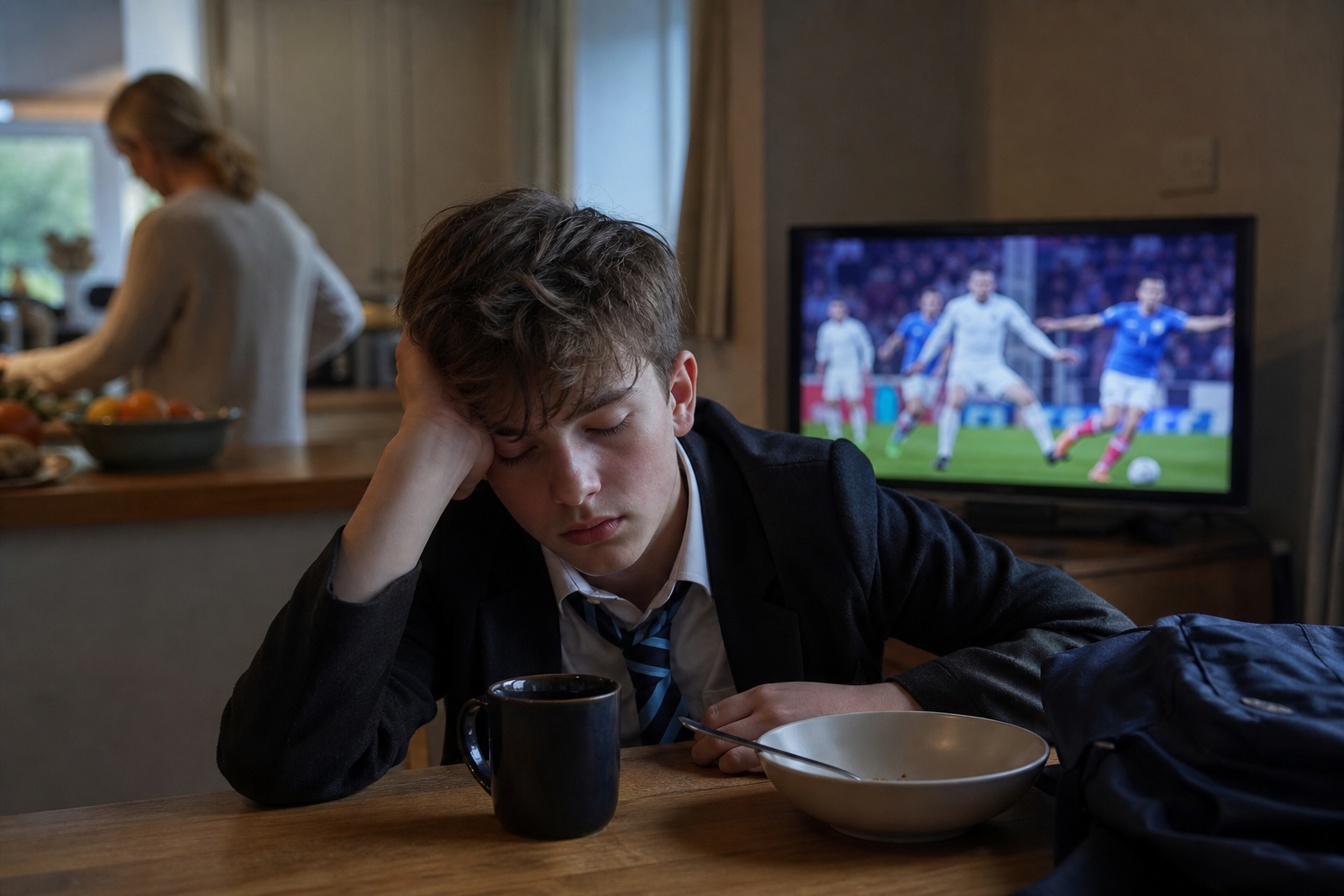
The question is not whether football is more important than education. It is whether schools should make small schedule adjustments when a major national sporting event predictably disrupts sleep, childcare, attendance, and family routines. On that question, the practical answer is yes, often they should.
Some schools in England opened later than usual after a 01:00 England kick-off. Their reason was straightforward, reducing pressure on parents while balancing competing priorities. Many parents supported the decision. That matters, but not because parental approval is sacred. It matters because it is evidence of demand, and institutions that ignore obvious demand usually create larger costs elsewhere.
Start with the real operating problem. A late national match does not stay neatly inside the television. It spills into homes, sleep schedules, transport plans, staff punctuality, and next-morning attention spans. Schools can either acknowledge that predictable disruption and manage it, or cling to the formal timetable and absorb the mess through higher absenteeism, late arrivals, tired pupils, stressed parents, and more administrative friction. A delayed start is not surrender to entertainment. It is basic load balancing.
The strongest objection is serious, not silly. Critics argue that schools exist to educate, not to organize family life around sport. They worry about routine, curriculum pacing, supervision for vulnerable children, school meals, and the broader signal sent when a football match appears to move the school day. They also worry about precedent. If schools shift for England, why not for every concert, final, or cultural event with a loud constituency?
Those concerns deserve an answer, because some of them are right. Routine does matter, especially for younger children and for pupils who rely on school structure. Not every parent wants a later start. Not every community cares equally about the same sporting event. And no, schools should not become fan-service operations that bend to every popular distraction.
But conceding those points does not rescue the anti-adjustment case. It simply narrows the rule: schools should adjust operating hours for major national sporting events when the expected net benefit exceeds the disruption, and when they can preserve essential services. That is a manageable standard, not a slippery slope.
The anti side tends to make two mistakes. First, it overprices the value of abstract consistency and underprices the cost of predictable noncompliance. A school day that begins on time on paper but functions badly in practice is not a triumph of standards. If a meaningful share of pupils arrive exhausted, late, or absent, the apparent stability is fake. Teaching is not improved by maintaining ceremony while losing attention, attendance, and goodwill.
Second, critics often assume that every schedule change creates system-wide chaos. In reality, the fact pattern here is limited and specific. We are talking about major national sporting events, not every recreational interest. We are talking about modest operating-hour adjustments, such as opening later the morning after a 01:00 kick-off, not shutting schools for a week. And we are talking about decisions some schools are already making because they judged the trade-off worth it.
That last point matters. The best evidence in small operational questions is often revealed preference. Schools are not theoretical debating societies. They face parents at the gate, teachers in classrooms, attendance registers, staffing constraints, and local expectations. If some schools looked at a late England match and concluded that a delayed start would reduce pressure on parents and better balance priorities, that is not proof of perfection. But it is proof that the benefit was concrete enough to outweigh the hassle in those communities.
The centralizing answer, that there should be one national policy, sounds tidy and often performs badly. A uniform rule would either force flexibility where nobody wants it or ban flexibility where it is useful. England is not one neighborhood. Schools differ in transport patterns, childcare dependency, parental demand, breakfast provision, staffing, and the local salience of the event. The whole point of running schools locally is to allow local information to shape low-stakes operational choices.
The libertarian objection, that parents alone should decide and schools should stay out of it, is cleaner in theory than in practice. Families can of course make their own choices, but atomized choice imposes collective costs. If enough families independently decide that children will be late or absent after a major match, the school still has to deal with the consequences. Timetables, staffing, classroom sequencing, and safeguarding do not disappear because the disruption was privately chosen. Sometimes coordination beats purity.
The right framework here is not culture-war symbolism. It is return on disruption. What do schools give up, and what do they get? They give up a slice of one morning's standard schedule. In return they may get higher attendance, more awake pupils, fewer late arrivals, less parent-school conflict, and less wasted teaching time spent on a room full of half-functioning children. That is a favorable exchange if the event is genuinely large enough.
Of course there must be limits. A sensible school should apply clear criteria. The event should be rare, major, and nationally significant. The timing should create an obvious next-day problem, such as a very late kick-off. The adjustment should be modest. Essential support for vulnerable pupils should be maintained where possible, including supervision and meals. Schools should communicate early so parents can plan. And schools should be free not to adjust if local conditions make the cost too high.
Notice what this approach avoids. It avoids the institutional vanity of pretending rules are valuable even when they are producing worse outcomes. It avoids the opposite vanity of treating every public enthusiasm as a reason to upend the calendar. Most importantly, it keeps the mission in view. The purpose of school hours is not to prove moral seriousness through inflexibility. The purpose is to create the best conditions for education and child welfare at acceptable cost.
That is why the phrase balancing competing priorities, used by schools in England, is better than critics admit. In a functioning institution, balancing is not weakness. It is management. Every school already balances instruction, transport, weather, exams, illness, staffing, safeguarding, and community expectations. A major national sporting event with a 01:00 kick-off is simply another temporary constraint to manage.
The deeper issue is whether public institutions should respond to how people actually behave. They should. Not slavishly, not sentimentally, but intelligently. A country is allowed to notice when a national team event has enough cultural and practical impact to make one morning's timetable less valuable than a small delay. Schools do not undermine education by recognizing reality. They undermine it when they insist on forms that make learning worse.
So yes, schools should adjust operating hours to accommodate major national sporting events, selectively, locally, and with guardrails. The winning argument is not that sport outranks school. It is that operational flexibility beats performative rigidity. When the cost is low and the payoff is better attendance, less fatigue, and lower pressure on families, the smart institution adapts.