
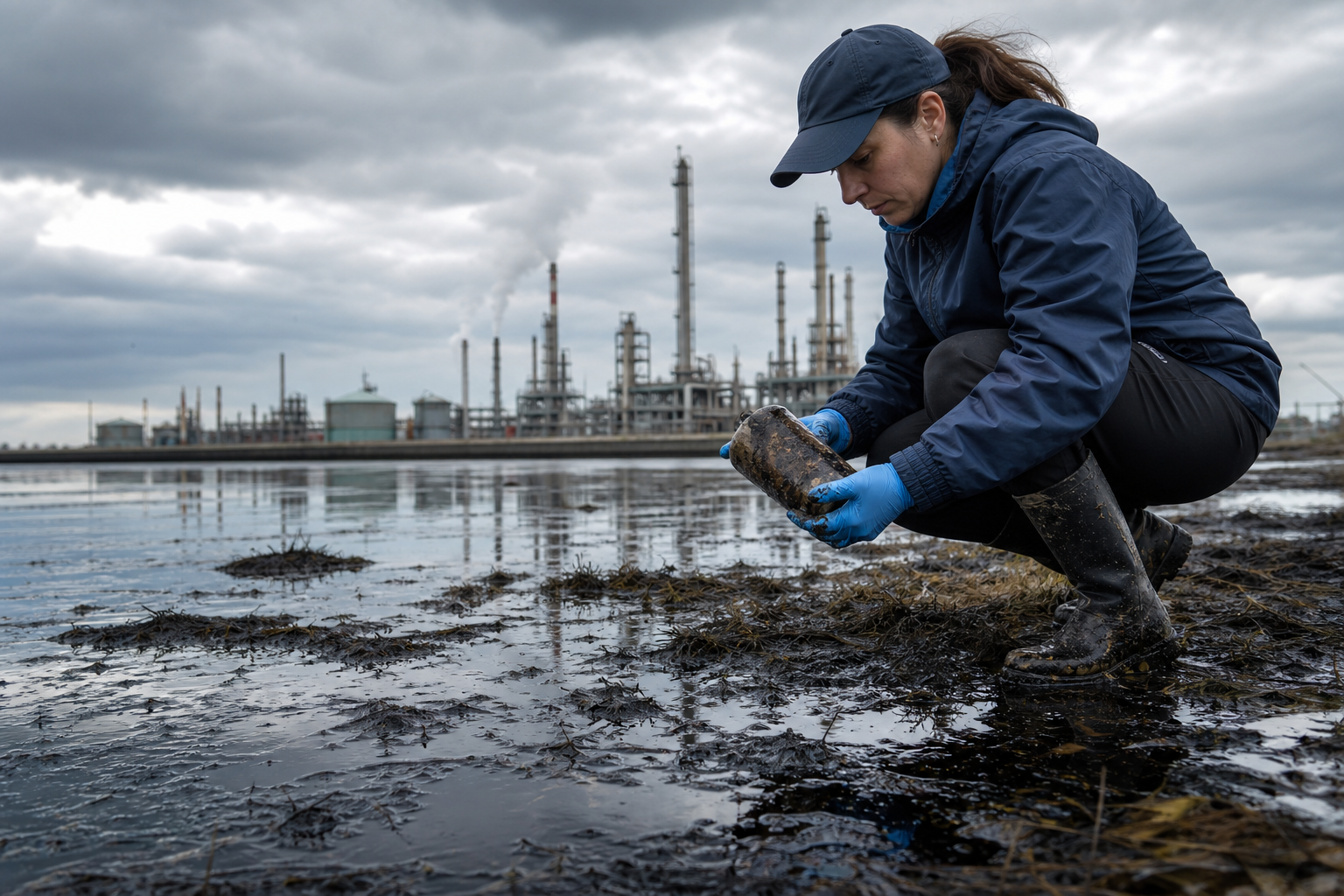
The case for restricting the presidential pardon power in this narrow context is not hard to state. It is hard only if we refuse to name the risk plainly. A president used clemency authority to pardon people convicted of Clean Air Act violations. At least one recipient was also a political donor to the president. Another pardon recipient had pleaded guilty to fraud charges connected to Jack Abramoff. Those facts do not prove every pardon was corrupt. They do prove something more important for public policy: the current structure permits a form of executive grace that predictably collides with environmental enforcement, anti corruption norms, and public trust.
That is why the resolution is right. Presidential pardon power should be restricted when used for individuals convicted of environmental law violations or campaign donors.
The stakes are larger than any one defendant. Environmental crimes are not bookkeeping errors in a vacuum. Clean Air Act violations can mean dirtier air, elevated health risks, degraded local environments, and costs imposed on people who never consented to bear them. Campaign donor pardons raise a separate but overlapping danger. Even if no explicit quid pro quo is proved, the appearance of pay to play justice corrodes confidence in equal treatment under law. A pardon for a donor may be lawful under current doctrine and still be institutionally reckless.
The strongest objection is constitutional and serious. The pardon power is broad, textually rooted in Article II, and historically understood as a check on judicial rigidity. That argument deserves respect. Clemency can correct overpunishment, account for rehabilitation, and temper the blind spots of a legal system. A presidency with no meaningful room for mercy would be poorer, not stronger.
But that is not the proposal on the table. The resolution does not abolish clemency. It does not say environmental defendants are beyond mercy, or that every campaign donor is presumptively guilty of corrupt influence. It says there should be restrictions when the pardon power is used in these categories because these categories create acute and foreseeable conflicts of interest. That is what guardrails are for. They are not insults to discretion. They are acknowledgments of human incentives.
Another objection says that bad pardons are best handled by politics, not law. If voters dislike a president rewarding polluters or benefactors, they can register that judgment through elections, public pressure, and historical condemnation. In ordinary political disputes, that answer has force. Here, it is too weak and too late.
Political accountability is retrospective. Environmental harm is often not. If enforcement of air pollution laws is weakened by the signal that well connected violators can be rescued at the end of the process, communities absorb the risk long before any election arrives. Public health damage is not undone by a bad news cycle. Nor is trust in anti corruption norms restored simply because pundits denounce an ethically dubious act after the fact. The duty of care in democratic design is to reduce the chance of foreseeable abuse before it occurs, not merely to narrate it after the damage is done.
There is also a more cynical criticism, and it contains a partial truth. Some argue that restricting pardons for environmental violations or campaign donors merely pushes corruption into other channels. Powerful people, on this view, will always seek favors; a rule here will just produce workarounds elsewhere. That can happen. Regulation is never magic. But this is not an argument against rules. It is an argument for better ones.
We do not abandon conflict of interest law because some conflicts go undiscovered. We do not repeal bribery statutes because influence can be subtle. We build layered protections, disclosure requirements, recusal standards, review procedures, and penalties because the impossibility of perfect prevention does not justify preventable exposure. In public law, especially where health, environment, and democratic legitimacy are implicated, the precautionary principle is not overreaction. It is governance.
The opponents also raise a concern about line drawing. Why environmental law violations? Why campaign donors? Why not other categories of offense or association? This is a fair challenge, and it is precisely why the best defense of the resolution must be narrow and principled. Environmental crimes are distinctive because they externalize risk onto the public, often diffusely and sometimes irreversibly. A pardon in that domain does not just relieve one individual, it can undercut deterrence for conduct that harms shared air, water, and land. Campaign donors are distinctive because the president has a direct political relationship, or can be perceived to have one, with people who finance his electoral prospects. That creates an unusually obvious appearance problem, and appearance matters when the integrity of law is at stake.
Equal justice depends not only on actual fairness but on visible fairness. If the ordinary defendant sees one rule, and the donor or politically connected polluter sees another, legitimacy drains from the system. Once that happens, compliance suffers. Why should firms make expensive investments to meet environmental standards if they believe enforcement can be neutralized through political relationships? Why should citizens trust anti corruption rhetoric if clemency can blur into patronage?
A workable reform need not pretend Congress can simply rewrite the Constitution by statute. The legal architecture matters. Restrictions could take several forms, some more constitutionally secure than others: a constitutional amendment, mandatory transparency and waiting periods for pardons in these categories, an independent advisory review process, required publication of donor ties and underlying offense facts, and heightened scrutiny where campaign contributions are involved. Reasonable people can debate which mechanism is valid and durable. The key point is that the status quo, broad power plus minimal guardrails, is an invitation to abuse in exactly the kinds of cases listed in the fact sheet.
It is worth conceding one more point to the opposition. Not every environmental conviction is morally equal. Regulatory schemes can be complex, prosecutions can overreach, and rehabilitation is real. Likewise, a campaign donor is not stripped of citizenship or mercy. That is why a sensible restriction should be targeted, transparent, and procedurally disciplined, not absolute. But recognizing edge cases is not a reason to ignore the core case. It is a reason to design carefully.
This debate is often framed as mercy versus bureaucracy, or constitutional tradition versus reformist impatience. That framing obscures the real conflict. The real conflict is between a pardon system that can be used in ways that reward those who impose public harms or enjoy political proximity, and a constitutional order that takes equal justice, environmental compliance, and public trust seriously enough to build safeguards around obvious pressure points.
The presidency is not less legitimate when bound by anti corruption rules. It is more legitimate. Clemency is not less humane when subject to conflict of interest protections. It is more defensible. And environmental law is not some technical obstacle to growth. It is a baseline commitment that the powerful may not privatize profit while socializing disease, contamination, and cleanup costs.
A pardon power designed for mercy should not become a mechanism for favoritism. When polluters and political donors are the beneficiaries, the burden of proof should shift decisively toward restraint. In this domain, delay is not paralysis. It is due care. Restricting presidential pardons here is not an attack on constitutional structure. It is a necessary update to protect the public from a danger the facts have already made visible.