
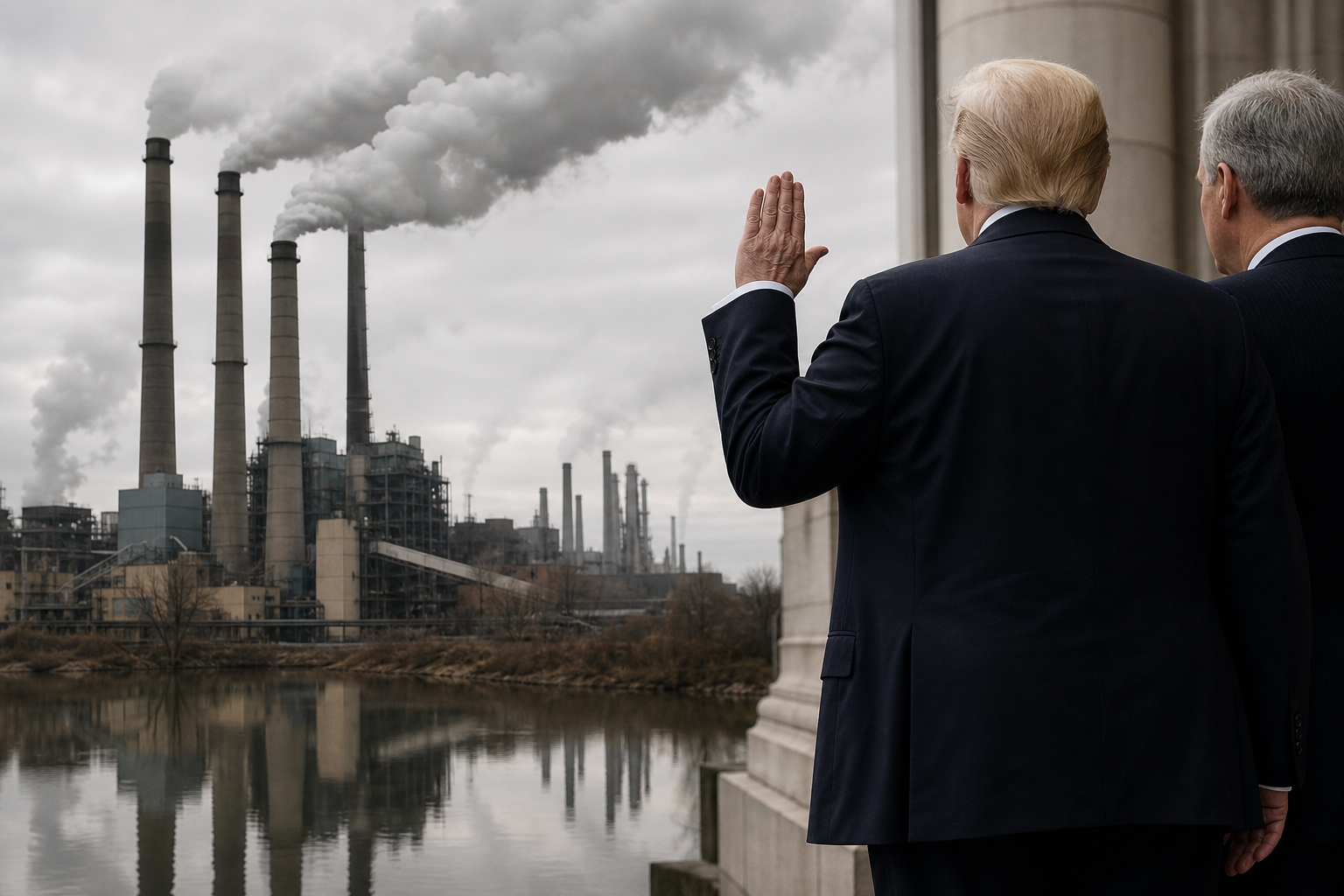
The case for restricting presidential pardon power in this narrow area begins with a simple premise: some uses of discretion are so predictably corrosive that a constitutional democracy owes the public better guardrails. That is the issue raised when a president uses clemency authority for individuals convicted of Clean Air Act violations and for a political donor who pleaded guilty to fraud in a case involving Jack Abramoff. These are not random offenses. They sit at the intersection of public health, regulatory deterrence, corruption, and trust in government.
A pardon is not merely a private act of grace. It is a public signal. It tells prosecutors, regulated industries, donors, and ordinary citizens what kinds of conduct the political system is willing to forgive, and for whom. When that signal is sent to polluters and politically connected fraud defendants, the foreseeable effect is not abstract. It weakens the credibility of environmental enforcement and deepens the suspicion that access purchases leniency. A legal system that appears negotiable for the well connected is not just offensive to civic ideals, it is dangerous to compliance itself.
The strongest case against restriction deserves to be taken seriously. The Constitution vests the pardon power in the president precisely because law can be rigid, prosecutions can be unfair, and mercy sometimes requires a final check outside the courts. Critics of restriction warn, correctly, that once Congress or the public starts carving out unpardonable categories, the pardon power may cease to function as an emergency valve against injustice. They also raise practical concerns. How would a restriction define a political donor? What threshold matters? Would a statute be struck down as an infringement on Article II? Would a president simply shift favoritism into quieter channels, such as selective enforcement, agency appointments, or commutations dressed up in legal ambiguity?
Those are not trivial objections. Anyone arguing for reform should concede that a broad frontal assault on clemency would be misguided. The presidency does need an instrument for exceptional cases. And yes, no single reform can eliminate corruption if determined officials can reroute it elsewhere.
But that is not a reason to do nothing. It is a reason to be precise.
The resolution is not that pardon power should be abolished, or even generally cut back. It is that it should be restricted when used for Clean Air Act violators or political donors convicted of fraud. Those categories matter because the public harms are unusually legible and the abuse risk is unusually high.
Start with Clean Air Act violations. Environmental law is often caricatured as paperwork, but Clean Air Act cases exist because unlawful emissions impose costs on other people. Neighbors breathe the contamination. Workers bear exposure. Children with asthma do not get to opt out of another person’s regulatory shortcuts. The point of criminal enforcement in this area is not symbolic purity. It is deterrence against conduct that externalizes risk onto the public. A pardon granted after conviction can tell future violators that accountability is politically reversible. That does not merely forgive a past wrong, it discounts the expected cost of future noncompliance.
Now consider political donors convicted of fraud. The fact sheet is stark: one pardon recipient was a donor to the president, had pleaded guilty to fraud charges, and the fraud case involved Jack Abramoff, one of the most recognizable names in modern corruption politics. Even if no prosecutable quid pro quo is proved in the pardon itself, the institutional harm is plain. When a donor receives presidential clemency after a fraud conviction linked to a corruption scandal, the appearance problem is not cosmetic. Appearance is part of the substance of public integrity. The justice system depends on the belief that outcomes are not sold.
Opponents say public outrage and elections are enough. That argument fails for two reasons. First, it is radically post hoc. The pardon has already issued, the conviction has already been nullified, and the deterrent message has already been weakened. Second, electoral accountability is diffuse and unreliable. Voters decide among many issues. A beneficiary of clemency enjoys a concrete, individualized benefit, while the public absorbs a spread-out institutional loss. That asymmetry matters. Systems fail when concentrated gains for insiders routinely overpower dispersed harms to everyone else.
The broader constitutional objection also has force, but not enough. If the only imaginable response to abuse is a total constitutional shutdown of pardon power, then of course reform looks reckless. But there are narrower ways to restrict abuse while preserving clemency in the mine-run case. A constitutional amendment would be the clearest route, though difficult. Short of that, Congress can pursue strong disclosure rules, mandatory waiting periods, recusal style procedures for donor-linked applicants, and legal consequences tied to corruption or self-dealing surrounding clemency decisions. If the polity ultimately decides that a more formal restriction is necessary, difficulty is not a rebuttal. The separation of powers is not a suicide pact requiring passivity when a structural vulnerability becomes obvious.
Some critics make a more cynical point: presidents who cannot pardon allies may instead reward them through appointments, regulatory relaxation, or nonenforcement. True enough. But that is an argument for layered safeguards, not for preserving every avenue of abuse because others remain open. Consumer protection, environmental compliance, and anti-corruption law all work this way. We do not repeal one guardrail because another can still be breached.
The underlying principle is duty of care. The state owes the public a reasonable architecture of protection against foreseeable misuse of concentrated power. A pardon for a minor offender after a dubious prosecution is one thing. A pardon for a Clean Air Act violator or a political donor convicted of fraud is another. In those settings, the risk is not only leniency toward an individual. It is institutional instruction to future actors: pollute if profitable, contribute if useful, accountability is negotiable.
A healthy clemency power should correct injustice, not invite it. It should stand apart from patronage, not become its reward. And it should not be used in ways that make environmental law look optional or public corruption look survivable if one has the right connections.
The most responsible reformers should say this plainly: mercy matters, executive flexibility matters, constitutional design matters. But so do clean air, honest government, and equal justice. Where those values come into direct conflict, and where experience has already shown the risk, the burden of proof lies with those who insist that unrestricted discretion remains safe.
It is not safe. Not here.
Restricting presidential pardons for Clean Air Act violators and political donors convicted of fraud would not end corruption or guarantee environmental justice. No serious person should promise that. What it would do is something both humbler and more important: it would place one necessary boundary around one demonstrated abuse, and in doing so reaffirm that clemency is not a private favor to dispense at the expense of public health and the rule of law.