
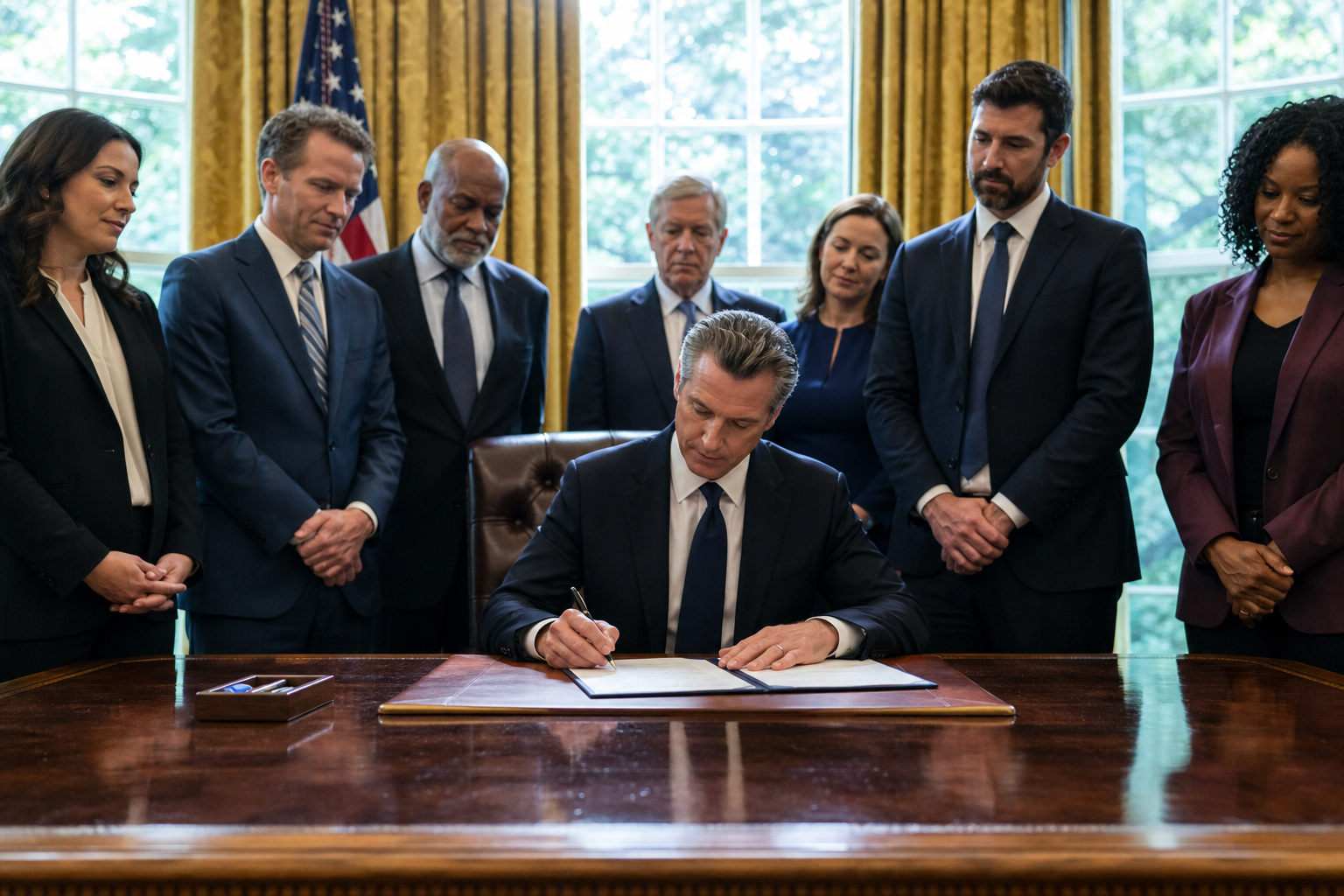
A president is not a clerk. The veto exists for a reason. But that is not the real question in this fight. The real question is when a president should spend political capital resisting a bill that already passed Congress with bipartisan support. On that metric, refusing to sign, or even publicly downgrading, bipartisan legislation because of intra-party disagreement is usually a bad trade.
That is why President Trump’s cancellation of a planned signing ceremony for a housing bill matters beyond one awkward Wednesday. The fact pattern is simple. Congress passed a housing bill with bipartisan support. Republicans planned a ceremony. The ceremony was cancelled after passage. And this came amid multiple disagreements between Trump and Republican legislators. Even if the bill still became law, the signal was unmistakable: cross-party agreement in Congress is not enough if internal party friction remains unresolved.
That signal has costs. Not abstract civics costs, real operating costs. It tells lawmakers that negotiating across the aisle may not pay off. It tells committee chairs and rank-and-file members that clearing both chambers is not the finish line. It tells future dealmakers that after they take the electoral risk of compromise, the White House may still use them as leverage in an internal family feud. In incentive terms, that is poison.
The strongest argument on the other side is not crazy. Presidents are independently elected. They have constitutional judgment, not just ceremonial duties. Bipartisan support does not prove a bill is wise, efficient, fiscally sound, or aligned with executive priorities. Congress can pass bad bipartisan bills. Party dissent can reflect substantive concerns, not merely bruised egos. A president who signs every bipartisan bill regardless of objections would reduce the office to a rubber stamp and throw away one of the few real bargaining chips the executive has.
Fair enough. If a bill is unconstitutional, badly designed, too expensive, duplicative, or operationally unworkable, the president should resist it. A bad law does more damage than a cancelled photo op. That concession matters because it draws the line in the right place. The resolution is not that a president must sign every bill because the process was bipartisan. It is that the president should sign bipartisan legislation regardless of intra-party disagreements. Those are different standards.
If the objection is policy quality, make the policy case. Veto it. Threaten a veto before passage. Demand revisions. Explain the implementation problem, the budget impact, the legal flaw, the administrative burden. Use the constitutional tool for its proper purpose. But if the real issue is internal party conflict, bruised hierarchy, or the need to remind legislators who is boss, then the president is spending public capacity on private discipline. That is an expensive indulgence.
This is where the constitutional defense of maximum executive discretion becomes less persuasive than it sounds. Yes, the Constitution allows the president to approve or disapprove legislation. It does not follow that every use of that discretion is wise. Markets offer a useful analogy. A company CEO can block a deal the board likes. The question investors ask is not whether the CEO had authority. It is whether the intervention improved expected value. If the intervention mostly signaled internal management conflict, investors mark down the firm. Politics works similarly. Governance has a risk premium.
Bipartisan bills are scarce assets. In a polarized Congress, any legislation that can attract support from both parties has already survived multiple veto gates, ideological filters, and electoral anxieties. That does not make it sacred. It does make it costly to waste. There is a reason people search for terms like bipartisan housing bill, president signing legislation, White House ceremony cancelled, and Trump Republican disagreement. They understand instinctively that the bottleneck in Washington is not the supply of partisan messaging. It is the supply of durable agreement.
Presidents should treat that agreement as valuable inventory. Once Congress has delivered a bipartisan bill, the burden shifts. The default should be signature, not sabotage. The threshold for resistance should be substantive defect, not intra-party annoyance. Why? Because the second-order effects dominate.
First, bipartisan lawmaking depends on credible reward. Legislators need to believe that if they absorb criticism from activists and party media to strike a compromise, the compromise will actually be ratified. If presidents regularly undercut those deals for internal political reasons, fewer lawmakers will make them. Throughput falls.
Second, public trust tracks visible completion. The public sees Congress pass a bill and expects a result. A cancelled signing ceremony, especially on a housing measure, looks like dysfunction. Maybe optics are not everything, but they are not nothing. If people conclude that even broad agreement cannot produce clean execution, they reasonably infer that government is high drama and low yield.
Third, internal party discipline is often overrated as a governing objective. Presidents can win the news cycle by humiliating their own legislators, but they rarely improve policy capacity that way. The gain is usually symbolic dominance. The cost is lower cooperation on the next bill, narrower room for compromise, and more defensive behavior from legislators who do not want to be stranded after taking a tough vote.
The housing context sharpens the point. Housing policy is exactly the kind of issue where incremental bipartisan legislation matters. It is technically complicated, locally administered, and usually solved through accumulation rather than one grand ideological victory. Delays, symbolic downgrades, and public intraparty feuds do not reform zoning, finance construction, or deliver units. They simply add friction to an already friction-heavy sector.
Opponents sometimes say that forcing a president to sign bipartisan legislation mistakes process for substance. But in this case the process is substance, because the process shapes future supply. A president who routinely rewards bipartisan passage expands the market for compromise. A president who punishes it shrinks that market. Once that norm decays, every future bill becomes harder, more performative, and less durable.
The pragmatic rule is straightforward. A president should sign bipartisan legislation unless there is a clear, substantive reason not to. Intra-party disagreements are not enough. Not because party conflict is illegitimate, and not because bipartisan support is morally magical. Because government runs on incentives, and this incentive is one we can measure. Reward cross-branch agreement, and you get more of it. Undercut it for internal political theater, and you get less.
That is the part constitutional romantics and executive maximalists alike tend to miss. The presidency is not only a source of power. It is also a price setter for political behavior. When the White House marks down bipartisan success because of internal party drama, it makes future cooperation more expensive. That is bad management.
So yes, preserve the veto. Preserve presidential independence. Preserve the right to say no to bad bills. But do not confuse those powers with a reason to burn a functioning agreement just to settle scores inside the party. Congress did the hard part. When a bipartisan bill reaches the desk, a president should usually close the deal.