
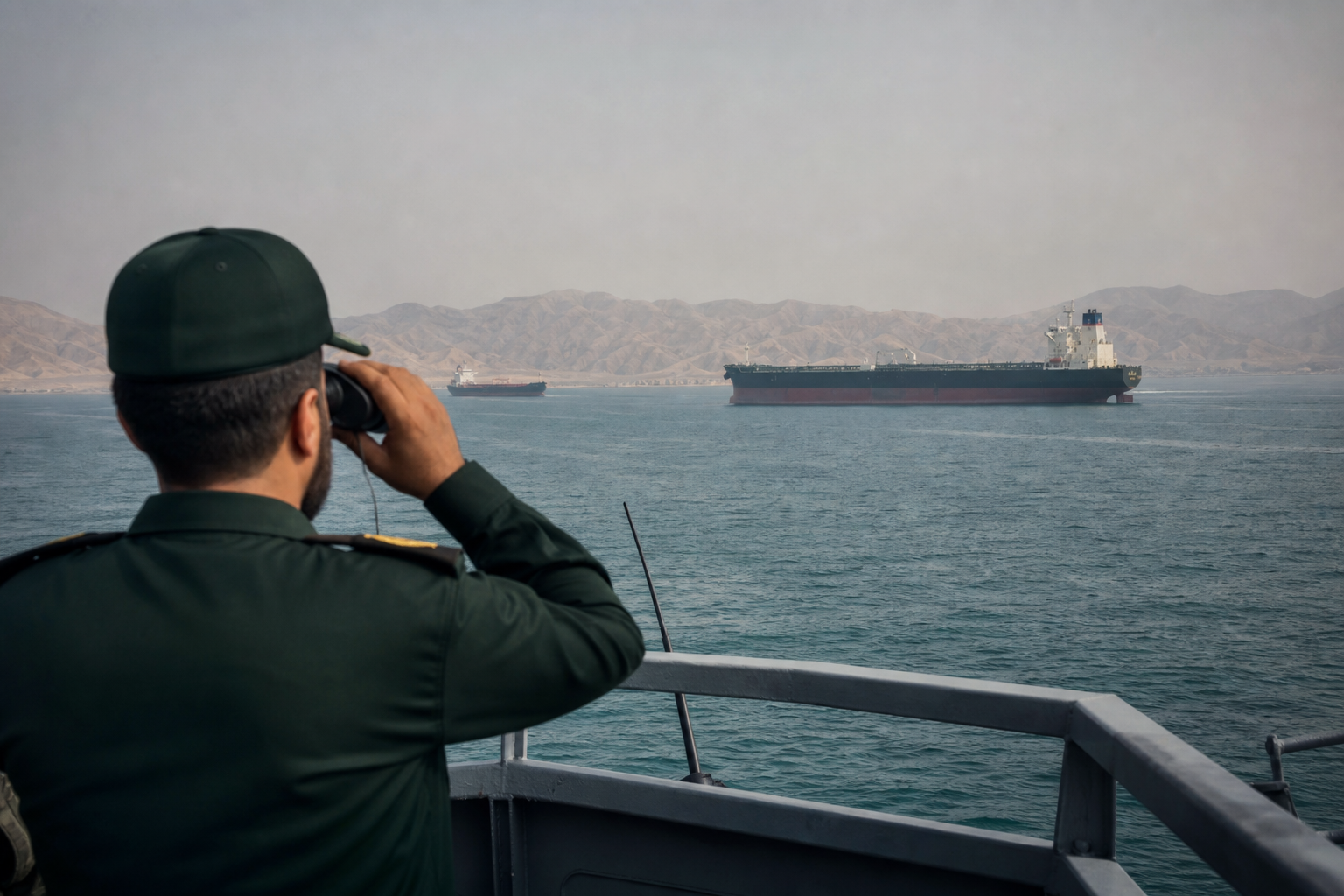
The question is not whether Iran can threaten the Strait of Hormuz. It is whether the world should accept the closure of one of the most strategic waterways on earth as a legitimate response to Israeli military operations in Lebanon. It should not. A closure of the Strait of Hormuz would be a deliberate disruption of global oil transport, an invitation to military escalation, and a direct transfer of economic pain onto states and households far removed from the immediate conflict. Whatever Iran says about a breached agreement with the United States or an obligation to answer Israel’s actions in Lebanon, shutting the strait would be an act of systemic coercion with global consequences.
That is the essential point too often blurred by the rhetoric of leverage. The Strait of Hormuz is not merely a bargaining chip in a regional dispute. It is a public artery of the world economy. When a state threatens to block it, the damage does not stop at the shoreline. Oil prices move. Shipping insurance costs rise. Supply chains tighten. Inflation follows. Vulnerable import-dependent countries bear costs they did nothing to incur. This is what fragmentation looks like in practice: a local military crisis converted into a worldwide tax on energy, food, transport, and political stability.
Iran has stated that the Strait of Hormuz will be closed and has cited Israeli attacks on Lebanon as the reason. It has characterized those Israeli actions as a breach of an agreement and claims to have had an agreement with the United States to end the war. Even if one takes those claims seriously as political signaling, they do not establish that closing an international chokepoint is a proportionate or legitimate remedy. A disputed understanding, real or alleged, cannot become a license to menace the entire global trading system. There is no durable order if every claimed diplomatic breach justifies strangling a maritime corridor.
The strongest argument from the other side is not moral but strategic. It says states act through leverage; Iran sits astride a chokepoint; therefore Iran should use the tool available to it. In this view, the threat to close the Strait of Hormuz is rational statecraft. It raises the price of inaction for Washington, for Israel, and for energy-dependent governments. It converts geography into bargaining power. It may even, as some cynically suggest, create profitable chaos for those prepared to weaponize uncertainty.
That argument has the virtue of realism. It understands that states do not operate in a seminar room. But it mistakes the existence of leverage for the wisdom of using it this way. Not every instrument that can impose pain produces usable political outcomes. Closing the strait would not isolate Israel from consequence. It would globalize the crisis, push neutral and affected states toward a response, and make de-escalation harder rather than easier. It would also collapse the distinction between retaliation and indiscriminate economic warfare. A state that claims to be enforcing an agreement cannot persuasively do so by threatening every economy tied to the flow of Gulf oil.
Another serious objection comes from market pragmatists, who argue that markets reprice risk faster than institutions can coordinate. Oil futures spike, insurers adjust, tankers reroute, and decentralized systems adapt. There is some truth here. Prices do move quickly. Traders react before diplomats finish drafting communiques. But rapid repricing is not governance. It is the distribution mechanism for harm. Markets do not decide who deserves to bear the burden of a blockade; they allocate that burden according to exposure and weakness. Poorer states pay more for energy. Fragile governments absorb social unrest. Consumers absorb inflation. The fact that a market can metabolize a crisis does not mean the crisis is acceptable, still less that it should be endorsed.
Indeed, this is where the institutional view prevails. The central problem exposed by the Strait of Hormuz dispute is the underprovision of global public goods. Freedom of navigation, stable energy transit, and credible conflict de-escalation do not emerge reliably from ad hoc national maneuvering. They require planning, enforcement, and collective commitment. Left to fragmented actors, every player free-rides on order until a crisis arrives, then discovers that order had no guarantor. When one state can credibly threaten a strategic waterway over a separate conflict in Lebanon, the failure is not simply that actor’s opportunism. It is the absence of sufficiently strong, coordinated mechanisms to deter and contain it.
The historical argument against closure is also compelling. Maritime blockades and chokepoint disruptions rarely remain tidy signals. They tend to be interpreted as escalatory acts, often as acts of war, because they threaten not just an adversary but an entire chain of commercial dependence. Once that threshold is crossed, military planning accelerates, coalition politics harden, and opportunities for limited settlement narrow. The stated rationale may be a breach of an agreement. The practical effect is to widen the theater.
It is also worth being precise about proportionality. Israeli military operations in Lebanon are grave matters with regional implications. If Iran believes there has been a breach of an agreement involving the United States, there are channels for diplomatic, legal, and multilateral contestation. Those channels are imperfect; institutions often move too slowly; great powers are selective in their fidelity to rules. But the answer to weak institutions is stronger institutions, not the normalization of transit blackmail. Once closure of the Strait of Hormuz is accepted as an appropriate response to a contested regional grievance, every strategic bottleneck becomes a future hostage.
The deeper lesson of this debate is that unilateral coercion at infrastructure chokepoints is the predictable outcome of a world that has tolerated fragmentation in security governance. Some observers conclude from this that institutions are fantasies and only leverage is real. That is too shallow. The fact that opportunists exploit gaps in the system is not evidence against system-building; it is evidence of its necessity. Public order is always most visible when it fails. Tankers, ports, shipping lanes, insurers, importers, and central banks are all reminders that modern interdependence cannot be governed by improvisation.
So the resolution fails. Iran should not close the Strait of Hormuz in response to Israeli operations in Lebanon. It should not because the measure is wildly overbroad. It should not because it would punish third parties at planetary scale. It should not because it would increase the odds of wider war. And it should not because it would reward the very logic that has made strategic waterways recurrent sites of coercion.
What should happen instead is straightforward, if demanding. Major powers and regional states must treat the strait as a non-negotiable international commons interest, coordinate maritime security, intensify diplomatic pressure around Lebanon, and clarify that alleged side agreements cannot justify interference with global shipping. The burden belongs not to markets to absorb, nor to vulnerable populations to endure, but to institutions to prevent. A world economy organized around critical arteries requires something sturdier than deterrence by price shock. It requires governance equal to the scale of the risk.
That is the real verdict of this news cycle. The Strait of Hormuz cannot be allowed to become an all-purpose weapon for settling unrelated scores. If the international system means anything, it must mean that no state may answer one breach, real or claimed, by threatening the circulatory system of the entire world.