
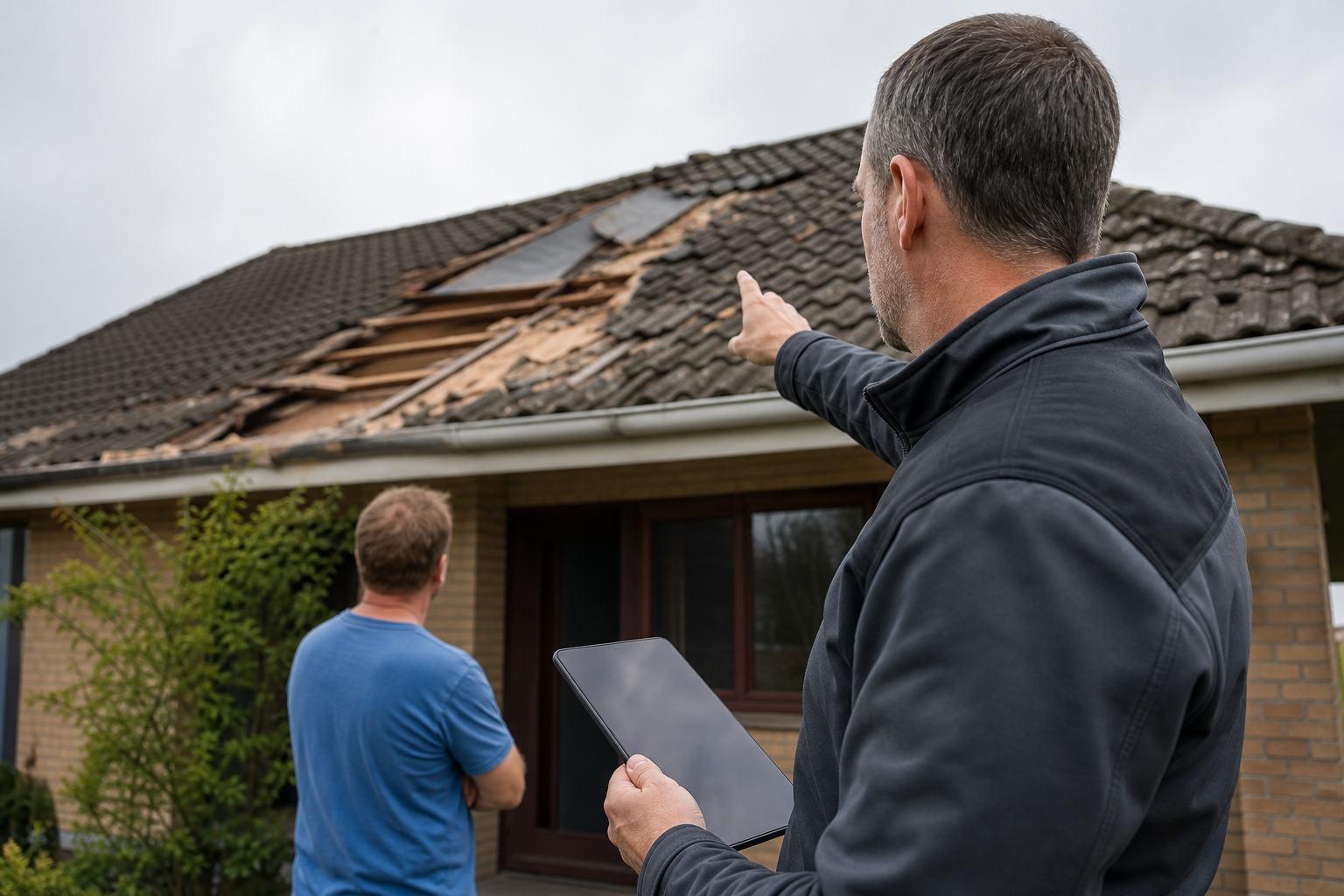
The cleanest way to understand this policy fight is to start with the roof itself. An insurance company looked at wind damage and reportedly saw a few lost tiles. An independent loss adjuster looked at the same property and found $10,000 in damage. The wind was strong enough to make the structure shake. That is not a rounding error. It is a warning about who gets believed when a policyholder and an insurer disagree about the reality in front of them.
The resolution says insurance companies should be required to accept independent loss adjuster assessments over their own initial damage estimates. On first read, that can sound too broad, even destabilizing. Insurers do have legitimate reasons to worry about inflated claims, inconsistent outside estimates, and higher premiums. Those objections are not frivolous. Any serious consumer protection argument has to confront them directly.
But once you do, the case for requiring acceptance still prevails, because the status quo embeds a more dangerous bias into a more powerful institution. The insurer is not a neutral observer. It is the party that pays the claim. Its initial estimate is not merely descriptive, it is financially consequential. If that estimate is too low, the burden does not fall on a balanced system with equal resources on both sides. It falls on a homeowner who may be living under a compromised roof, facing repair deadlines, weather exposure, and legal complexity while the company that sold protection controls the first official account of the loss.
That asymmetry matters more than abstract worries about market efficiency. Insurance is not an ordinary retail product. It is a promise sold in advance for use in moments of vulnerability. That promise carries a duty of care. When severe wind conditions shake a structure, a superficial estimate of a few missing tiles is not just one opinion among many. It may be the beginning of underpayment, delayed repairs, mold, structural deterioration, financing problems, and coercive settlement pressure. Foreseeable harm compounds quickly in property claims.
The strongest opposing argument is simple and worth taking seriously: independent adjusters have incentives too. If a loss adjuster is hired by the policyholder, critics say, why assume that estimate is more trustworthy than the insurer's? If the law automatically elevates outside assessments, have we not just swapped one conflict of interest for another?
There is some truth there. Independence is not purity. A claimant-hired adjuster can be mistaken, aggressive, or strategically optimistic. A smart regulatory framework should admit that. But this objection fails for three reasons.
First, the resolution concerns the insurer's own initial damage estimate. Initial estimates are often fast, thin, and made before the full consequences of roof and wind damage are visible. The fact pattern here is not a close call between two detailed reports. It is a stark gap between minimal visible damage and a substantial independent assessment after severe shaking. Where there is that level of discrepancy, the greater risk to the public is not overpayment. It is institutional underestimation backed by claims-handling power.
Second, incentives are not symmetrical because power is not symmetrical. An insurer writes the policy language, controls the claims process, retains experts, and can delay, negotiate, or litigate from a position of scale. A homeowner gets one damaged home, one disrupted life, and often one chance to push back. Existing dispute resolution mechanisms are real, but they are not neutral in practice when one side has time, money, and repeat-player advantage. To tell consumers that arbitration or litigation is available after a lowball estimate is a bit like telling a patient there is always a complaint form after a dangerous discharge. Formal recourse is not the same as meaningful protection.
Third, the cost argument is overstated and selectively framed. Opponents warn that accepting independent assessments will raise premiums for everyone. Perhaps some costs would rise. That is a fair concession. But the relevant question is compared to what. Compared to the current system, where underpaid claims shift repair costs onto households, defer maintenance, weaken housing stock, and force some policyholders to absorb losses they paid to insure against? Compared to neighborhoods where storm-damaged roofs are patched instead of repaired because the initial estimate never reflected the real damage? The existing model also externalizes costs. It just hides them on the consumer side of the ledger.
This is where a precautionary lens is not rhetorical flourish but sound policy discipline. When there is a known structural conflict, a demonstrated discrepancy, and a foreseeable chain of harm from underassessment, the burden should not rest on the vulnerable party to prove why safeguards are necessary. The burden should rest on the institution asking to preserve unilateral authority. Insurers want the right to issue their own estimate first, contest the outside assessment later, and keep payment power throughout. Fine. Then they should have to show that this arrangement reliably protects policyholders when the two assessments diverge sharply. The fact pattern before us suggests the opposite.
Critics also argue that a blanket acceptance rule is too blunt, that better dispute resolution would be more tailored. In the abstract, that sounds prudent. In practice, it often means preserving friction as leverage. Every additional procedural step favors the party that can afford delay. Every demand for one more inspection, one more review, one more negotiation round increases the chance that a family will settle cheap, postpone repairs, or give up. Speed without safeguards is reckless, but safeguards without enforceability are theater. A rule requiring insurers to accept the independent loss adjuster's assessment over their own initial estimate changes the default from corporate disbelief to consumer restoration.
The key phrase is their own initial estimate. This does not mean insurers lose all ability to detect fraud or challenge bad faith. It means they should not be permitted to treat their first, self-interested number as the authoritative baseline when credible independent evidence points elsewhere. That is a modest but meaningful reordering of risk. It places the cost of uncertainty on the party best able to bear and investigate it, rather than on the policyholder least able to absorb a mistaken denial or an inadequate payout.
The broader public interest is easy to miss if we reduce this to a private billing dispute. Accurate damage assessment after wind events is part of housing safety, community resilience, and trust in the insurance market itself. If consumers come to believe that filing a roof damage claim means entering a contest where the insurer grades its own exam, trust degrades. And once trust degrades, people either overpay for legal help, underreport damage, or discover too late that coverage on paper was not coverage in practice.
So yes, there are trade-offs. Some independent assessments will be too high. Some claims costs will increase. Regulators should still police fraud, licensing, and professional standards. But those are manageable governance problems. The deeper problem is letting the payor's initial estimate dominate when the evidence suggests serious damage and the policyholder faces all the practical consequences of being wrong.
Insurance exists to spread risk, not to weaponize uncertainty against the insured. When a house shakes in strong wind, when a roof may have hidden damage, and when an insurer says a few tiles while an independent adjuster says $10,000, the law should not shrug and send the homeowner into procedural combat. It should require the company to accept the independent assessment and pay accordingly. In consumer protection, the most dangerous errors are not always the ones that cost institutions too much. Often they are the ones that leave ordinary people underprotected exactly when the contract was supposed to protect them.