
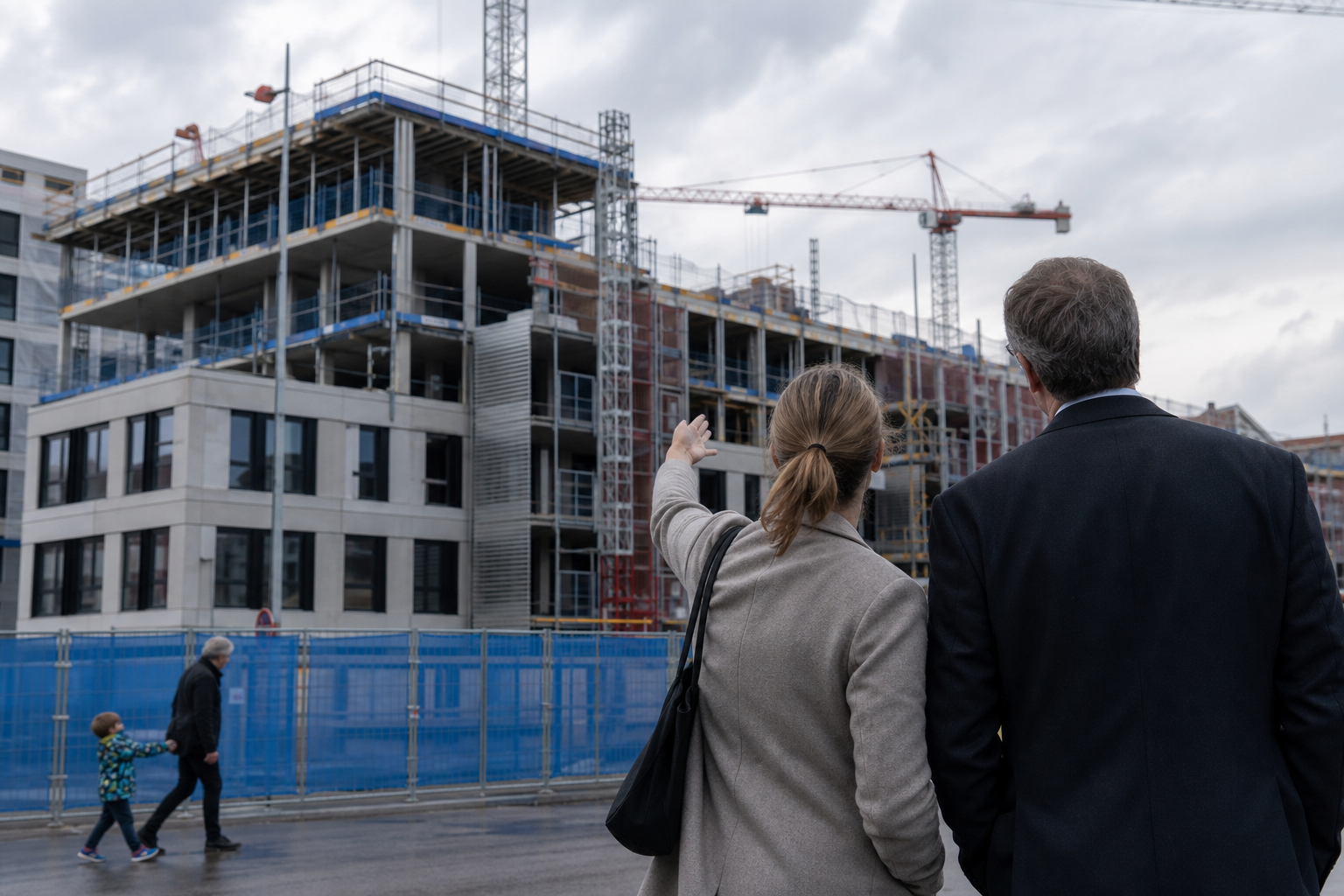
The clean story now dominating housing policy is that affordability is mostly a supply problem. The Roosevelt Institute put the thesis plainly: there is no housing affordability without building more housing. On the narrow economics, that is hard to deny. If a city adds jobs, households, and investment faster than it adds homes, rents rise, prices rise, and scarcity gets monetized. Anyone pretending otherwise is selling nostalgia, not policy.
But the resolution is not whether housing supply matters. It is whether governments should prioritize increasing housing supply as the primary solution to housing affordability. That little word, primary, is where the con begins.
Because once supply becomes the primary frame, everything else starts getting treated as a nuisance. Tenant protections become distortion. Environmental review becomes delay. Community bargaining becomes obstruction. Requirements for below-market units become burdensome. Public housing, social housing, rent stabilization, anti-displacement policy, land banking, and acquisition of existing affordable buildings all get demoted from central tools to side dishes. The political beneficiary is obvious. If affordability is defined mainly as a shortage of units, then the hero of the story is the entity that can produce units at scale, fast: developers backed by lenders, private equity, institutional landlords, and the legal and consulting class that feeds on entitlements.
That does not make the supply argument false. It makes it incomplete in a very interested way.
The strongest pro-supply case deserves to be taken seriously. Cassian Ro and Marcus Hale were right about one thing many housing debates refuse to admit: scarcity is real, and governments have manufactured a lot of it. Restrictive zoning, parking minimums, endless permitting, and veto points do raise costs and choke construction. In high-demand markets, refusing to allow apartments, townhomes, accessory dwellings, and denser infill is functionally a policy of exclusion. The result is not preservation of community virtue. It is a transfer of wealth to incumbent property owners and landlords, plus a higher entry fee for everybody else.
That part of the indictment is correct, and it matters. Some anti-development politics really is just upper-middle-class homeowners protecting home values while draping themselves in the language of character, neighborhood fabric, or participatory planning. A lot of local process is not democracy in any noble sense. It is a cartel meeting with public comment.
But this is exactly why supply-first politics is so slippery. It takes a true diagnosis, exclusionary scarcity, and smuggles in a far more convenient prescription, deregulate and trust the market to deliver affordability downstream. That downstream promise is where history gets ugly.
What gets built first, absent strong public direction, is what pencils out. In expensive cities, that usually means luxury rentals, high-end condos, or professionally managed multifamily aimed above median income. Developers are not villains for doing math. They are businesses. The problem is when government pretends private return and public affordability are the same thing. They are not. Market-rate housing can relieve pressure over time, yes. Filtering is real. Older units often become cheaper relative to new ones. But the timeline matters, the geography matters, and the bodies count too.
A family being displaced this year does not get much comfort from a model showing regionwide rent moderation in eight years. A neighborhood hit by speculative land assembly does not benefit just because a metro average bends slightly downward later. If the policy asks vulnerable tenants to absorb near-term upheaval so that aggregate affordability might improve eventually, then be honest about the trade. Do not call it a painless win-win. It is a distributional choice.
Mira Solenne was closest to the real issue when she argued that supply without guardrails is recklessness. Her critics heard only regulation, delay, and process fetish. Fair enough, some safeguards do metastasize into permanent obstruction. But the answer to bad regulation is not no regulation. It is regulation that knows exactly what it is trying to prevent and who it is trying to protect.
Governments should absolutely increase housing supply. They should legalize more housing types, reduce absurd procedural chokepoints, and stop handing incumbent owners a scarcity premium. But if supply is made the primary solution, governments will predictably prioritize the quantity that markets reward over the affordability that voters were promised. The distinction is not academic. It determines whether public action lowers costs for working households or mainly socializes the political risk of private development.
There is a reason the supply-only script is so attractive across ideological camps. For market enthusiasts, it flatters the idea that prices are just signals distorted by meddling. For centrist technocrats, it offers a neat graph and a growth-friendly agenda. For think tanks, it sounds empirical, modern, and unsentimental. For the real estate industry, it is perfect: a public crisis translated into a permitting agenda. Everybody gets an elegant story. The tenant gets a rent increase.
The better framework is blunt. Housing affordability is a supply problem, a power problem, and an income problem at the same time. Governments should build more, allow more, and speed more, but they should not make raw supply the primary solution unless they want to hand the steering wheel to actors whose incentive is yield, not shelter.
What would a less gullible policy look like? Increase housing supply, yes, but tie public upzoning and expedited approval to actual public gain. Require anti-displacement plans in hot markets. Protect existing tenants from eviction and predatory rent spikes. Put public money into social housing, nonprofit housing, and preservation of naturally occurring affordable housing, because losing cheap existing units while celebrating expensive new ones is the oldest shell game in the book. Use land policy to capture some of the upside government itself creates when it grants new development rights. And judge success by rent burden, eviction rates, and the number of low-cost homes preserved or created, not just by total permits issued.
That is the part supply evangelists often skip. They want government muscle when it clears the path, and government silence when the winnings are distributed.
So no, governments should not prioritize increasing housing supply as the primary solution to housing affordability. They should prioritize affordability itself. Sometimes that means more construction. Often it means legalizing more homes. But just as often it means refusing to let a real shortage become an all-purpose alibi for policies that enrich landowners, developers, and financiers while telling everyone else to wait for filtering.
There is no housing affordability without building more housing. Fine. But there is also no housing justice in pretending that whatever gets built, by whoever profits most, is close enough. When government turns a social necessity into a developer-led affordability strategy, the shortage may ease eventually. The grift arrives immediately.