
The policy question here is modest, not revolutionary: when a household has leftover food, should it generally try to convert that food into a new meal, or throw it away? The correct answer is yes, households should prioritize repurposing leftovers. Not because this solves the entire food system, not because every scrap must be saved at any cost, and not because a casserole is a moral triumph. They should do it because, in ordinary life, it is the highest return move available once the food has already been bought, cooked, and stored.
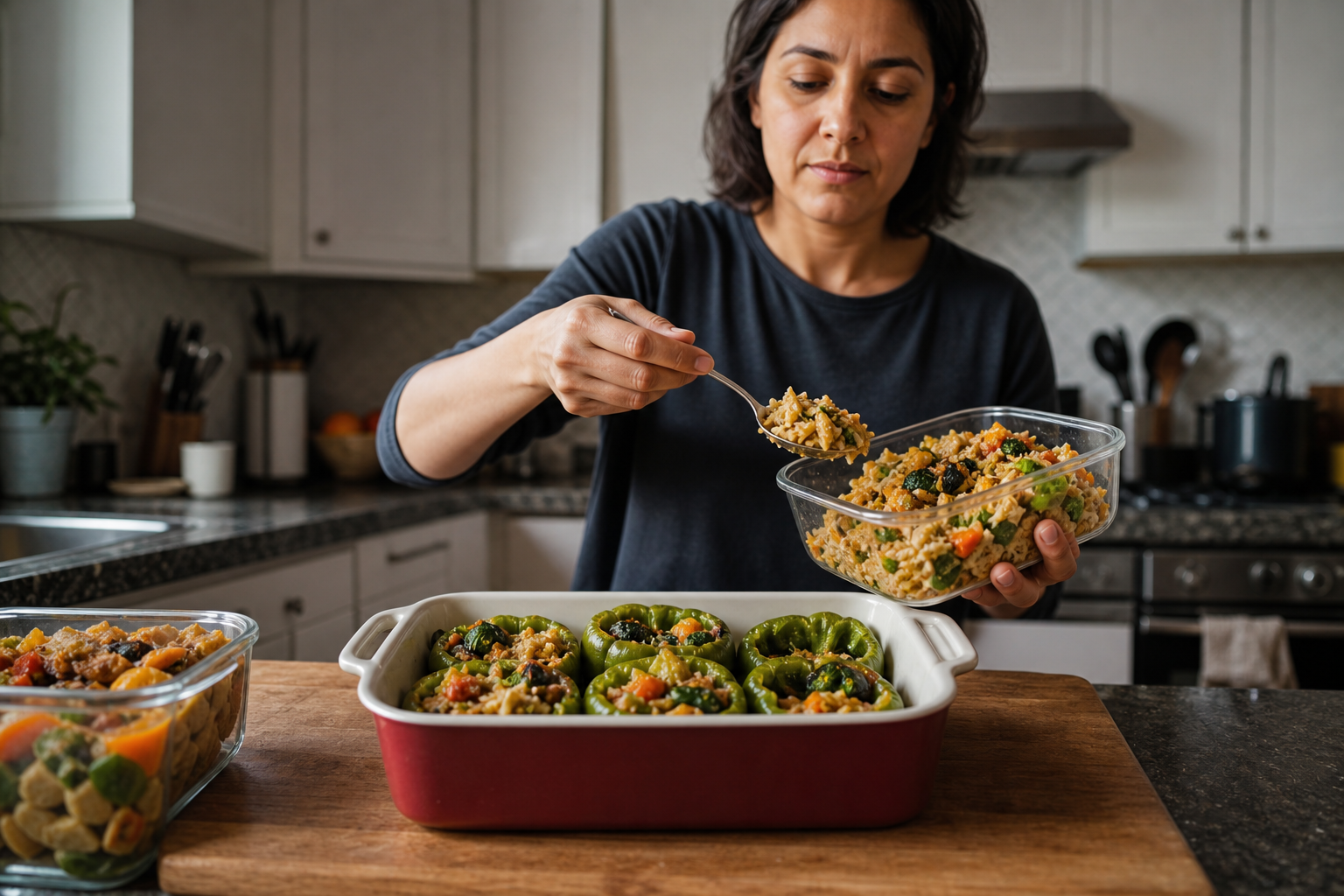
The fact pattern is telling in its simplicity. A media organization asked readers for recipes that use leftover food and compiled seven examples. Among them were stuffed peppers and biryani casserole, dishes specifically meant to use refrigerator scraps. That matters less as lifestyle content than as proof of concept. People already know how to do this. Repurposing leftovers is not a niche hobby for food obsessives. It is a common household technique for turning yesterday's sunk cost into today's lunch or dinner.
Start with the economics, because that is where the case is strongest. Discarding leftover rice, cooked vegetables, roast chicken, beans, or sauce is not a neutral act. It is the final step in paying full price for food and then choosing not to extract the last unit of value from it. The grocery bill has already been incurred. The energy used to cook the first meal has already been spent. The time used to shop, prep, and clean has already been spent. In many cases, making a second meal from leftovers requires only marginal additional effort. Add seasoning, combine ingredients, reheat safely, and you have a new dish. Stuffed peppers and biryani casserole are just branded versions of a broader principle: combine edible fragments into something coherent and useful.
That principle is especially attractive because it often beats the supposed alternative on convenience. Critics of leftover repurposing tend to imagine an exhausted household standing over a cutting board performing culinary origami with half an onion and three spoonfuls of lentils. Sometimes that picture is accurate. But often the comparison is wrong. The real choice is not between effortless disposal and an elaborate cooking project. It is between spending ten or fifteen minutes making fried rice, soup, a casserole, wraps, or stuffed peppers from what is already in the refrigerator, or spending more money and often more time deciding, shopping, ordering, or starting from scratch.
The strongest practical objection is food safety, and it deserves more than a hand wave. Leftovers are not sacred. The phrase refrigerator scraps can indeed hide a lot of ambiguity. Some food is too old, contaminated, or dubious to save. Anyone arguing otherwise is confusing thrift with self-sabotage. A meal that causes food poisoning is not frugal. It is expensive, miserable, and stupid.
But that concession does not defeat the resolution. It clarifies it. Prioritize repurposing usable leftovers, not spoiled food. The resolution does not require households to eat risk. It asks for a default ranking of options. If food is safe, turn it into a new meal before you discard it. If it is unsafe, throw it out. Every kitchen already depends on that basic judgment. The same common sense required to cook chicken thoroughly or refrigerate dairy properly is enough to sustain the resolution. Safety is a boundary condition, not a reason to abandon the larger rule.
A second objection says this is the wrong level of analysis. The big waste problems are upstream, in supply chains, retail practices, packaging, and confusing date labels. True enough. But this argument tries to turn “not sufficient” into “not worth doing,” which is lazy reasoning. Households do not control industrial agriculture or supermarket procurement. They do control what happens to last night's food. A useful standard for household behavior need not solve the whole system to be justified. The return on an action is measured against its alternatives at that level. For households, leftover repurposing is one of the few waste reduction strategies with immediate, private payoff.
In fact, that private payoff is why this works better than grand moral messaging. When incentives line up, behavior follows. People will not repurpose leftovers because they have been scolded about civilization. They will do it if it saves money, reduces meal stress, and stretches ingredients another day. That is why the audience-submitted recipes matter. They lower the cognitive cost. They give households templates. Stuffed peppers means, in practice, “use the rice, meat, and vegetables that are hanging around.” Biryani casserole means “combine leftovers into a filling one-pan meal.” The names are less important than the mechanism: lower friction, recover value.
There is also a time-management point that critics often overstate. Yes, some households are too stretched, too inexperienced, or too uninterested to make elaborate second-life meals consistently. Fine. The resolution says prioritize, not maximize. Prioritizing leftovers does not mean turning every wilted herb into artisanal stock. It means checking the refrigerator before ordering takeout, planning one leftover night per week, and choosing the low-effort salvage option when available. The productivity gain here is not perfection. It is routine triage.
Some opponents also worry that a “should” becomes a soft mandate that ignores personal autonomy. This is overstated. Advice about better household management is not tyranny. We say households should compare prices, save for emergencies, and lock their doors. These are not assaults on freedom. They are practical norms based on expected benefit. The same applies here. No one is proposing leftover police. The claim is simply that, as a household practice, repurposing edible food usually outperforms discarding it.
There is a deeper reason this resolution wins. It respects trade-offs instead of fantasizing them away. The anti-waste maximalist is wrong to imply every scrap can be redeemed. The anti-effort critic is wrong to imply the labor always exceeds the benefit. Real households live between those extremes. They need defaults that are simple, forgiving, and net positive. “Use safe leftovers first” is exactly that kind of rule.
It is also one of the rare domestic habits that scales without requiring bureaucracy. No new program is needed. No subsidy must be invented. No agency has to inspect your casserole. A refrigerator, basic judgment, and a short list of flexible recipes already do the job. That is a much better cost-benefit profile than waiting for a perfectly optimized food system to descend from above.
So yes, prioritize converting leftover food into new meals rather than discarding it. Not blindly, and not as a substitute for broader reforms. Do it because the food is already paid for, because safe repurposing is usually cheaper than replacement, because seven audience-tested recipes demonstrate the idea is practical, and because households benefit when they treat leftovers as inputs instead of trash. In a world full of expensive, complicated advice, this one is refreshingly simple: if it is still good, cook it again.