
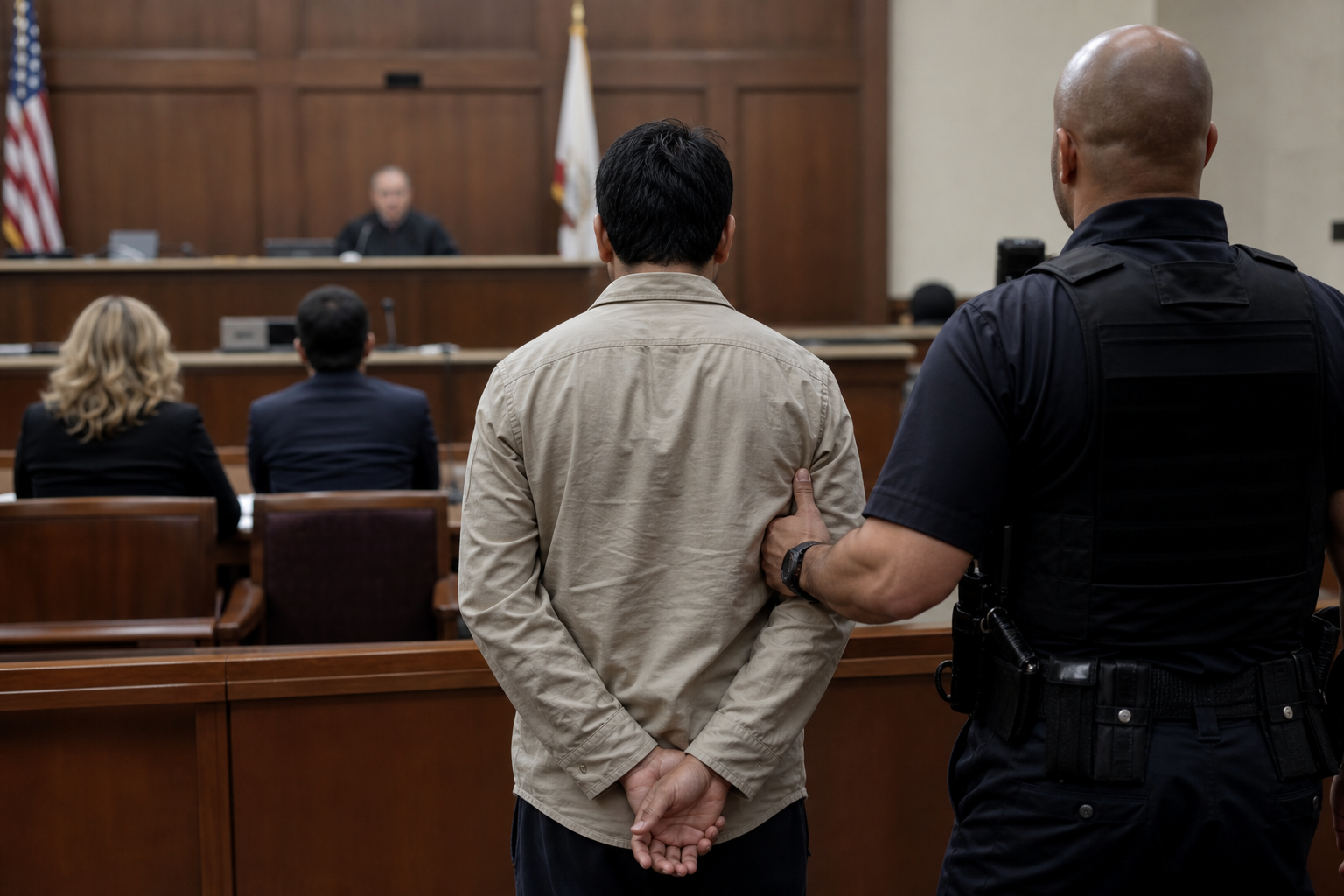
The immediate issue is narrow, but the stakes are not. A court has ruled for the government in a case involving green card holders accused of crimes, and the dispute turns on the legal rights afforded to lawful permanent residents in criminal proceedings. The resolution asks whether green card holders should have fewer due process protections than U.S. citizens. My answer is no, and not because citizenship is meaningless. It is because due process is most valuable precisely when the state claims a practical reason to cut corners.
There is a serious opposing argument here, and it deserves to be stated fairly. Lawful permanent residents are not citizens. Their right to remain in the United States is real, but conditional in a way citizenship is not. The political community has always distinguished between members and guests, between those who possess an unconditional claim on the nation and those whose continued presence depends on law. From English practice through the early republic to the modern immigration state, sovereigns have exercised broader discretion over non-citizens. It is also true that courts have often recognized that immigration consequences and removal proceedings need not mirror every protection found in an ordinary criminal case.
That history matters. A nation that cannot distinguish between citizenship and residency is a nation that has forgotten what citizenship is. But a nation that cannot distinguish between regulating admission and punishing the accused has forgotten something even older and more important, namely why due process exists at all.
The Constitution does not reserve due process to citizens. The Fifth Amendment speaks of no person being deprived of life, liberty, or property without due process of law. The Fourteenth Amendment uses the same word, person. That was not accidental drafting. It reflects an old constitutional insight that procedure is the first restraint on power. When the government accuses, detains, convicts, or expels, it acts at its most coercive. At that moment, the category that matters most is not voter, taxpayer, or citizen. It is person under the power of the state.
That principle is not some airy abstraction. It has been tested in harder times than ours. The American legal tradition has repeatedly flirted with the idea that exceptional categories of people justify exceptional shortcuts. Sometimes the category was alien, sometimes dissenter, sometimes suspected radical, sometimes racial minority. The recurring lesson is that reduced protections advertised as narrow and efficient rarely remain either. The history of the Alien and Sedition era, the Palmer Raids, Japanese American internment, and the broad deference often shown in immigration enforcement is not a story of the state using less process with perfect wisdom. It is a story of urgency overstating its case and institutions repenting later, if at all.
The strongest practical case for fewer protections is administrative efficiency. Why provide identical process to a green card holder accused of a crime, the argument goes, if deportation is likely anyway? Why spend public money on extended litigation for a non-citizen whose status is contingent? Why not streamline removal, reduce backlogs, and prioritize citizens?
Because this argument confuses two different systems and ends by damaging both. Criminal proceedings exist to determine guilt and protect against wrongful punishment. Immigration proceedings determine removability. Those systems can interact, but they are not interchangeable. If the government wants to punish crime, it must prove crime through fair procedures. If it wants to remove a lawful permanent resident, it may invoke immigration law, but it should not dilute criminal due process on the theory that deportation makes accuracy less important. On the contrary, deportation can be one of the gravest consequences the state imposes. For a lawful permanent resident with family, work, and decades of ties in the United States, exile is not a clerical adjustment. It is often a life-altering penalty.
The phrase lawful permanent resident should matter here. A green card holder is not a tourist or an unlawful entrant encountered at the border. He or she is someone the United States has admitted to live here permanently, often after years of vetting, compliance, labor, and family formation. The law has long treated this status as significant. Permanent residents can be drafted, taxed, prosecuted, and bound by the full force of American law. It would be a curious jurisprudence that demands all the duties of presence while discounting the protections of presence the moment accusation arrives.
There is another practical objection worth taking seriously. Identical rules in all contexts are not required by common sense or precedent. Citizens can vote, non-citizens generally cannot. Citizens cannot be removed, non-citizens can. This is all true. But it does not follow that when the government accuses someone of criminal wrongdoing, it should enjoy a lower burden of fairness simply because the accused lacks citizenship. Constitutional systems survive by sorting distinctions carefully. Some differences are foundational; others are invitations to abuse. Distinguishing voting rights by citizenship is one thing. Distinguishing the fairness of criminal process is another.
Nor is the government’s recent courtroom victory the final word on what policy wisdom requires. Courts often decide specific questions narrowly. They also operate within doctrines that have historically given the political branches exceptional leeway over immigration. One can acknowledge that precedent has sometimes permitted differential treatment of non-citizens without endorsing a broader political principle that green card holders as a class deserve fewer due process protections whenever accused of crimes. Law is full of tolerated powers that a prudent republic should still use sparingly.
The deeper problem with a two-tiered model of criminal due process is institutional. Once prosecutors and courts become accustomed to a reduced-protection track for one class of defendants, incentives shift. Speed is rewarded over accuracy. Plea pressure intensifies. Defense quality diverges. Errors become easier to rationalize because the affected population lacks full political standing. This is not speculation detached from history. It is how exceptional procedures entrench themselves. Systems built for the marginal case have a way of migrating inward.
Supporters of the resolution say the state’s first duty is to its citizens. Fair enough. But one of the clearest duties a constitutional state owes its citizens is preserving legal forms sturdy enough to restrain power before it reaches them too. Citizens are not protected when the government learns that status-based shortcuts are cheap, popular, and judicially manageable. They are protected when institutions maintain the discipline of proving accusations through procedures that can withstand fear, fatigue, and politics.
So the question is not whether citizenship matters. Of course it does. The question is where it matters. It matters for voting, for officeholding, for the absolute security of the right to remain in the country. It should not become a license for lesser justice in the adjudication of criminal accusations. The American tradition at its best has distinguished the sovereign’s power over borders from the prosecutor’s power over persons. We should keep that distinction.
Green card holders accused of crimes should receive robust due process protections, not because they are citizens, but because the government is the government. The oldest lesson in constitutional history is that when officials ask for less process in the name of efficiency, the bill arrives later, with interest, in the currency of arbitrary power. We have funded that experiment before. We should not fund it again.