
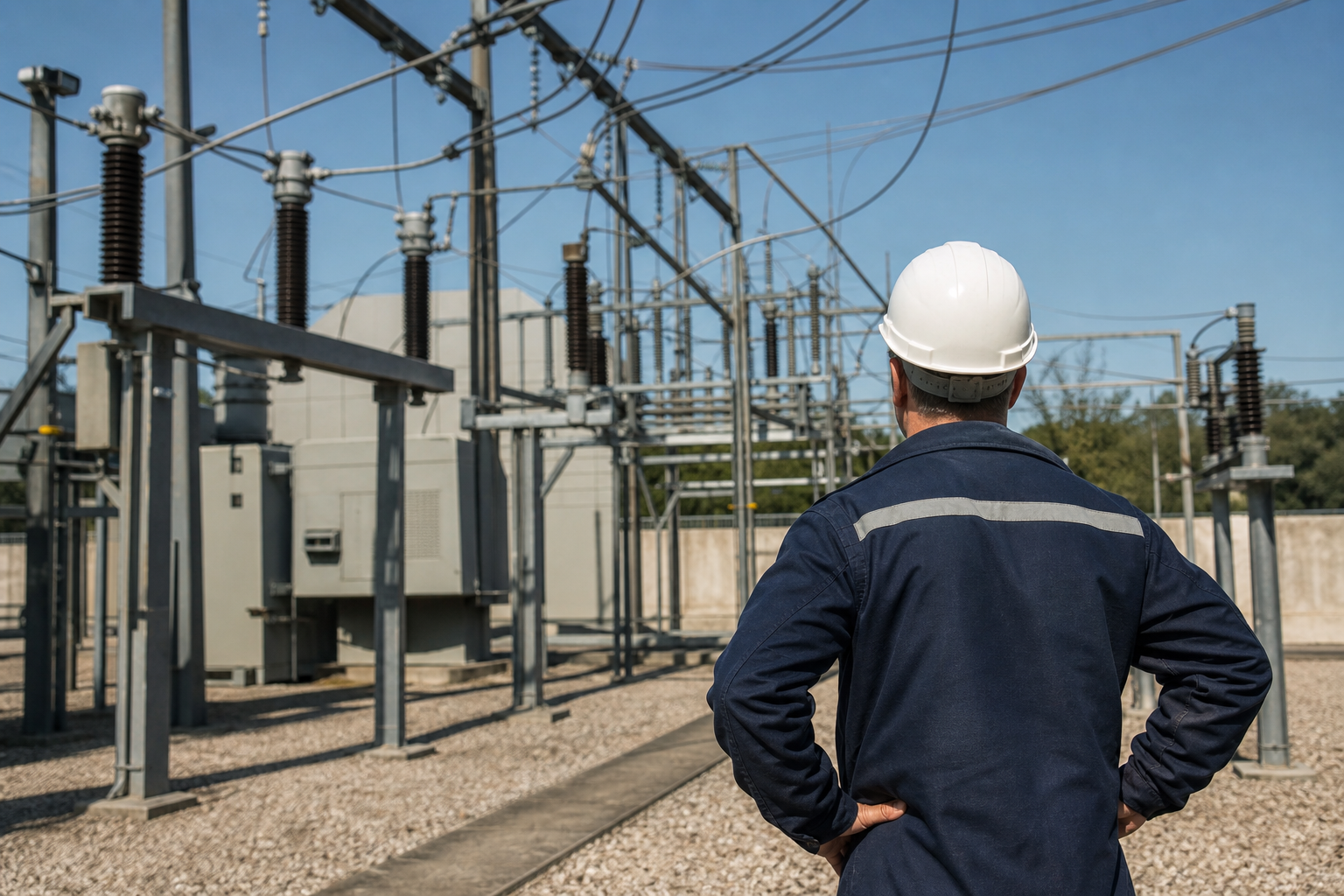
When a country records its hottest day since 1947, then breaks that record again within the same week, and power outages occur at the same time, the debate is no longer abstract. It is about whether the electric grid can keep working when people most need air conditioning, refrigeration, hospital equipment, transit, communications, and water systems. It is about whether governments will treat heat-related power failures as a foreseeable public safety risk or as a regrettable inconvenience to be managed after the fact.
They should treat it as a foreseeable risk, and they should act accordingly. Governments should mandate infrastructure upgrades to prevent heat-related power failures.
That conclusion does not require panic, and it does not require pretending every mandate is wise by definition. It requires something simpler and more demanding, a serious understanding of duty of care. A power grid is not a luxury service. During extreme heat, electricity becomes a life-preserving necessity. Blackouts in mild weather are costly; blackouts during record temperatures can be deadly. The vulnerable pay first and worst, older people, infants, disabled people, low income households, tenants in poorly insulated housing, people who rely on powered medical devices, and workers who cannot escape the heat. Any policy discussion that treats this as merely a pricing problem or a capital allocation puzzle has already missed the human stakes.
The strongest case against mandates deserves a fair hearing. Skeptics raise at least four important objections.
First, they warn against overreacting to a single event. One week of record heat in France, they argue, should not trigger expensive, sweeping requirements across an entire power system. Second, they argue that top-down mandates are blunt instruments. Utilities and local operators know their systems better than distant ministries do; a national order can misallocate money, force the wrong upgrades, and crowd out more adaptive local solutions. Third, they point to cost. Infrastructure spending is real money, and ratepayers and taxpayers should not be handed an unlimited bill under the banner of resilience. Fourth, some argue that market tools can address the problem more efficiently, dynamic pricing during heatwaves, insurance signals, distributed energy, microgrids, and private investment in better equipment where risk is highest.
These are not frivolous concerns. In fact, a good mandate should be shaped by them. Governments should not write sloppy one-size-fits-all rules, and they should not let utilities use climate risk as an excuse to socialize losses while privatizing gains. If operators have underinvested for years, regulators must examine cost recovery carefully. A mandate without accountability can become a subsidy for neglect.
But those objections still do not defeat the case for government action. They mostly describe how to design mandates well, not why to avoid mandates altogether.
Start with the claim that this is only one event. It is true that one fact pattern does not answer every engineering question. But infrastructure policy is not a courtroom where regulators must wait for multiple fatalities before concluding danger was foreseeable. The relevant standard is not certainty. It is reasonable foresight. France's weather agency reported the hottest day since record-keeping began in 1947, and then that record was surpassed days later. Power outages occurred at the same time. That is enough to establish a warning signal that prudent governments cannot ignore. If a bridge sways under a load it should safely carry, officials do not wait for collapse to begin strengthening it.
Now consider the market argument. In ordinary consumer markets, price signals can be powerful. In critical infrastructure during an extreme heat event, they are not enough. The reason is structural. The benefit of resilience is collective, long term, and often invisible when it works. The cost of upgrading transformers, substations, transmission lines, cooling systems, vegetation management, and backup capacity is immediate and concentrated. Left alone, many firms will defer those costs, especially when failures are episodic, when customers cannot easily switch providers, and when the harm falls disproportionately on people with the least political and economic leverage. That is a textbook case for regulation.
The local-control argument is also weaker than it first appears. Yes, local conditions matter. Heat stress is not identical in every region, and no central authority should micromanage every bolt and cable. But a power grid is an interconnected system. Reliability is not fully local. A failure in one part of the network can ripple outward. Fragmented decision-making also creates a free-rider problem. One operator can skimp on resilience while still depending on the wider system to absorb shocks. Governments exist in part to solve exactly this kind of coordination failure.
This is why the best version of the pro-mandate case is not crude central planning. It is rule-bound, evidence-based public protection. Governments should set heat resilience standards, require utilities and grid operators to meet them on a timeline, audit compliance, and tie cost recovery to demonstrated performance and prudent investment. They should allow regional flexibility in how standards are met, but they should not leave the basic obligation optional.
That distinction matters. The choice is not between a rigid national blueprint and laissez-faire drift. There is a middle path, and it is the responsible one: mandatory outcomes, flexible implementation, transparent oversight. Require utilities to harden equipment against extreme temperatures, modernize aging components, improve grid monitoring, add redundancy where failures would be catastrophic, and protect critical facilities from outages. Require planning that reflects heat risk rather than yesterday's averages. Require clear emergency protocols for hospitals, care homes, transit systems, and cooling centers. Require disclosure so the public can see which operators are preparing and which are gambling.
The burden of proof should rest with those who want fewer protections, not those trying to prevent foreseeable harm. That is not bureaucracy for its own sake. It is the logic of public safety. We accept building codes before towers fall, water standards before poisoning spreads, and fire rules before apartments burn. Heat-related power resilience belongs in the same category. Delay is often defended as prudence, but in infrastructure, delay usually means the risk remains while the weather worsens.
There is also an equity issue that should not be pushed to the margins. Wealthy households can sometimes buy generators, batteries, better insulation, or temporary relocation. Poorer households cannot. So when governments avoid mandates in the name of flexibility, what they often create in practice is selective resilience, where protection depends on income and geography. A public utility system that fails in extreme heat is not simply inefficient. It is unequal.
The opponents of mandates are right about one thing: governments can waste money. That is why this agenda must be paired with strict scrutiny of procurement, cost allocation, and utility performance. But the possibility of bad regulation is not an argument for no regulation when the hazard is obvious. It is an argument for better regulation.
France's record heat and coinciding power outages should be read as a warning, not an anomaly to rationalize away. The policy conflict is clear. We can keep relying on voluntary adaptation, partial incentives, and after-action regret, or we can require the power system to meet the conditions it now predictably faces. One approach assumes that resilience will emerge if everyone follows their incentives. The other recognizes that when lives, health, and basic social functioning are at stake, governments have an affirmative duty to set the floor.
On this question, the precautionary principle is not alarmism. It is responsible governance. Heat is rising. The grid must be ready before the next record falls, not after the next blackout.