
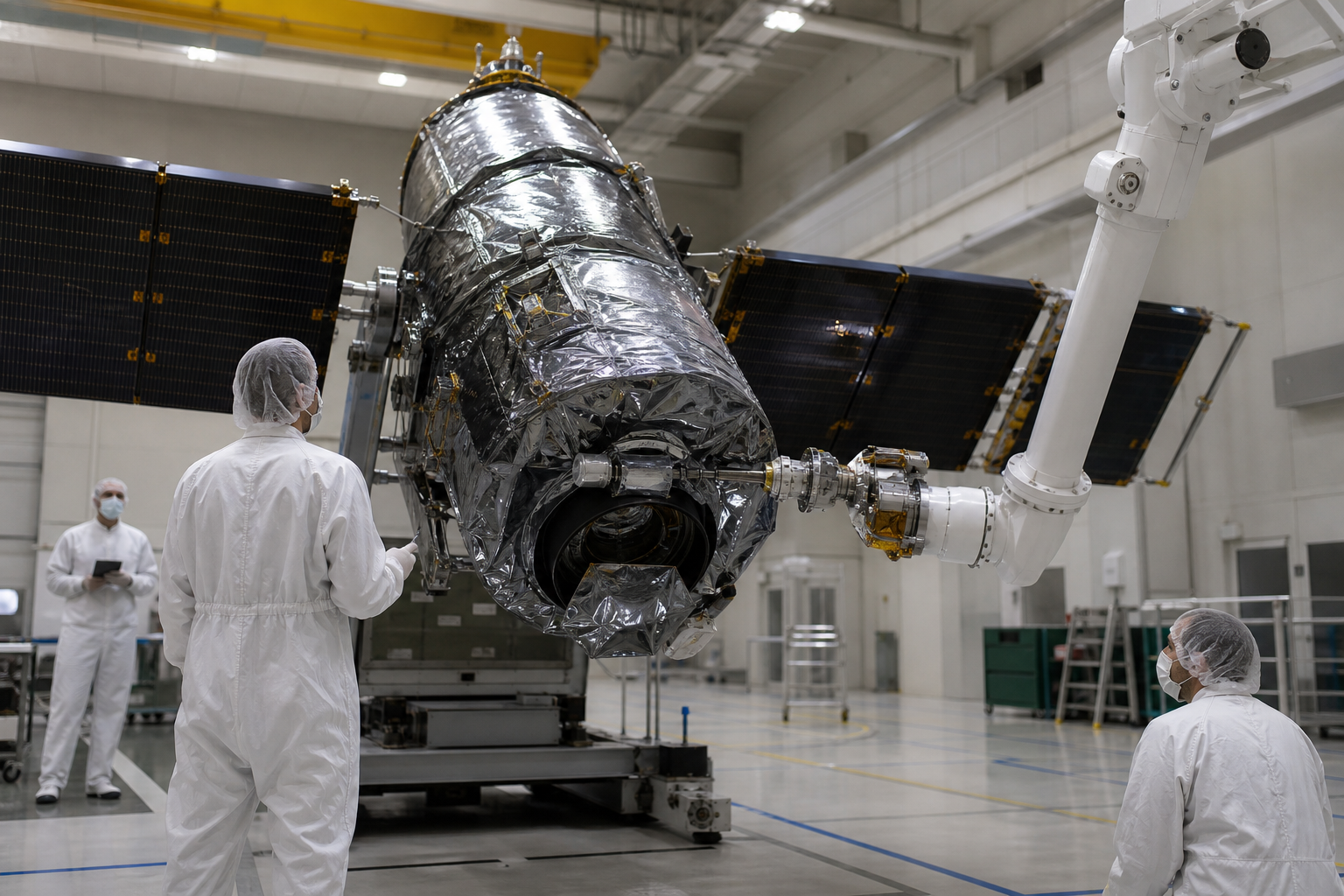
The cleanest way to think about robotic rescue missions in orbit is to strip away both romance and outrage. A telescope is descending from its operational orbit. NASA funded a robot, launched it, and tasked it with intercepting that telescope before atmospheric reentry, capturing it in orbit, and boosting it back to a safe orbital position. The policy question is not whether this makes for a good movie. It is whether government space agencies should pay for this kind of orbital servicing when spacecraft fail.
Yes, they should, but not as a blank check and not as a standing bailout. They should fund robotic missions to rescue failing orbital assets when the numbers are favorable and the spillover benefits are real. That is the practical standard. Not duty for duty’s sake, not anti-government purity, not technological spectacle for its own sake. Just disciplined asset management under conditions where inaction is more expensive.
The strongest objection comes from the moral hazard camp. If operators think a government tow truck will eventually show up in orbit, they may underinvest in reliability, on-board propulsion, servicing ports, or end-of-life disposal. That is a legitimate concern. Public rescue can socialize losses while private actors keep gains. We should concede that much immediately, because pretending otherwise leads to bad policy design.
But the moral hazard argument fails as a reason to reject government rescue missions outright. Why? Because orbital failures produce externalities. A failing space telescope or satellite is not just a private bookkeeping problem. It can create public costs through uncontrolled reentry risk, debris generation, collision hazard, congestion in valuable orbital regimes, and loss of scientific or strategic capability that taxpayers already paid to build. When an asset in orbit degrades, the damage does not stop at the balance sheet of the original operator.
That matters here. The fact pattern is specific. NASA did not launch a robot to indulge sentimentality about a beloved telescope. It launched a robot because the telescope was descending and at risk of burning up on reentry. Rescue is not just preservation, it is hazard management. If a robotic capture and reboost can cheaply extend useful life, avoid a replacement launch, and reduce the chances of a messy end, government has a rational reason to act.
Critics also say this is a bespoke stunt, not a scalable policy. Fair point, partly. A single robotic intercept of a single orbital asset does not prove that every failing satellite deserves a rescue mission. Many will not. Some satellites are too cheap to save. Some are too risky to approach. Some should be deorbited, not preserved. Some should have been designed better from the start. The resolution, however, is not that every failing orbital asset must be rescued. It is that government space agencies should fund robotic missions to rescue them. The right reading is capability plus discretion.
That distinction is everything. You want the capability, because the first successful capture, stabilization, and reboost does more than save one telescope. It creates a reusable operational skill set in rendezvous, docking, autonomy, robotic manipulation, and servicing of non-cooperative spacecraft. Those are not narrow tricks. They are platform capabilities. They can support life extension, debris removal, inspection, refueling, deorbit assistance, and emergency intervention. In plain English, one robotic rescue mission can lower the cost of many future fixes.
This is where the anti-rescue side becomes too ideological. It treats failure as a pure market signal, as if allowing a spacecraft to burn up or drift is the cleanest form of accountability. On Earth, that logic breaks down whenever the failure spills costs onto others. We do not let a collapsing bridge remain in service to teach contractors a lesson. We stabilize it, reopen it if feasible, then change the incentive structure afterward. Orbit is no different. The market signal is useful, but it is not sacred when third parties bear the downside.
There is also a simplistic fiscal critique that government agencies should avoid becoming an orbital roadside assistance program for contractors. Again, partly fair. Public agencies should not rescue private firms from predictable negligence. But that is an argument for pricing and eligibility rules, not for abstention. Agencies can require co-funding, liability sharing, data-sharing, pre-approved servicing interfaces, or reimbursement terms for commercial beneficiaries. They can prioritize assets with broad public value, science payloads, shared infrastructure, and high debris or reentry consequences. They can refuse missions where replacement is cheaper than rescue. Good policy is not helpless. It can distinguish between stewardship and subsidy.
The safety critique deserves serious treatment too. Intercepting a failing orbital asset is not risk-free. A robot capturing a descending telescope could collide, fragment the target, or worsen the orbital situation. But this cuts both ways. The baseline is not perfect safety. The baseline is a failing object already descending from operational orbit. The right comparison is managed intervention versus unmanaged deterioration. If the mission risk is lower than the likely cost of doing nothing, then safety concerns support action rather than paralysis.
This is the broader point that got lost in much of the debate. Space policy is full of false binaries. Either free markets or central control. Either heroic rescue or stoic abandonment. Either innovation or regulation. In practice, the best-performing systems mix incentives with backstops. Governments set standards, fund capabilities markets underprovide, and intervene selectively when externalities are large. Private actors still bear responsibility, but not in a way that leaves the public paying for debris, danger, or duplicated replacement costs later.
So what should the rule be? Government space agencies should fund robotic rescue missions to rescue failing orbital assets when four tests are met. First, the asset has public, scientific, strategic, or economic value worth preserving. Second, rescue is cheaper than replacement or the avoided hazard is large enough to justify the premium. Third, the servicing mission creates reusable capability that lowers future costs. Fourth, the funding model preserves operator accountability through fees, conditions, or design requirements.
That is a far better framework than either reflexive bailout or reflexive neglect. It recognizes what the NASA telescope mission really represents. Not a sentimental salvage job, and not proof that every satellite deserves saving. It is a demonstration that orbital servicing can move from science fiction to infrastructure. Once that happens, the policy question becomes boring in the best way: when does intervention beat loss?
That is how mature sectors operate. They do not worship failure, and they do not subsidize it blindly. They manage assets, price risks, and build capabilities that reduce waste. If a robotic mission can intercept a descending telescope, prevent burn-up during atmospheric reentry, and boost it back to a safe orbit at lower total cost than letting it fail, then government should fund it. Not because space is inspiring, but because waste is expensive.