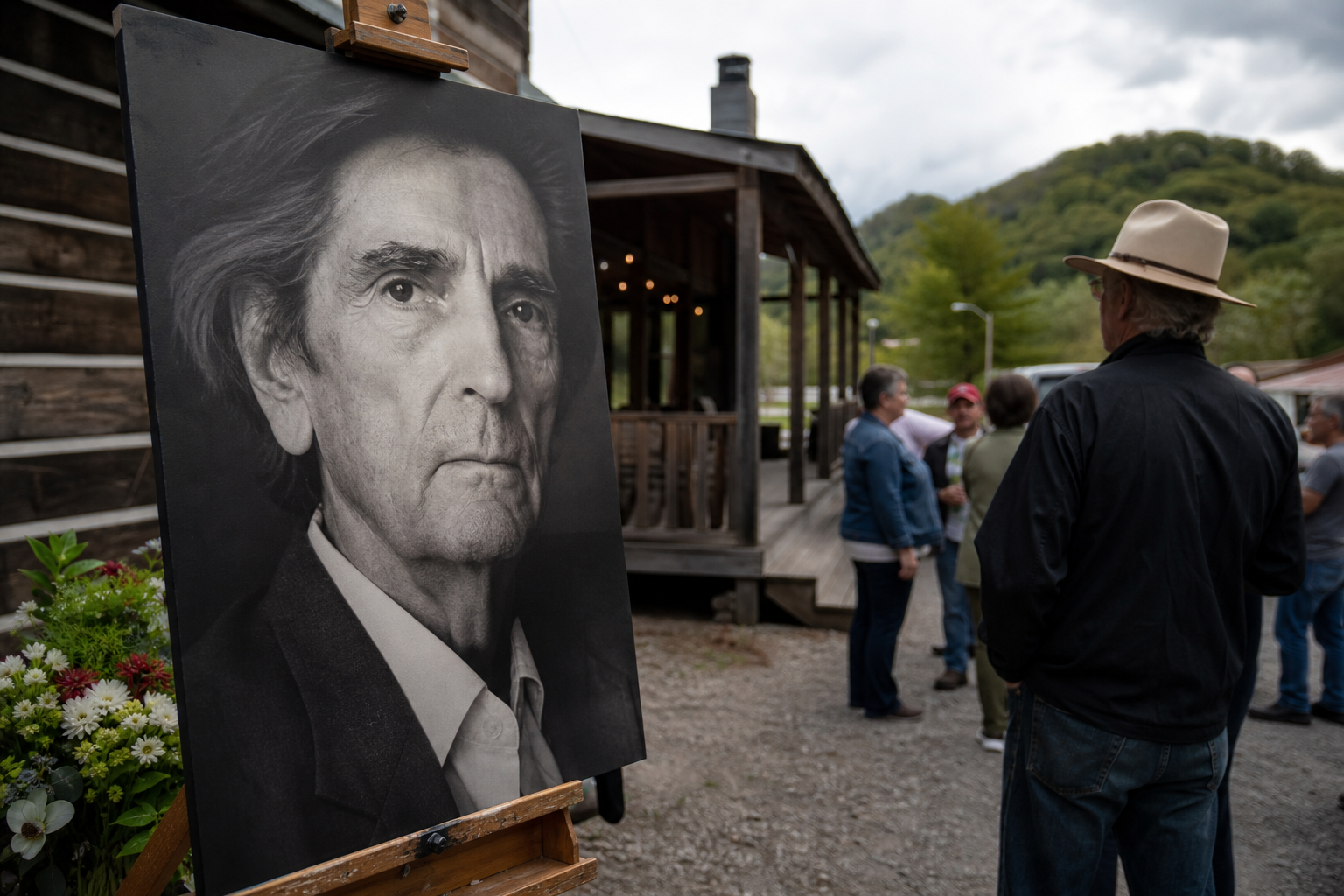
Harry Dean Stanton would have turned 100 this week. He was a character actor, he was from Kentucky, and Kentucky already has an annual festival celebrating him, organized by fans. That fact pattern matters, because it strips the resolution down to its practical core. This is not a debate about whether local culture has value. It does. It is not even a debate about whether communities should honor deceased local artists. They should, and they already do. The live policy question is narrower and more useful: should government funding and support enter the picture, and if so, on what terms?
My answer is yes, but only in a limited, disciplined way. Public festivals honoring deceased local artists should receive government funding and support when the public contribution is small, measurable, and clearly additive. Not as an open-ended subsidy. Not as a make-work program for arts administrators. Not as a declaration that every fan club gets a check. If a local artist festival already has proof of life, private buy-in, and a realistic path to drawing residents and visitors, government should be willing to help with the boring but high-value pieces: permits, policing coordination, sanitation, venue access, modest matching grants, tourism promotion, and small infrastructure support. That is the highest-return version of public involvement.
The strongest argument against funding is serious, and it should be taken seriously. A fan-organized Harry Dean Stanton festival already exists. That means there is organic demand. Once government money appears, so can paperwork, favoritism, lobbying, and mission creep. Every town has a beloved musician, actor, painter, or writer. If public agencies start writing checks based on sentiment, taxpayers will fund a long tail of niche passions with weak public return. Worse, government can flatten what made the event worth attending in the first place. A grassroots memorial can become a sterilized municipal product.
All true, or at least plausibly true. This is exactly why the case for public support cannot be a romantic one. The argument is not that every cultural tribute is sacred and therefore entitled to tax dollars. The argument is that some public festivals honoring local artists clear a simple business test. They convert a modest public input into outcomes government claims to want anyway: visitor spending, local identity, downtown foot traffic, off-season hotel occupancy, press attention, and low-cost civic programming.
That business test matters more here than abstract arguments about whether culture should be publicly supported in principle. The market signal is already present. Fans took the first risk. They organized the annual festival without being bribed into existence. That should be the threshold criterion for government involvement, not the reason to stay out forever. If private people have already shown there is an audience, the state is not funding a fantasy. It is deciding whether a small amount of public support can scale a working model.
This is where some critics overreach. They treat all public funding as if it displaces volunteer energy and all professionalization as if it automatically creates dead weight. Sometimes it does. Sometimes it does not. A fan-run event can be wonderfully authentic and operationally brittle at the same time. Volunteers burn out. Insurance is expensive. Permitting is tedious. Marketing beyond the friend circle rarely happens by magic. If a county tourism office can add promotion, if a city can waive certain fees, if a state arts agency can offer a matching grant that unlocks private donations, that is not cultural central planning. That is leverage.
The best pro-funding argument, then, is not that government should transform every memorial festival into a permanent institution. That was the weaker version offered in the debate. Turning a fan gathering into a heavily managed civic asset often raises costs faster than benefits. The stronger case is narrower: government can reduce friction and amplify upside while leaving programming control largely with the community. Think support, not takeover.
The best anti-funding argument is that public money should go to roads, schools, and police before it goes to actor festivals. Also true, in the broad sense, but not dispositive. Budgets are not one giant bucket where every dollar spent on culture directly cancels a firefighter. Governments already make smaller quality-of-life and tourism investments all the time because a place is more than its emergency services. The relevant question is comparative value at the margin. A modest local festival grant or in-kind support package may cost less than many routine economic development efforts and produce cleaner, more visible returns.
Notice the word modest. This is where guardrails matter. The resolution says these festivals should receive government funding and support. Fine. But the operative model should be capped, matched, and performance-based. Require local buy-in. Require attendance estimates, even rough ones. Require simple after-action reporting, not a novel-length compliance file. Favor events that already exist over speculative proposals. Favor support that lowers fixed costs over recurring payroll. Favor one-time centennial support, such as for Harry Dean Stanton at 100, over permanent dependence. And never let the grant process become so expensive that the administrative cost rivals the award itself.
That framework answers the best cautionary points from skeptics. It reduces favoritism by using transparent criteria. It avoids crowding out private passion by requiring matching funds or documented volunteer contribution. It avoids bloat by capping awards. It avoids political capture by focusing on local economic and civic outcomes rather than ideological content. Most important, it respects the revealed preference already shown by the fans. Government is not choosing an artist from a vacuum. It is responding to demonstrated community demand.
There is also a second-order benefit that ideologues on both sides tend to miss. Small, smart public support can preserve the advantages of a decentralized event ecosystem. If organizers know government will help with permits, logistics, and limited matching funds, more communities can attempt festivals without needing a wealthy patron or major institution. That broadens access while keeping initiative local. You get more experimentation, not less. Some festivals will fail. Good. Failure is information. The public role is to make entry possible, not guarantee permanence.
In Kentucky, the Harry Dean Stanton festival is the easy test case because it is concrete. A local artist with national recognition, a centennial milestone, an existing annual event, and fan organizers who have already done the hard part. That is exactly the kind of situation where government support can make sense. Not because Harry Dean Stanton was famous, and not because nostalgia deserves a blank check, but because the odds of additive value are higher when a real event already has traction.
So yes, public festivals honoring deceased local artists should receive government funding and support, but only the kind that earns its keep. The state should not replace fans, curate taste, or build a permanent dependency. It should clear obstacles, match demonstrated demand, and spend small to get large civic return. That is the grown-up answer. It honors culture without pretending sentiment is a budget strategy.
A society that cannot make room for local memory becomes thinner and less interesting. A government that funds every heartfelt cause becomes broke and ineffective. The sweet spot is obvious if you stop moralizing and start measuring: back what already works, keep the subsidy light, and make sure the public gets more than it pays for.