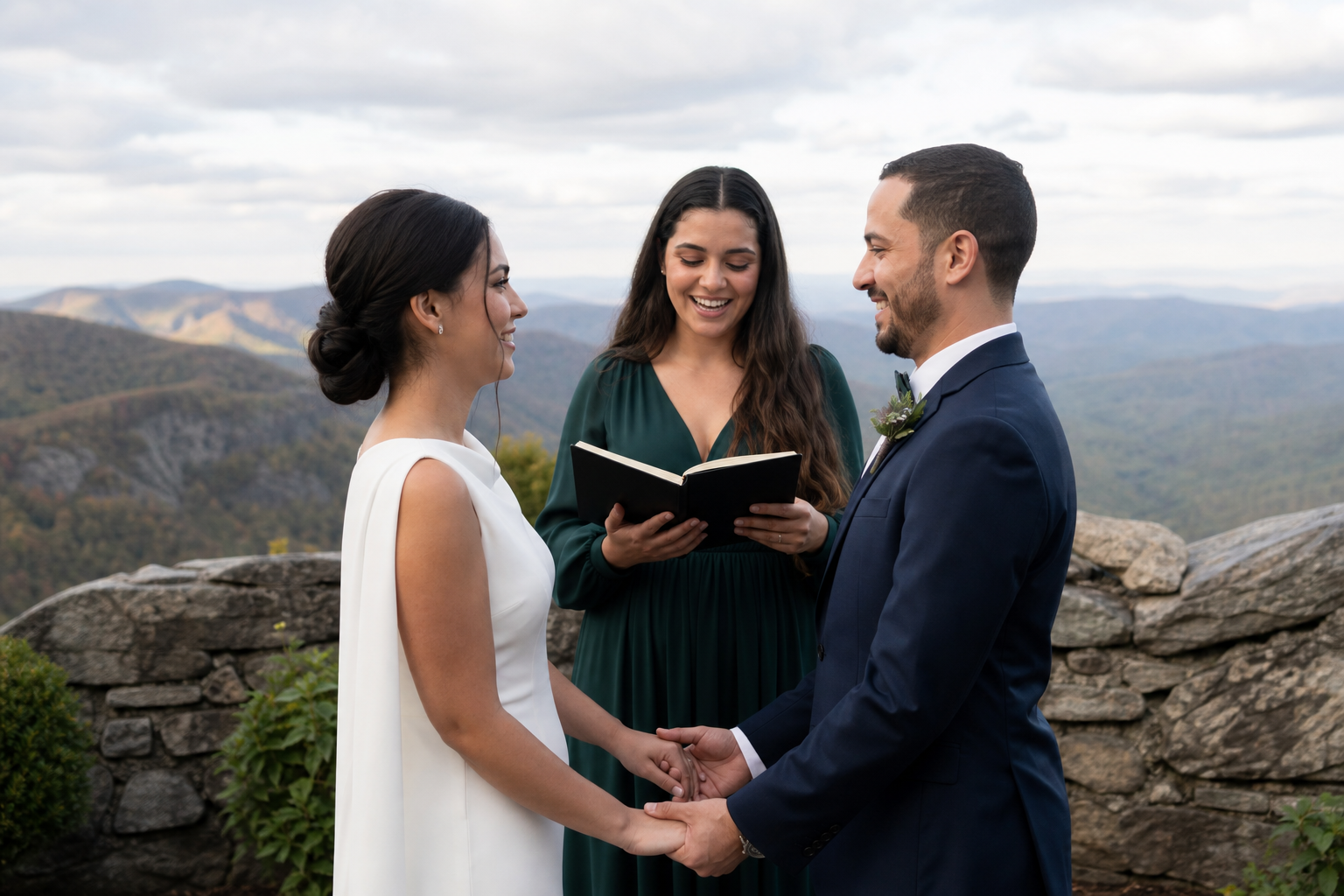
The policy question here is narrower than the rhetoric around it. The issue is not whether marriage matters, whether religion matters, or whether the state should care about legal validity. It is whether non-clergy individuals, usually friends or family members chosen by the couple, should be permitted to officiate a legal wedding ceremony. On that question, the practical answer is yes.
Why? Because the core state interest in marriage is accurate consent, proper paperwork, and reliable record-keeping. It is not preserving a monopoly for clergy, courthouse staff, or professional officiants. If the legal objective is to create a valid marriage license, verify the basic formalities, and submit the documents, then excluding competent non-clergy officiants is mostly an artificial bottleneck.
The fact pattern already tells us where demand is moving. Couples are increasingly selecting friends rather than traditional clergy or professional officiants to conduct wedding ceremonies. Markets are information systems. That trend signals a straightforward reality, people want a ceremony that feels personal, and they do not see much added value in being forced to use an approved stranger. When policy collides with stable consumer preference, regulators should ask a basic question, what problem are we solving by saying no?
The best objection is not moral panic about tradition. It is administrative risk. Critics are right about one thing, friends who officiate weddings take on legal and ceremonial responsibilities. Mistakes can matter. A signed marriage license filed incorrectly can create delays, confusion, and in edge cases legal disputes. Marriage is a legal contract with consequences for taxes, inheritance, health care decision-making, immigration, and property rights. A wedding ceremony is emotionally meaningful, but the legal component is procedural. Procedure matters.
That is the strongest argument against broad permission for non-clergy officiants, and it deserves respect. But it still does not justify exclusion. It just justifies basic guardrails.
This is where the opposition overreaches. Critics implicitly treat the choice as binary, either use clergy and professionals, or invite chaos. Real governance is not binary. If the risk is paperwork error, solve the paperwork problem. Require registration. Provide a one-page instruction sheet. Use a short online module. Add a checklist for signatures, witnesses, and filing deadlines. If a jurisdiction wants more protection, require the officiant to acknowledge legal duties before the ceremony. These are low-cost fixes.
In other words, the relevant comparison is not between a perfect professionalized system and a reckless amateur free-for-all. The real comparison is between a closed system with higher friction and a more open system with modest safeguards. Once framed correctly, the economics are obvious. The cost of letting a friend register and follow a standardized process is low. The cost of prohibiting that choice is spread across millions of couples in the form of fees, scheduling hassle, reduced personal meaning, and forced dependence on providers they did not choose.
The final debate surfaced an important point that should settle this. Legal requirements for who may officiate weddings vary by jurisdiction. That variation is not just a trivia note. It is evidence. Some jurisdictions already permit non-clergy officiants. Marriage as a legal institution has not disintegrated there. The burden of proof shifts quickly once a policy exists in the wild without systemic collapse. You no longer get to argue from abstract catastrophe. You have to show concrete failure serious enough to justify restricting choice.
Opponents tried to repackage this as a precautionary principle argument. Better to delay flexibility than risk invalid marriages, they say. Fair enough in theory, but precaution has a price, too. Every gatekeeping rule imposes real costs on compliant people, not just hypothetical benefits against rare mistakes. If the state insists that only clergy or licensed professionals can officiate, it narrows supply, raises transaction costs, and imposes a cultural model many couples do not want. That might be tolerable if the legal task were complex. It is not.
A wedding officiant is not performing surgery. They are not adjudicating a contested estate. They are not underwriting financial derivatives. In most cases, they are confirming the ceremony, completing forms, and transmitting records. That is an administrative role with symbolic importance, not a high-skill profession that requires years of training. We should regulate the error points, not mystify the function.
There is also a clean institutional principle here. The state should care more about outputs than pedigree. Was there valid consent? Was the marriage license properly issued? Were the signatures complete? Was the filing timely? If yes, then the state has achieved its objective. Whether the officiant was a minister, judge, friend, cousin, or former college roommate is secondary. Restricting legal wedding ceremonies to a narrow class of people confuses status with performance.
Now, a concession to the skeptics. Not every version of this policy is good. A sloppy patchwork can create confusion. Jurisdictions should not simply announce that anyone can officiate and walk away. Mira Solenne was right to insist that legal integrity matters. The better path is permission plus standardization. Permit non-clergy individuals to officiate, but make the process easy to understand and hard to botch. A practical model would include registration, identity verification, plain-language instructions, and a simple filing mechanism. That is enough in most cases. Heavy licensing, expensive training, or broad bans are not.
Some critics also worry that this trend cheapens marriage, reducing it to personalization and convenience. That concern misunderstands where value actually comes from. A legal wedding ceremony does not become more serious because the officiant has institutional branding. For many couples, asking a friend to officiate increases the solemnity because the person knows their history, speaks credibly about their commitment, and has the couple's trust. The ceremonial meaning rises while the legal mechanics stay manageable. That is not degradation. It is specialization, let the law handle legality and let the couple choose significance.
The liberty case for permission exists, but it is not even the strongest case. The strongest case is throughput. Public institutions work best when they reserve strict gatekeeping for genuinely high-risk functions and simplify everything else. Marriage formation should be robust, legible, and cheap. If non-clergy officiants can perform the role with a short compliance process, then blocking them wastes time for couples, creates unnecessary demand for professionals, and solves no major public problem.
So yes, permit friends and other non-clergy individuals to officiate legal wedding ceremonies. Not because tradition is irrelevant, and not because regulation never matters. Permit it because the state can protect legal validity at far lower cost than an exclusionary system imposes. When consumer demand is strong, the legal task is administratively simple, and real-world jurisdictions already show the model can work, the smart policy is flexibility with guardrails.
That is what pragmatic governance looks like. Keep the marriage license valid, keep the paperwork clean, and stop forcing couples to buy bureaucracy they do not need.