
The cleanest rule is usually the best rule, especially when the money is this large and the market this easily moved by government action. Federal officials should be required to divest from cryptocurrency businesses while in office.
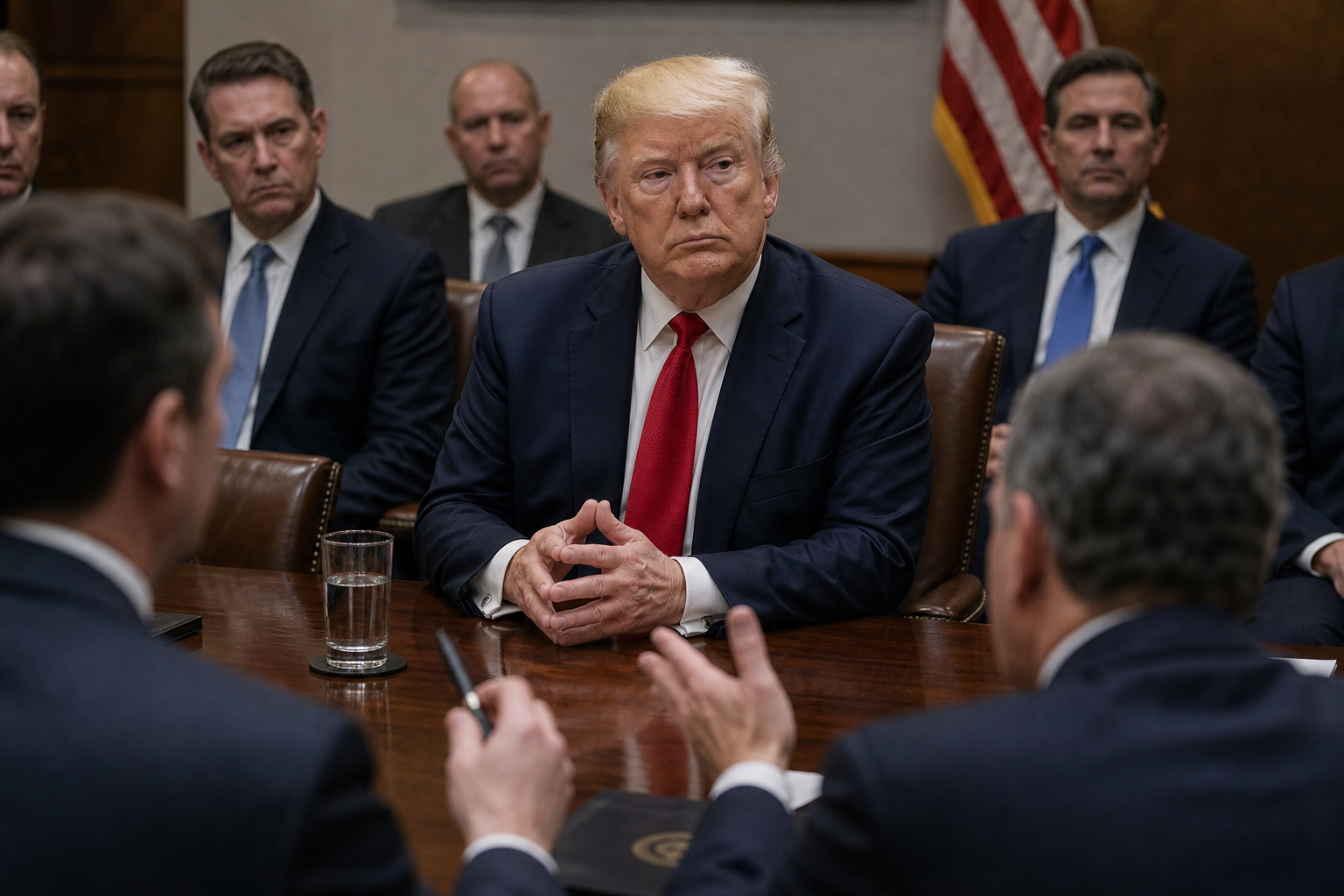
The trigger for this debate is straightforward. A federal filing released on a Wednesday disclosed financial information about President Trump and his family. The filing indicated revenue exceeding $1 billion in one year, and the revenue source was identified as crypto businesses. The disclosure pertains to the previous calendar year. That fact pattern does not, by itself, prove corruption in office. It does prove something else, and that is enough: the financial incentive is enormous, the policy levers are real, and the credibility cost of leaving the conflict in place is higher than the compliance cost of removing it.
Start with incentives, not morality plays. Cryptocurrency businesses live and die by federal action. Enforcement priorities matter. Securities classification matters. Banking access matters. Tax treatment matters. Anti-money laundering rules matter. Stablecoin legislation matters. A single speech, rulemaking signal, or agency posture can move valuations, liquidity, and deal flow very fast. If a federal official owns or profits from a crypto business while helping shape that environment, the market has every reason to assume policy and private gain are entangled. Sometimes that assumption will be unfair. It will still be rational.
That is why the usual fallback options, disclosure and recusal, are too weak here.
Disclosure is useful, but mostly as a diagnostic tool. It tells the public where the conflict is. It does not neutralize the conflict. In fact, the Trump family filing is a perfect example of disclosure doing what it can and no more. We learned a lot. The conflict risk did not disappear because a form was filed. If anything, the size of the revenue made the problem more vivid.
Recusal is better than nothing, but in crypto it breaks down quickly. This is not a narrow zoning permit or a one-off procurement contract where an official can step out of one meeting. Crypto policy is cross-cutting. It runs through the White House, Treasury, SEC, CFTC, banking regulators, tax authorities, law enforcement, and Congress. Senior officials shape tone, priorities, staffing, and strategy even when they are not signing a particular order. You cannot recuse someone from the atmosphere. If the business exposure is large enough, every broad decision becomes adjacent to the asset.
The strongest case against mandatory divestment is not crazy. It says a blanket rule is blunt, costly, and potentially overinclusive. Forced sales can trigger taxes, crystallize losses, and discourage qualified people from public service. Some critics also argue that officials with real market knowledge are exactly the people government needs when regulating fast-moving technology. Others prefer tougher disclosure, independent ethics review, and case-by-case recusals. A more crypto-native critique says divestment could push ownership toward larger incumbents and reduce participation by people who actually understand decentralized systems.
Those are real costs. They are just smaller than the costs of the alternative.
First, on talent. Public office is already full of restrictions. Judges recuse. Civil servants face trading limits. Cabinet officials restructure portfolios. Contractors accept procurement rules. The country somehow continues to find applicants. And the specific pool we are talking about here is not poor, trapped, or unable to diversify. If someone can build or benefit from a crypto business that throws off nine or ten figures, that person can afford to sell, place assets in a blind trust where appropriate, or simply wait until leaving office to reenter the market. The burden is material, but manageable.
Second, on expertise. Owning a crypto business is not the same thing as understanding blockchain, stablecoins, custody, token markets, or digital payments. The government can hire technologists, economists, compliance specialists, and market structure experts without letting policymakers keep a direct financial stake in the firms affected by their decisions. Expertise can be bought with salary, consulting contracts, public advisory roles, and hearings. Integrity is harder to rent after it has been spent.
Third, on overbreadth. A smart divestment rule should be targeted. The resolution is about crypto businesses, not every incidental digital asset exposure in a retirement fund. There is a practical distinction between broad index exposure and ownership or profit participation in a cryptocurrency company, token issuer, exchange, stablecoin venture, mining operation, or similar enterprise. Write the rule narrowly and enforce it hard. That gets most of the benefit without swallowing ordinary passive investment.
Fourth, on market effects. The claim that forcing a handful of federal officials to divest will materially centralize the crypto ecosystem is overstated. Relative to global crypto market capitalization and private capital flows, the number of covered officeholders is tiny. Even if some assets are sold to larger buyers, that is a second-order issue. The first-order issue is whether the United States wants policy for digital assets written by people with an active private stake in the outcome. The answer should be no.
There is also a broader governance point. Crypto is uniquely exposed to hype cycles, valuation swings, and narrative trading. Political signals can become price signals within minutes. That feature makes crypto conflicts of interest more dangerous, not less. If an official with a business tie can move markets with a regulatory nod, the temptation does not need to be acted on to be corrosive. The market will price the possibility anyway. Citizens will assume favoritism. Rivals will allege capture. Honest officials will operate under a cloud they do not need.
This is why the fact that the filing covers the previous calendar year, and relates to President Trump and his family, does not rescue the anti-divestment position. Critics are right about one narrow point: the disclosure alone does not prove a current officeholder made decisions to enrich a current holding. Fine. Concede that. The resolution is not about proving one completed offense. It is about setting a workable rule for known risk. When a federal filing shows that crypto businesses can generate more than $1 billion in annual family revenue, the scale of the incentive is no longer theoretical. At that level, saying "trust disclosure and recusal" is not prudence. It is wishful outsourcing of ethics to paperwork.
The best policy is therefore simple. Require federal officials to divest controlling stakes, direct equity, profit-sharing rights, and comparable ownership interests in cryptocurrency businesses while in office. Allow reasonable transition periods, clear definitions, and independent ethics review. Exempt broad passive funds below a de minimis threshold. Pair the rule with strong disclosure and meaningful penalties for evasion.
That is not anti-crypto. It is pro-credible government. If digital assets are important enough to merit serious federal policy, they are important enough to justify serious conflict rules. A republic does not need perfect virtue from officeholders. It needs incentive design that does not ask for heroism every day.
The practical question is always the same: what is the cheapest reliable way to reduce a high-value risk? In this case, it is not blockchain transparency, community oversight, or elaborate recusal choreography. It is divestment. Remove the direct financial incentive, and you remove the most obvious reason to doubt the public decision. When the numbers are this big, anything less is penny-wise and legitimacy-foolish.