
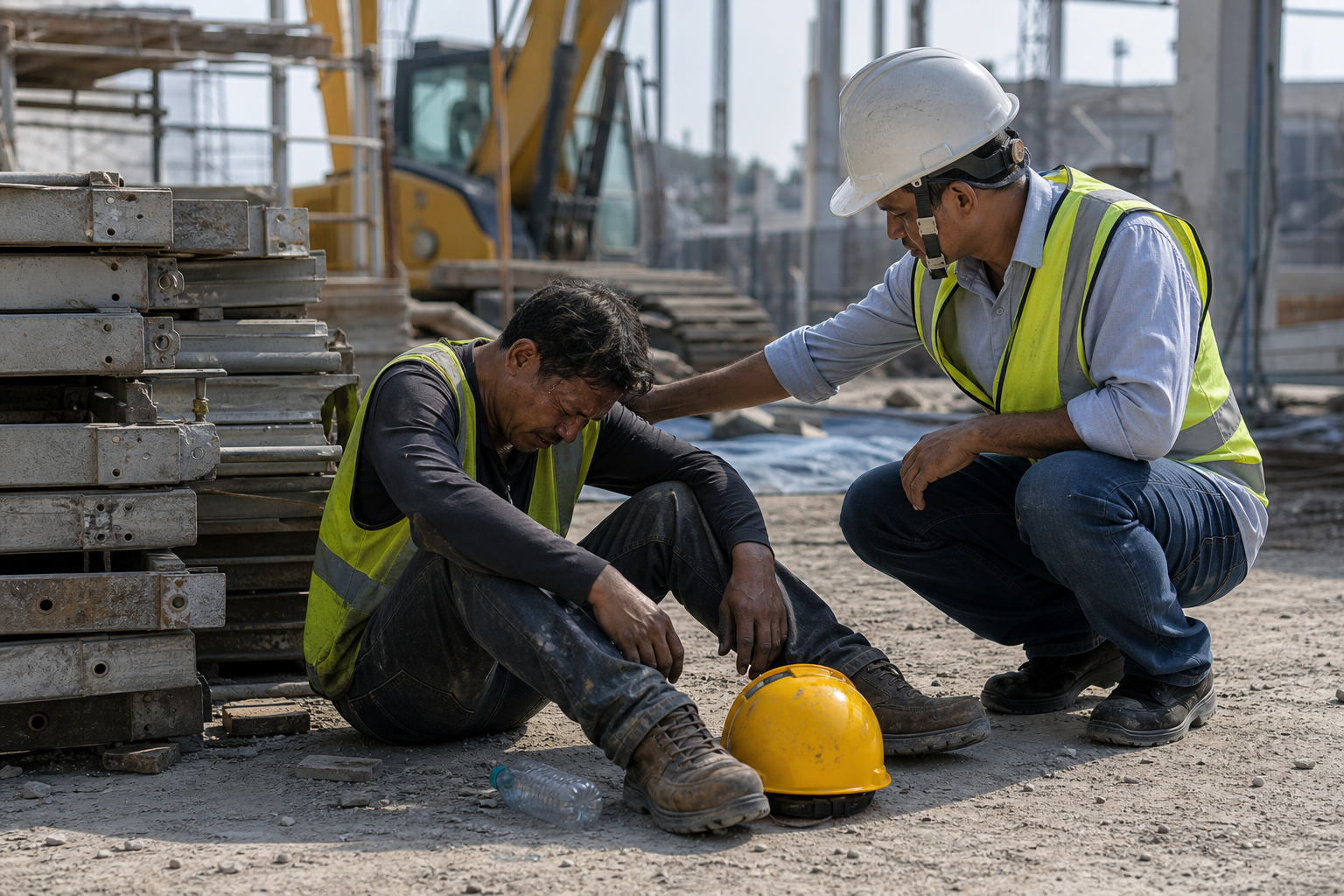
A multi-day heat event reaching 38 degrees Celsius, or 100 degrees Fahrenheit, with high humidity and millions of people exposed is not an inconvenience. It is a public health threat with familiar victims and predictable mechanics. Outdoor workers, delivery drivers, landscapers, construction crews, sanitation workers, festival staff, farmworkers, children in recreation programs, older adults, and people in poorly cooled indoor workplaces all face elevated risk. The timing matters too. Coming just before the Fourth of July holiday, this heat wave collides with exactly the conditions that make voluntary restraint least reliable: more outdoor events, more seasonal labor demand, more commercial pressure, and more temptation to tell people to push through it.
That is why governments should mandate workplace and outdoor activity restrictions during extreme heat events. Not symbolic advisories, not a patchwork of employer discretion, not the comforting fiction that information alone will protect people whose paycheck depends on ignoring it. Restrictions should be targeted, time-limited, and clearly defined, but they should be mandatory.
The strongest objection is not frivolous. Critics are right to warn that blunt rules can impose real costs. A construction halt can delay projects. A canceled outdoor event can hurt small vendors. Hourly workers can lose wages if policy is poorly designed. And not every workplace faces the same heat burden. An indoor office with functioning air conditioning is not a road crew laying asphalt in high humidity. A family walking briefly to a shaded park is not the same as an employer running a full outdoor shift through the hottest hours of the day.
Those distinctions matter, and any serious case for mandates should concede them. The answer is not an indiscriminate ban on all movement outside. The answer is a structured public rule set that matches the hazard. That can include limits on strenuous outdoor labor during peak heat, required rest and hydration intervals, schedule shifts to early morning or evening, mandatory access to shade and cooling, and cancellation or modification of high-exertion public activities when heat index conditions become dangerous. In other words, precision in design, not passivity in governance.
But once we accept that the hazard is real, widespread, and foreseeable, the case for mandatory baselines becomes stronger, not weaker. Extreme heat is a textbook case of fragmented incentives producing underprotection. Employers capture the short-term benefit of keeping output on schedule. Workers, especially low-wage workers, often bear the immediate physiological risk. Hospitals, emergency responders, and families absorb the downstream costs when things go wrong. That is the very definition of cost externalization. Advisories do not fix it, because advisories do not alter bargaining power.
The voluntary alternative sounds reasonable in editorial abstraction. Give people data. Open cooling centers. Encourage flexible schedules. Trust local judgment. In practice, that leaves the decisive question to whoever has the leverage in the moment. Before a holiday weekend, with contracts to meet and crowds to serve, many businesses will not voluntarily scale back unless everyone is required to do so. That is not because every employer is malicious. It is because competitive pressure punishes unilateral caution. A mandatory rule levels the field. No employer loses business for doing the safe thing if every employer must do the safe thing.
This is where the language of individual choice breaks down most severely. Choice is not meaningful when one side can lose income, shifts, or employment for declining hazardous work. Nor is it meaningful when the consequences of unsafe decisions spill into emergency rooms and public systems. Heat illness does not remain private merely because the initial decision was decentralized. The burden becomes collective fast.
Opponents also argue that local adaptation is more flexible than central planning. There is a narrow truth here. State or local governments should not draft one rigid script for every setting. Conditions vary by humidity, nighttime cooling, workplace exposure, and population vulnerability. Yet this is an argument for calibrated public administration, not for abdication. Government is the only actor capable of setting common thresholds, coordinating weather alerts, standardizing enforcement, funding cooling infrastructure, aligning labor protections, and communicating clearly across millions of people. Fragmentation is not resilience when the underlying problem is that safety gets treated as optional.
The holiday timing sharpens the point. Fourth of July events increase outdoor exposure precisely when the body has fewer margins for error. Large gatherings, road work, logistics activity, food service, and public celebrations all expand. That means more workers outdoors, more families making plans, and more pressure on local emergency systems. In such conditions, the state has a duty to do more than warn. It must govern. That means setting temporary restrictions before emergency rooms fill, not after.
Critics often frame mandates as a trade-off between safety and economic activity. That framing is too simple. Unmanaged extreme heat is itself economically destructive. Heat-related illness reduces labor capacity, slows output, increases medical costs, disrupts services, and can leave projects understaffed anyway. Preventable injuries are not pro-growth. Nor is a system that depends on workers taking uncompensated physiological risks so that firms can preserve short-term revenue during a dangerous weather event.
A well-designed mandate can reduce that damage. It should be paired with income protection where possible, aggressive public communication, cooling centers with extended hours, utility support to keep air conditioning accessible, and clear guidance for employers on compliant scheduling and mitigation. This is not mere prohibition. It is coordinated risk management. Government should not simply tell people to stop; it should reorganize the conditions under which activity can safely continue or temporarily pause.
The broader lesson is uncomfortable for those who prefer atomized solutions, but it is borne out repeatedly. When a threat is large-scale, fast-moving, and unequal in how it falls, relying on scattered private discretion produces gaps that line up almost perfectly with power and precarity. People with salaried indoor jobs adapt. People with outdoor shifts, weak bargaining power, or inadequate housing do not. A public rule is not an insult to common sense. It is a recognition that common sense alone cannot overcome unequal incentives.
The debate, then, is not between freedom and bureaucracy. It is between a system that treats human heat exposure as an individual problem and one that recognizes it as a collective governance problem. With temperatures at 38 degrees Celsius, humidity compounding the danger, multiple days of exposure, and millions affected before a holiday built around outdoor activity, the government should not hide behind advisories. It should establish mandatory workplace and outdoor activity restrictions that are temporary, specific, and enforceable.
Extreme heat is no longer an exceptional inconvenience at the margins of public policy. It is a recurring test of whether the state will use its capacity to prevent foreseeable harm. In this case, the answer should be yes.