
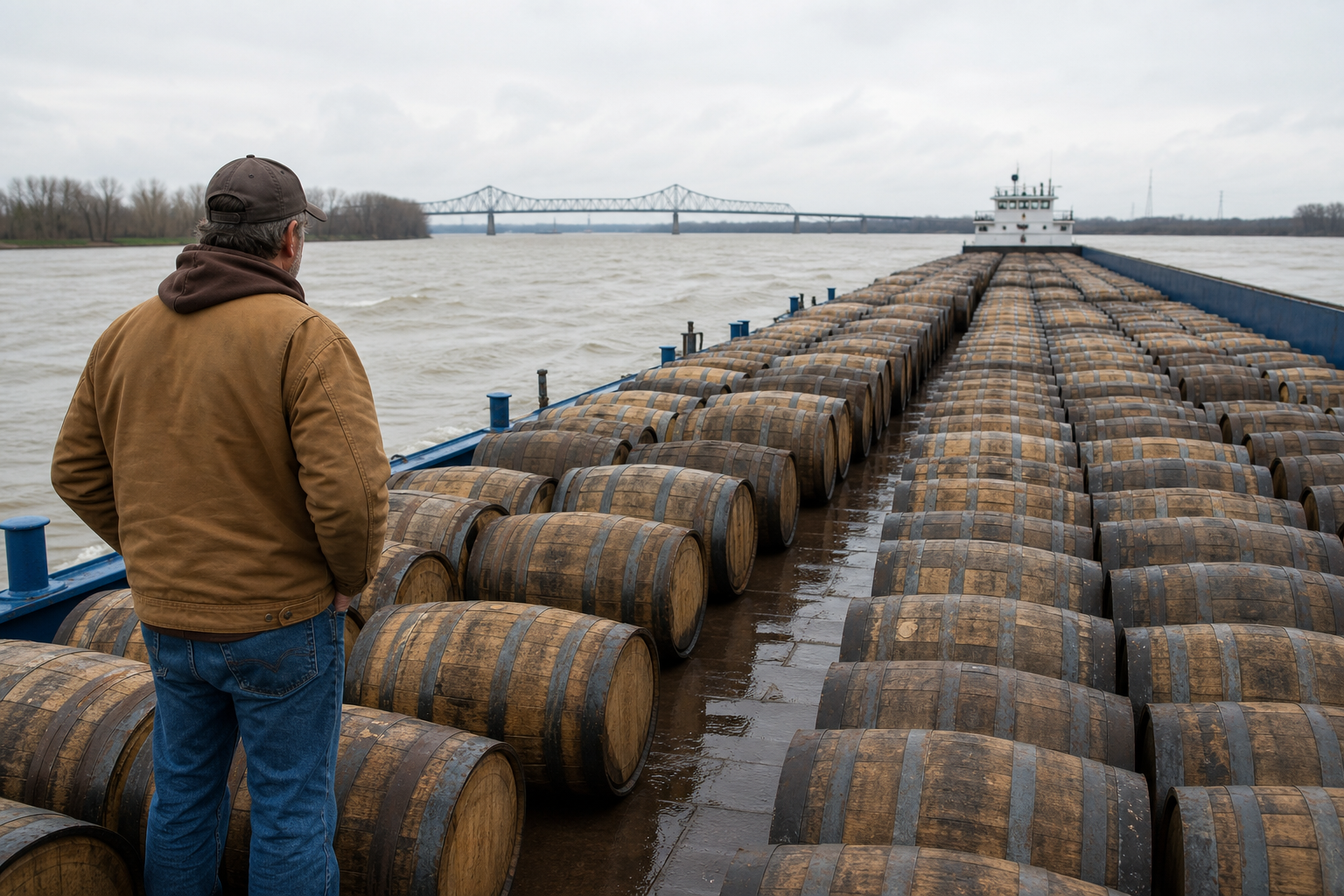
The case for permitting bourbon aging on river barges is not romantic, and it does not need to be. It is a simple question of whether regulators should prohibit a new maturation method when the known upside is plausible, the direct evidence of harm is thin, and existing rules already cover most of the obvious risks. On that standard, bourbon producers should be permitted to age spirits on barges.
Start with the actual dispute. A bourbon maker is aging spirits on a barge in the Mississippi River, in Kentucky, and presenting it as a new way to age bourbon. Some claim the river-based aging produces a distinct flavor. That is enough to trigger familiar anxiety in legacy industries. Purists hear "distinct flavor" and worry about gimmickry. Regulators hear "new method" and imagine hidden externalities. Competitors hear "alternative maturation" and suspect a loophole. Those concerns are not insane. They are just not enough, by themselves, to justify a ban.
The stakes are larger than one floating warehouse. Bourbon is valuable because it sits at the intersection of law, tradition, branding, and manufacturing discipline. If you loosen definitions carelessly, you can damage consumer trust. But if you freeze production methods at the first sign of novelty, you turn a successful category into a museum exhibit and handcuff the very producers who keep it economically relevant. Good policy has to protect the core product while leaving room for controlled experimentation around the edges.
That is why the strongest argument for permission is narrow, not absolutist. The question is not whether anything novel should count as bourbon. The question is whether aging bourbon in a barge, rather than in a conventional rickhouse, necessarily violates bourbon's essential identity. Based on the facts we have, the answer is no. The fact sheet says this is a new way to age bourbon, not a new grain bill, not a new barrel standard, not a new spirit category. The variable is the aging environment, specifically a river barge in Kentucky, not the abandonment of bourbon's basic production rules.
This is where the opposition's best point deserves real credit. The legal and historical value of bourbon is not fake. Product definitions matter. If consumers buy a bottle labeled bourbon, they should not be getting something functionally unrelated to bourbon with a marketing story pasted on top. Selene Ward's best objection in the debate was that bourbon is a legal construct, protected over generations, and regulators should not casually allow practices that could blur the category. That is a serious concern, especially for an export product whose reputation is part of its price.
But a concern about line-drawing is not an argument for drawing the line at zero innovation. If the core bourbon requirements remain intact, then changing the place or conditions of maturation is not obviously category fraud. In fact, the bourbon market already tolerates meaningful variation in warehouse placement, microclimate, temperature swings, humidity, barrel location, and aging duration. Producers openly market the effects of floor level, warehouse design, seasonal shifts, and storage conditions. Once you admit that maturation environment affects flavor, and bourbon plainly does, it becomes hard to argue that only one physical setting is legitimate unless the law specifically says so.
The safety case against barge aging is even weaker. Opponents raised barrel integrity, contamination, spills, motion, and unknown chemical interactions. Fair enough. Novel processes deserve scrutiny. But scrutiny is not prohibition. There is a large practical difference between saying, "comply with existing environmental and spirits rules," and saying, "you must first clear an undefined burden of independent proof before trying this." The former is regulation; the latter is a moat.
And it is an expensive moat. Requiring bespoke studies before a producer can age whiskey on a barge would mean high fixed compliance costs, long delays, and a de facto bias toward the largest incumbents. Small and midsize distillers would get the message immediately: innovation is allowed only if you can afford lawyers, consultants, and years of process. That is not consumer protection, it is market foreclosure disguised as prudence.
The practical question is incremental risk. Are barges so uniquely dangerous, compared with ordinary bourbon operations, that they warrant categorical prohibition? Nothing in the fact set establishes that. Barrels already leak. Warehouses already face fire, heat variation, structural risk, and inventory loss. Rivers already operate under environmental and transport oversight. If a barge must meet safety, storage, spill-prevention, and insurance requirements, then the relevant risk is not zero versus catastrophe. It is baseline industrial risk versus somewhat different baseline industrial risk. Policymaking should be calibrated to that difference, not to vibes.
The economics also matter, because incentives shape outcomes. If river aging produces a flavor consumers actually want, producers gain a premium product, retailers gain a new story to sell, and drinkers gain more choice. If it is a gimmick, the market will discount it quickly. That is the beauty of allowing experimentation in premium consumer goods. The failure mode is usually commercial embarrassment, not social collapse. A bottle that tastes worse than advertised dies on the shelf. A method that adds cost without adding quality disappears on its own. Regulators do not need to save firms from bad marketing bets.
There is also a second-order benefit: permission creates information. Once multiple producers can try alternative maturation methods, the industry learns faster what motion, humidity, and river conditions actually do to whiskey. Some experiments will fail. Good. Failure is data, and data beats theoretical panic. Blocking the experiment preserves ignorance while pretending to preserve standards.
The cynical argument, voiced in the debate, is that barge aging is really about evading rules or cutting corners. Sometimes cynicism is useful. Producers do chase margins. But that is exactly why permission should be paired with clear labeling and normal compliance, not denial. If a bourbon is aged on a Mississippi River barge, say so. Let the bottle tell the story. Then let buyers decide whether the distinct flavor is worth the price. Transparency solves more cheaply than prohibition.
This is the broader lesson. Not every tradition needs disruption, but every mature industry needs a mechanism for low-cost testing at the margin. Bourbon does not preserve its prestige by forbidding every unusual warehouse. It preserves prestige by maintaining its core standards while letting producers compete on quality, taste, and process innovation. Aging spirits on barges may turn out to be a niche, a fad, or a genuine new substyle. We do not know yet. That is precisely why it should be permitted.
The burden in a free, functional market should not fall on innovators to prove a negative before trying anything new. It should fall on opponents of permission to show concrete, material harm that existing rules cannot manage. On the facts we have, they have not done that. A Kentucky producer is already testing river-based bourbon aging on the Mississippi. The costs of allowing it are manageable, the upside is real, and the cheapest way to learn is to let the experiment run.
Permit the barges. Keep the bourbon standards. Enforce ordinary safety rules. Label the product honestly. Then let the market do the sorting. That is the highest-return policy available.